

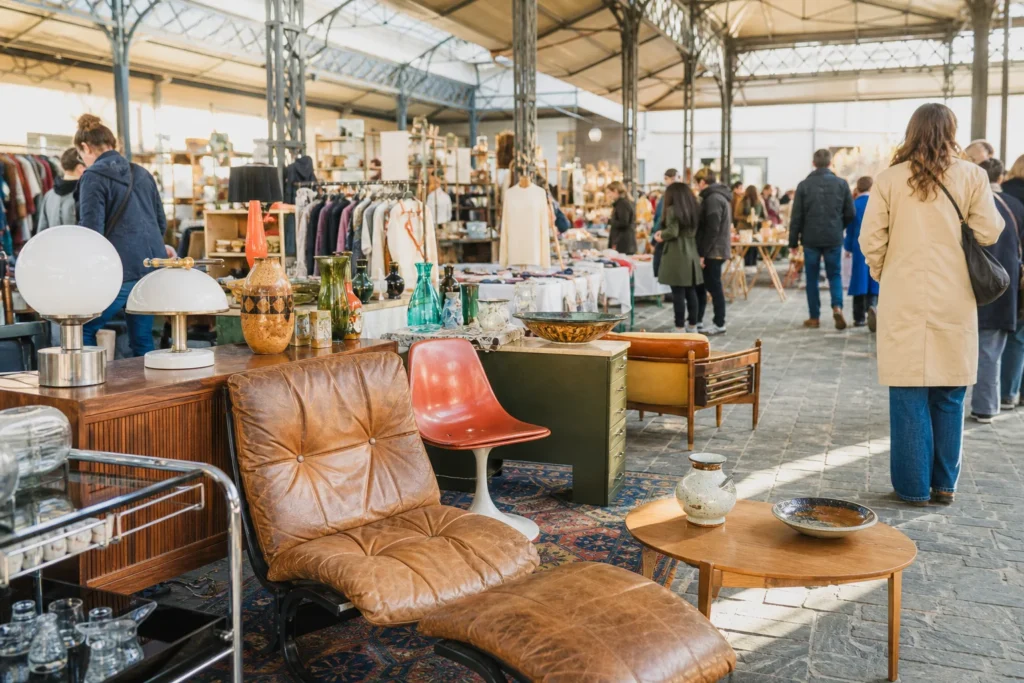

It started small. In 2010, a Brussels café called Madame Moustache hosted around a dozen vintage vendors, giving young designers and collectors a place to sell without the overhead of a permanent shop. That low-key beginning has grown into one of the Belgian capital's most distinctive monthly markets, now held at the Halles Saint-Géry — a 19th-century covered market hall in the lower town that locals have claimed as a neighbourhood anchor.
The Halles Saint-Géry is an architecturally rewarding space. Its iron-and-glass structure gives the browsing experience a visual warmth that a car park or convention hall simply cannot replicate. The market runs on the first Sunday of each month, noon until 19:00, and that monthly rhythm matters. It concentrates both buyers and sellers, and keeps the atmosphere purposeful rather than touristic.
The market's real distinction lies in its seller mix. Around 40 vintage and second-hand merchants share the floor with more than 20 working designers. That combination shifts the experience away from a conventional flea market. You might find a 1970s leather jacket hanging beside something made last season, consciously in dialogue with that same era. The fashion offer is particularly strong — vintage clothing and accessories that dealers and designers have reinterpreted, customised, or simply curated with a sharp eye.
Beyond clothing, the market carries a secondary layer of objects: small furniture pieces, accessories, and decorative finds that reward slower browsing. It draws close to 2,500 visitors per event, yet the indoor setting keeps the crowd manageable and the pace relaxed. This is a market where lingering is expected.
The social texture of the day is part of the draw. A vinyl soundtrack from retro DJs sets an unhurried tone, and the venue's terrace is genuinely good for a drink or lunch with friends. The market works as a full Sunday afternoon outing, not just a quick browse.
Getting here is straightforward from central Brussels. The Bourse–Beurs stop is roughly 64 metres from the Halles Saint-Géry, served by trams 4 and 10 and buses including lines 46 and 89. Night buses also stop there for anyone staying late in the neighbourhood. Visitors arriving from further afield can use Brussels-Central train station, approximately 678 metres away, with connections across the national rail network including IC and S-line services.
The Brussels Vintage Market suits fashion-focused shoppers who want curation alongside price, design buyers who value meeting makers directly, and anyone who treats Sunday browsing as a social occasion rather than a mission. The Halles Saint-Géry setting and the designer-vintage hybrid format both lift it above the average second-hand market — and the monthly timing gives each edition a quiet sense of occasion.
Frequently Asked Questions
Q: When does the Brussels Vintage Market take place?
A: The market runs on the first Sunday of each month, noon until 19:00, at the Halles Saint-Géry in central Brussels. Confirm the date on the organizer's official page before you go, as occasional exceptions may apply.
Q: What can I expect to find beyond clothing?
A: Fashion is the market's strongest suit — vintage pieces sit alongside redesigned and customised work from more than 20 working designers, making the clothing offer more curated than a typical flea market. A secondary layer of small furniture, accessories, and decorative objects rewards slower browsing.
Q: How do I get there by public transport?
A: The Bourse–Beurs stop is roughly 64 metres from Halles Saint-Géry, served by trams 4 and 10 and buses including lines 46 and 89. Brussels-Central train station is around 678 metres away if you're arriving by national rail.
Q: Is this worth visiting as a full afternoon out rather than a quick browse?
A: Yes — the indoor iron-and-glass hall keeps the atmosphere relaxed even when the crowd reaches its typical 2,500 visitors, and the venue's terrace is a genuine spot for lunch or drinks. A vinyl soundtrack from retro DJs adds to the unhurried pace.
Q: Does the market suit buyers who care about quality and curation, or is it more of a rummage experience?
A: It leans firmly toward curation. The mix of established vintage dealers and working designers means stock is generally selected with a point of view rather than sold in bulk. That said, prices vary across stalls, so it rewards comparison across the floor.
Marketplace Highlights










Christy Keller
29th March 2016 at 18:56There are some excellent finds here but goodness gracious does it get crowded! Worth the visit though.