

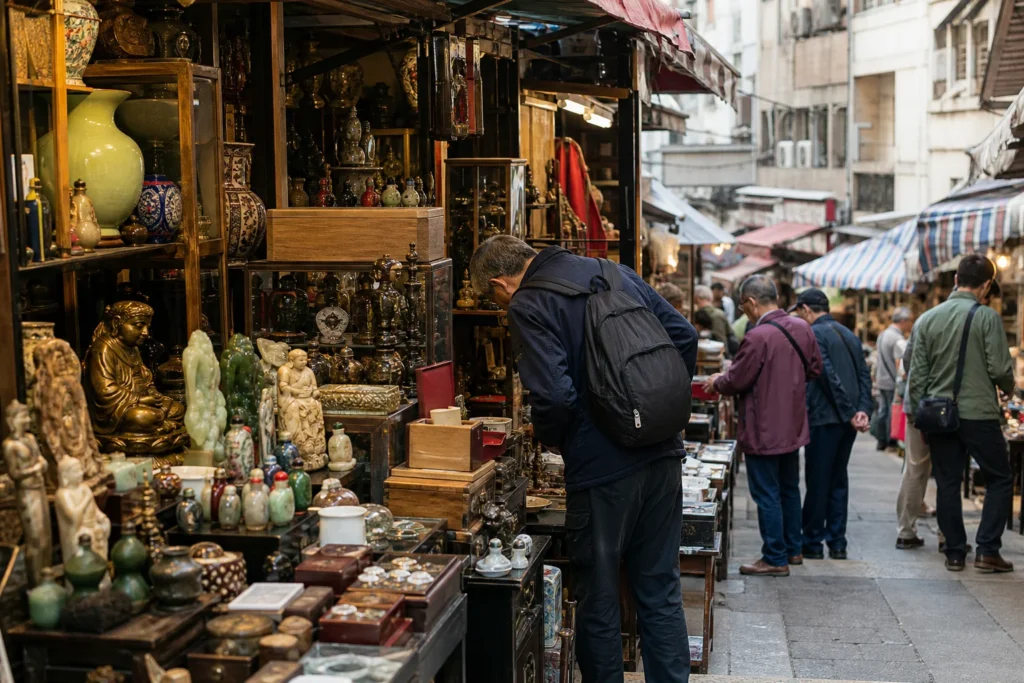

Hollywood Road gets the gallery crowds and the auction-house browsers. One block south, down a short staircase beside the Man Mo Temple, Cat Street operates on entirely different terms. The name itself explains the difference. In Cantonese slang, "cat" means odds and ends — a phrase that fits Upper Lascar Row far better than any polished description could. This narrow, roughly 200-metre lane through Sheung Wan is where the city's second-hand culture spills onto the pavement in the most honest way possible.
The street carries a layered past. Before the Second World War, Upper Lascar Row had a quiet reputation as a place where stolen antiques moved discreetly from hand to hand. After the war, the neighbourhood rebuilt itself as a legitimate second-hand destination, and that transformation stuck. The resulting character is hard to manufacture: a street that has earned its authenticity rather than constructed it for visitors.
What fills the stalls today is genuinely varied. Jade pieces, snuff bottles and old coins reward the collector who arrives with some knowledge and patience. Ceramic figurines, copper household items, vintage furniture and decorative bric-a-brac fill the gaps between the stronger finds. Quality shifts considerably from stall to stall, and that variability is part of the experience. Prices here run noticeably lower than on Hollywood Road, which reflects an honestly mixed stock rather than a curated selection.
Bargaining is expected along the row. Vendors engage with it directly and without ceremony, which gives the place a warmth that a gallery visit rarely matches. Shopping here feels more like an extended conversation about what catches your eye than a straightforward transaction. An hour passes quickly, and then another.
Cat Street suits collectors hunting for overlooked pieces and curious visitors in equal measure. A snuff bottle, an old coin or a single ceramic piece makes for the kind of souvenir that holds a specific memory. Mass-produced alternatives line every shopping centre on the island. Cat Street offers something harder to replicate.
Most stalls open Monday through Saturday, roughly 11am to 6pm. The street closes on Sundays. A weekday mid-morning visit typically offers the most relaxed browsing, when the lane is quieter and vendors have time to talk.
Getting here is straightforward. Sheung Wan station on the Island Line sits approximately 300 metres away and works well as the main arrival point for most visitors. For those already on the tram network, Western Market Terminus is around 250 metres from the street. Bus routes 26, H1 and H1S stop at Man Mo Temple, barely 100 metres from the lane — a useful option when connecting from elsewhere on Hong Kong Island.
Frequently Asked Questions
Q: What kinds of things can you find at Cat Street?
A: The stalls along Upper Lascar Row carry a genuinely mixed spread — jade pieces, Chinese snuff bottles, old coins, ceramic figurines, copper household items and decorative bric-a-brac are common finds. Quality varies considerably from stall to stall, which is part of the experience. Collectors with some background knowledge tend to get the most out of a visit, but curious browsers do well here too.
Q: Is bargaining expected, or are prices fixed?
A: Bargaining is standard practice along Cat Street. Vendors engage with it directly and without ceremony, so don't hesitate to make an offer. The atmosphere is conversational rather than pressured, which makes the negotiating feel like part of the visit rather than an obstacle.
Q: When is Cat Street open, and are there better times to visit?
A: Most stalls run Monday through Saturday, roughly 11am to 6pm. The street is closed on Sundays. A mid-morning weekday visit tends to offer the most relaxed browsing — the lane is quieter and vendors generally have more time to talk. Check closer to your visit, as individual stall hours can vary.
Q: How does Cat Street compare to Hollywood Road for antique shopping?
A: Hollywood Road, one block north, is home to galleries and auction-house trade aimed at serious collectors and institutional buyers. Cat Street operates on looser terms — more market-like, with prices that run noticeably lower. The stock is honestly mixed rather than curated, so the experience suits both bargain hunters and anyone wanting a flea-market atmosphere over a gallery visit.
Q: How do I get to Cat Street by public transport?
A: Sheung Wan MTR station on the Island Line is approximately 300 metres away and works well as the main arrival point. If you're on the tram network, Western Market Terminus is around 250 metres from the street. Bus routes 26, H1 and H1S stop at Man Mo Temple, barely 100 metres from the lane — a useful option when connecting from elsewhere on Hong Kong Island.
Marketplace Highlights








Add a review