

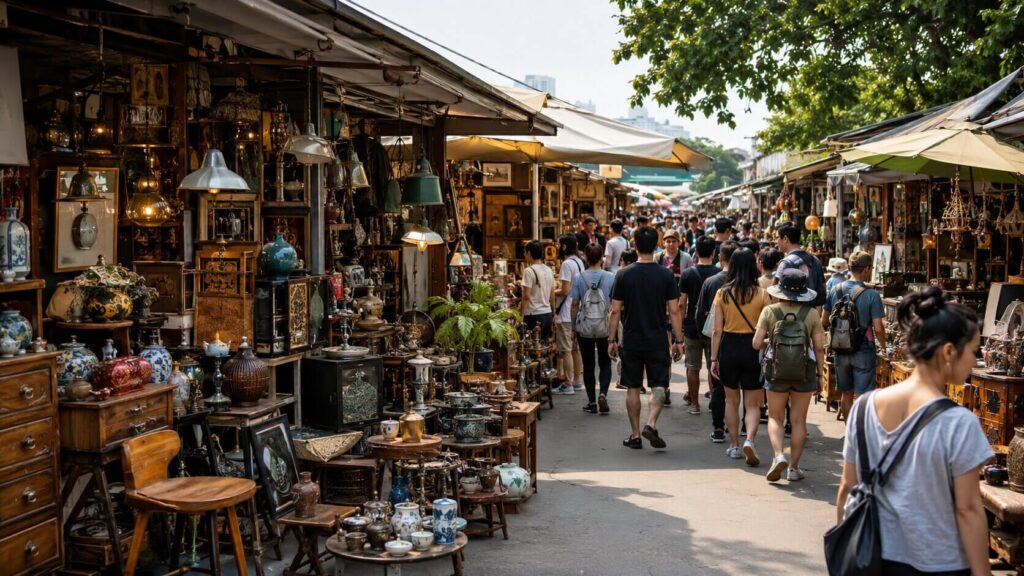

Wander past the clothing vendors and housewares stalls that fill most of Chatuchak's grid, and eventually you reach sections 1 and 26. That's where the market shifts character entirely. Dealers here stock mid-century furniture, antique lighting, architectural salvage, vintage cameras and gramophones alongside Buddhist and Hindu sculpture, wood carvings, Asian textiles, traditional clothing and porcelain. Few markets in Southeast Asia gather this density of antique goods under one roof, and for collectors, these two sections are the real reason to make the trip.
The sculpture and religious object dealers deserve a specific note. Replicas circulate widely in this category, particularly among Buddhist and Hindu pieces. Inspect carvings and cast objects carefully, buy from dealers whose stock feels coherent and whose manner invites questions, and resist the pull of a price that seems too clean. For furniture, ceramics and cameras, condition varies stall to stall, so scanning several vendors before committing usually pays off. A piece that looks like the best option in one lane often has a sharper equivalent two alleys over.
Chatuchak is enormous by any measure — figures commonly cited put the vendor count at several thousand stalls across roughly 35 acres, with the stalls organised into themed sections covering everything from plants and pets to fashion and home goods. That scale makes the antique sections genuinely rewarding to explore, but it also means that a loose approach can burn your best hours. The internal grid of main streets, side alleys and connecting lanes is easy to lose track of. The side alleys off the main routes are consistently where the stronger finds sit, so push into them. Mark any stall you want to revisit on a map app immediately — what feels like a short detour can carry you several sections off course before you notice.
The market opens on Friday evenings from 18:00 to midnight, then runs both Saturday and Sunday from 09:00 to 18:00. Weekend mornings are the most productive window. Arriving early puts you ahead of the peak heat and the midday crowd density that packs the narrower lanes. Nearby, Chatuchak Playground operates as a companion antique flea market with evening hours running until 22:00, giving the immediate area a layered antique character across different parts of the day. Together, the two spaces suit a collector who wants to extend the hunt beyond the main market's closing time.
Cash in Thai baht is essential, especially for smaller stalls where card readers are rare. For transit, Chatuchak Park station on the MRT Blue Line sits approximately 600 metres away and works well as the primary rail arrival point. Mo Chit station, served by the BTS Skytrain Sukhumvit line, is an alternative at roughly 650 metres. Bus travellers have good options too — a stop about 200 metres from the market connects to a wide range of Bangkok city routes.
What genuinely sets Chatuchak apart from comparable regional markets is the concentration of serious antique dealers within a market that also functions as a sprawling general bazaar. Sections 1 and 26 hold a depth of stock that rewards methodical browsing over a full morning. Casual visitors will enjoy the energy, but collectors who commit the time, work systematically through the alleys and stay alert to provenance tend to come away with the most.
Frequently Asked Questions
Q: Which sections should antique and vintage collectors head to first?
A: Sections 1 and 26 are the collector-focused core of the market. Dealers there stock mid-century furniture, antique lighting, architectural salvage, vintage cameras, gramophones, Buddhist and Hindu sculpture, wood carvings, Asian textiles and porcelain. The rest of Chatuchak is a general market — these two sections are why serious collectors make the trip.
Q: When is the best time to arrive for browsing the antique sections?
A: Early morning on Saturday or Sunday is the most productive window. Chatuchak opens at 09:00 on weekends, and arriving close to opening puts you ahead of the midday heat and the crowd density that eventually packs the narrower lanes. There is also a Friday evening session running 18:00 to midnight. The nearby Chatuchak Playground operates later into the evening, extending the hunt if you want more time after the main market closes.
Q: How do I avoid getting lost or missing stalls I want to revisit?
A: The internal grid of main streets, connecting lanes and side alleys makes it genuinely easy to lose your bearings. Mark any stall that interests you on a map app the moment you see it — what feels like a quick detour can carry you several sections off course. The side alleys off the main routes are consistently where the stronger finds sit, so push into them rather than staying on the primary walkways.
Q: How should I approach buying religious sculpture or antique objects here?
A: Replicas circulate widely in the Buddhist and Hindu sculpture category in particular. Inspect carvings and cast objects carefully, favour dealers whose overall stock feels coherent and who are willing to engage questions, and treat an unusually clean price as a reason for caution rather than a reason to buy quickly. For furniture, ceramics and cameras, condition varies considerably from stall to stall, so scanning several vendors before committing usually reveals better options than committing to the first strong piece you see.
Q: What is the easiest way to reach Chatuchak by public transit?
A: MRT Chatuchak Park on the Blue Line sits approximately 600 metres from the market and works well as the primary rail arrival point. Mo Chit station on the BTS Skytrain Sukhumvit line is an alternative at roughly 650 metres. Bring cash in Thai baht — smaller stalls in the antique sections rarely have card readers.
Marketplace Highlights








Add a review