

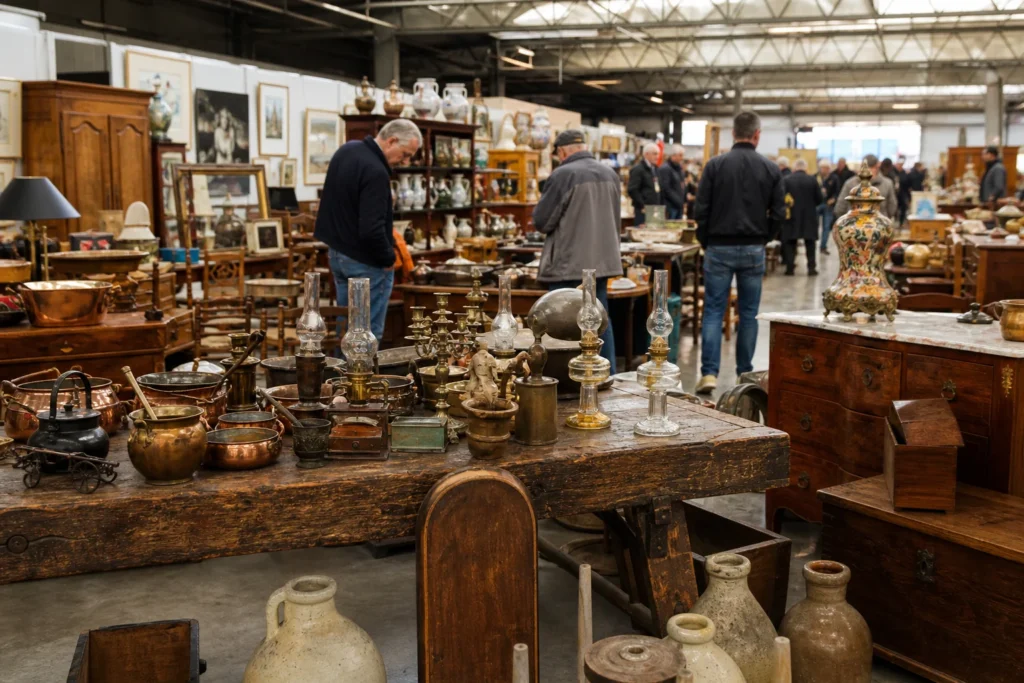

Few flea markets open with a ritual quite like this one. On the first morning of Ciney Puces et Salon des Antiquaires, more than 500 trucks roll into the Ciney Expo grounds and park up with their cargo sealed. At 2 p.m. sharp, the doors swing open — and buyers surge forward. Dealers, collectors and sharp-eyed hunters compete in real time for whatever emerges from the back of each vehicle. The French call it déballage au cul du camion, unpacking straight from the truck, and it is the defining spectacle of this Belgian antique fair.
That opening-day scramble shapes the entire rhythm of the event. The rarest pieces, the most unusual furniture, the jewellery worth chasing — most of it moves on day one. Experienced collectors know to arrive early and stay focused. By day two and three, the pace slows, the crowd thins, and the remaining stock tends toward the larger, the pricier or the simply overlooked. For a serious buyer, the first afternoon is everything.
The fair runs across three days, typically held up to three times a year in April, July and October, with hours generally running from 10:00 to 18:00 each day. More than 700 exhibitors take part, drawing from Belgium, France, Germany, the Netherlands and Italy. That international seller base is what lifts Ciney above the regional circuit. A French brocante dealer brings different stock than a Flemish antique trader or a German estate seller — and the overlap, the contrast, the variety of regional taste and period makes browsing genuinely rewarding.
Merchandise runs the full range of continental European decorative arts. Furniture from several centuries sits alongside ceramics, silverware, paintings and textile work. Smaller collectibles — jewellery, clocks, porcelain, vintage cameras, maps — appear in quantity and reward collectors who know exactly what they are looking for. The scale of the fair, reportedly attracting upwards of 15,000 visitors across the three days, means competition is real, but so is the depth of stock.
Ciney itself provides a quietly appealing setting. The town sits in the Belgian province of Namur, in the rolling landscape of the Ardenne fringe, and Ciney Expo offers a practical indoor-outdoor venue suited to an event of this size. The local atmosphere is relaxed and genuinely welcoming, and food options on site and nearby make a full day on the floor comfortable rather than exhausting.
For visitors arriving by public transport, bus lines 69, 126b and E80 serve the Ciney Zoning entrée stop approximately 170 metres from the venue. Bus line 126b also stops at Ciney Vivaco, roughly 300 metres away. That said, most visitors travel by car — the fair draws from across Belgium and neighbouring countries, and the Expo's parking area accommodates the kind of volume this event generates.
Ciney Puces et Salon des Antiquaires suits dealers and collectors hunting specific pieces from continental Europe's decorative past. It also works well for a first-time visitor willing to arrive with focus and a clear idea of what interests them. The déballage ritual alone makes this fair worth the journey — there is nothing quite like watching a truck open and knowing the best things inside will be gone within the hour.
Frequently Asked Questions
Q: What is the déballage au cul du camion, and why does it matter for buyers?
A: It is the defining moment of the fair. On opening day, more than 500 trucks arrive at Ciney Expo with their cargo sealed. At 2 p.m., the doors open and buyers rush the vehicles as dealers unpack on the spot. The rarest and most unusual pieces surface — and sell — in this first surge. If you are a serious collector, the first afternoon is by far the most important session of the event.
Q: How many exhibitors attend, and where do they come from?
A: The fair draws over 700 exhibitors from Belgium, France, Germany, the Netherlands and Italy. That international mix sets it apart from regional Belgian flea markets — a French brocante dealer, a Flemish antique trader and a German estate seller each bring distinctly different stock, which makes the range of periods and styles genuinely broad.
Q: What types of items can buyers expect to find?
A: The fair covers continental European decorative arts across several centuries. Furniture, ceramics, silverware, paintings and textiles appear at scale, alongside smaller collectibles — jewellery, clocks, porcelain, vintage cameras and maps — that reward buyers who arrive knowing what they are looking for. Stock depth is considerable, with upwards of 15,000 visitors competing across three days.
Q: Can I reach Ciney Expo by public transport?
A: Bus lines 69, 126b and E80 serve the Ciney Zoning entrée stop, approximately 170 metres from the venue. Line 126b also stops at Ciney Vivaco, around 300 metres away. Most visitors arrive by car, as the fair draws from across Belgium and neighbouring countries, and the Expo site has parking to match that volume.
Q: When is the fair held each year?
A: Editions are typically held up to three times a year, with dates falling in spring, summer and autumn. Check the organiser's official page before you travel, as exact dates vary by edition.
Marketplace Highlights









Add a review