


Region
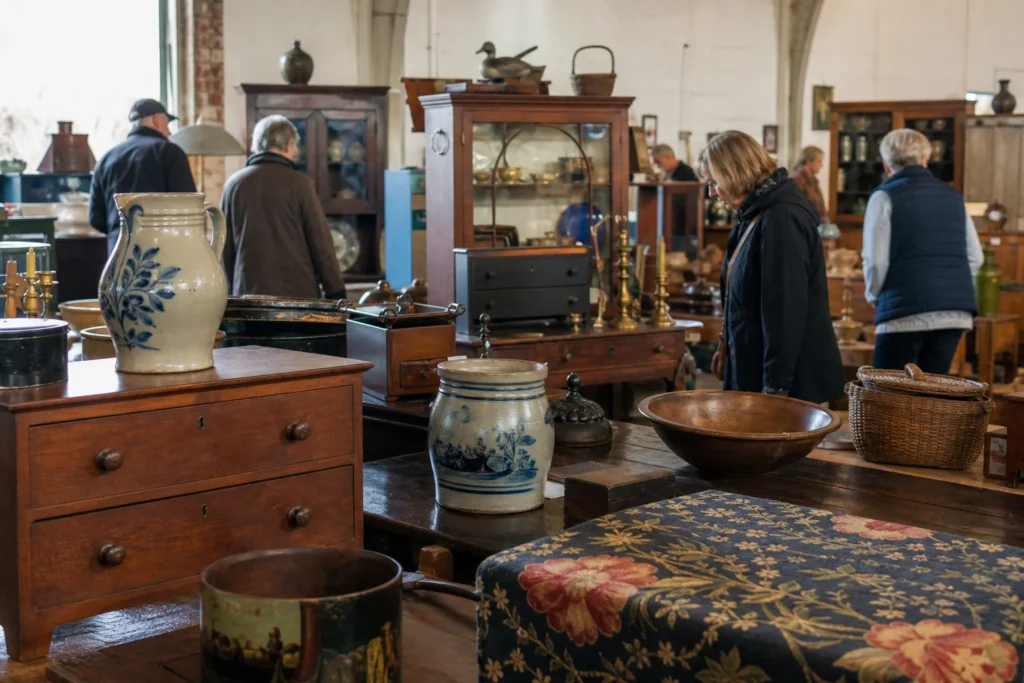
Every autumn, Hartford draws a particular kind of visitor — one who knows the difference between a Hepplewhite sideboard and a Sheraton one, or is determined to learn. The CT River Valley Antiques & Historic Homes Show has been gathering collectors, dealers and decorative arts enthusiasts since 1973. It runs for two days on a Saturday and Sunday, opening at 10:00 and closing at 16:00, and the pace across those hours is purposeful. This is a focused event built around early American furniture and the material culture that surrounds it.
The show was formerly known as the Connecticut Spring Antiques Show, and that long history carries weight. Dealers who have returned year after year know their inventories deeply. They can speak with authority about provenance, attribution, period and condition — and most are glad to do so. More than fifty exhibitors typically participate, bringing furniture that anchors the floor alongside fine art, folk art, silver, pewter, brass, glass, porcelain, iron and textiles. The range rewards single-category collectors and broad-ranging browsers alike.
Educational lectures run alongside the trading floor, giving the show a distinctly instructive character. Novice buyers can learn as much as they spend, pairing a morning of browsing with a talk that adds context to what they have just seen. That combination of hands-on shopping and structured learning is relatively rare in the antiques fair world. Interior designers attend in notable numbers, drawn by the scale of the furniture selection and the quality of the decorative arts on offer. For professionals sourcing material for period or period-influenced interiors, the show functions as a highly efficient sourcing day.
The annual format sharpens everything. Dealers bring inventory selected specifically for this event rather than cycling unsold stock. Demand is concentrated, and the best pieces — particularly in the furniture and folk art sections — tend to move early. First-time visitors should plan to arrive when the doors open at 10:00 to cover the floor thoroughly before the afternoon thins out.
The rebranding to the CT River Valley Antiques & Historic Homes Show broadened the event's identity, tying its antiques focus to the architectural and historical character of the Connecticut River Valley itself. That framing feels honest: the objects on the floor belong to a regional tradition, and the show presents them with corresponding seriousness. Whether you arrive as a seasoned Americana specialist or a genuinely curious newcomer, the depth of dealer knowledge and the quality of the programming make the two days productive.
Hartford Amtrak Station sits roughly 600 metres from the show's Broad Street location. It serves the Hartford Line, Northeast Regional, Valley Flyer and Vermonter trains, making the event accessible from New Haven, Springfield and beyond without a car. Sigourney Street Station, approximately 800 metres away, offers local bus connections including routes 102, 161, 923 and 928, among others. The combination of rail and bus options means visiting from across New England is straightforward for those who prefer not to drive into the city.
Frequently Asked Questions
Q: What kinds of objects will I find at the CT River Valley Antiques & Historic Homes Show?
A: Early American furniture anchors the show, but dealers also bring folk art, fine art, silver, pewter, brass, iron, glass, porcelain, textiles and pottery. The range suits both focused single-category collectors and buyers who like to range broadly. Smaller decorative pieces fill the floor alongside major furniture finds, so the show is productive at a range of budgets.
Q: When does the show run, and is there a best time to arrive?
A: The show runs on a Saturday and Sunday in autumn, opening at 10:00 and closing at 16:00 each day. The best furniture and folk art pieces tend to move early, so arriving when doors open is worthwhile if those are your priorities. Check the organizer's official page before you go to confirm the exact dates for the current year.
Q: Are there opportunities to learn as well as shop?
A: Yes. Educational lectures run alongside the trading floor, covering provenance, period attribution and decorative arts context. It's a relatively rare feature at antiques fairs and makes the show genuinely useful for newer collectors who want to sharpen their eye while they browse.
Q: How experienced are the dealers, and will they talk through pieces in depth?
A: More than fifty dealers typically exhibit, many of them long-term returning participants. That continuity matters — veteran exhibitors know their inventory well and most are willing to discuss provenance, condition, attribution and period in real detail. Novice buyers and seasoned specialists alike benefit from that level of engagement.
Q: How do I get to the show by public transport?
A: Hartford Amtrak Station is roughly 600 metres from the Broad Street venue and is served by the Hartford Line and Northeast Regional services. Verify current timetables and any venue-access details on the organizer's official page before travelling.
Marketplace Highlights










Add a review