

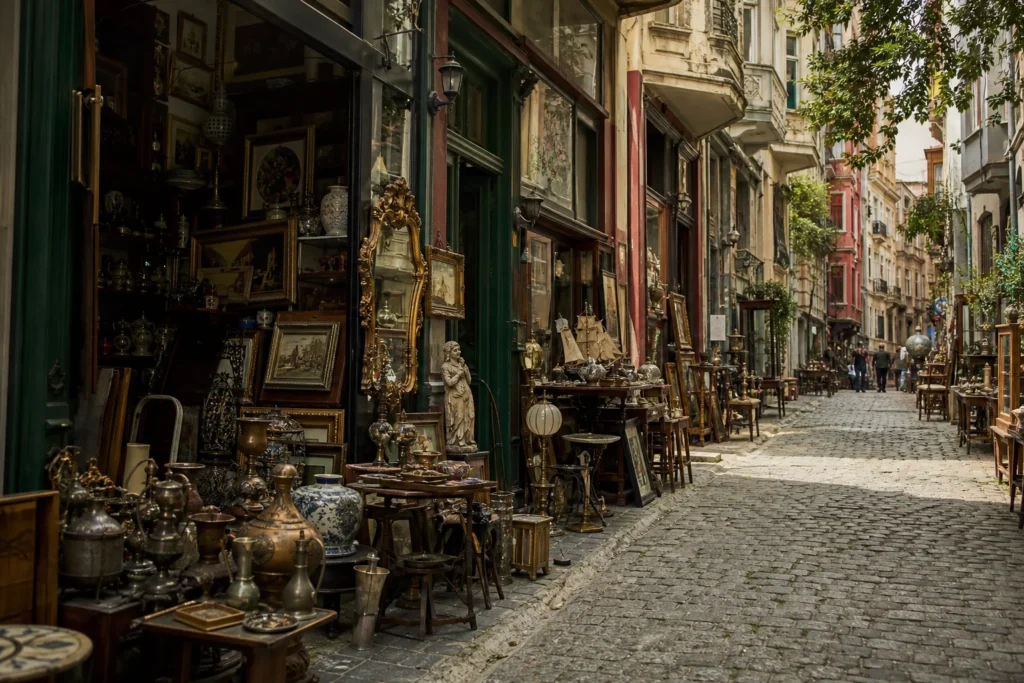

Few neighbourhoods in Istanbul wear their history as openly as Çukurcuma. Tucked into the Beyoğlu district on the city's European side, it sits a short walk downhill from the noise and foot traffic of İstiklal Caddesi. The drop in pace is immediate. Narrow lanes curve around nineteenth-century apartment buildings, crumbling brick stands beside freshly painted shopfronts, and goods spill out of open doorways onto uneven pavements — painted ceramics, wrought-iron hardware, stripped wooden furniture. The effect is less curated market, more living neighbourhood that happens to deal in beautiful old things.
Browsing here works best at a slow pace, without a fixed list. The closer you walk toward İstiklal, the busier the trade becomes, but antique shops cluster at both ends of the main street. Shopkeepers tend to know their stock well and are usually happy to talk through provenance. That willingness turns browsing into something closer to conversation.
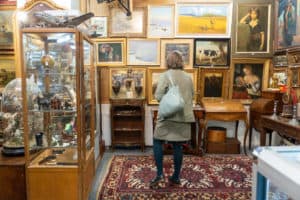
Two shops anchor the district for serious collectors. A la Turca carries one of the most substantial collections of Ottoman-era decorative arts in the city, covering textiles, ceramics, metalwork and furniture. Stock turns over slowly and selectively, so repeat visits often reveal something new. A dedicated listing for A la Turca at https://www.fleamapket.com/listing/a-la-turca/ gives more detail for those who want to research before arriving. Modern Tarih operates at a different scale but with similar depth, displaying objects from Central Asian, African and East Asian traditions alongside Turkish pieces. Tapestries, carved figures and decorative artefacts share space in a way that feels closer to a private museum than a conventional shop.
The district also holds lighter pleasures. Pied de Poule specialises in vintage clothing, chosen with clear personal taste. The atmosphere feels more like a well-edited wardrobe than a commercial rack, and prices reflect that curation. Popcorn mixes directions entirely — vintage electronics and boomboxes sit alongside Ottoman ceramics and antique clocks, an unexpectedly appealing combination that rewards a quick detour.
When the searching slows, Algeria Street inside the neighbourhood offers a natural break. Several cafés and restaurants open onto the pavement, and the spot suits a relaxed pause between shops.
Most shops open Monday to Saturday, roughly 10:00 to 19:00, though individual store hours vary. Sundays are quieter — some shops open, others by appointment only, so it is worth checking ahead before making a Sunday trip specifically for the antiques. Cash is always useful here, though many established shops also accept card. A half-day covers the basics; collectors focused on Ottoman decorative arts or mid-century European pieces often find a full day disappears without effort.
Çukurcuma is straightforward to reach by public transport. The nostalgic tram stop at Galatasaray Lisesi — served by the Taksim–Tünel Nostaljik Tramvay — sits approximately 350 metres from the district and suits visitors already moving along İstiklal. Metro line M2 stops at Şişhane, around 700 metres away, making it the strongest option for connections from further afield. Beyoğlu Station on the F2 light rail line at Tünel offers a third approach, approximately 600 metres out. All distances are approximate straight-line.
Çukurcuma suits collectors hunting Ottoman pieces, vintage clothing buyers with a taste for editorial curation, and curious browsers who prefer a neighbourhood with genuine life over a tidied antique centre. It remains one of the most rewarding slow afternoons available in Istanbul.
Frequently Asked Questions
Q: When is the best time to visit Çukurcuma for antique shopping?
A: Weekday mornings offer the most relaxed browsing. Most shops open Monday to Saturday, roughly 10:00 to 19:00. Sundays are quieter — some shops open, others by appointment only — so confirm ahead if you're making a dedicated Sunday trip.
Q: How long should I set aside for a visit?
A: A half-day is enough to cover the district's main streets and several shops. Collectors with a specific focus — Ottoman decorative arts, mid-century European pieces, or vintage clothing — often find a full day more satisfying, especially if they want time to talk through provenance with shopkeepers.
Q: Should I bring cash, or do shops accept cards?
A: Cash is always useful in Çukurcuma and worth having on hand. Many of the established shops also accept card, but smaller or more informal sellers may be cash only.
Q: What kinds of things can I find here beyond standard antiques?
A: The district has real range. Alongside Ottoman ceramics, metalwork, textiles and furniture, you'll find vintage clothing at Pied de Poule and an unexpected mix of vintage electronics, boomboxes and antique clocks at Popcorn. Modern Tarih adds Central Asian, African and East Asian objects to the mix.
Q: How do I get to Çukurcuma from İstiklal Caddesi?
A: Çukurcuma is a short walk downhill from İstiklal Caddesi in the Beyoğlu district on Istanbul's European side. The drop in noise and foot traffic is noticeable almost immediately once you leave the main street.
Marketplace Highlights







Add a review