


Region
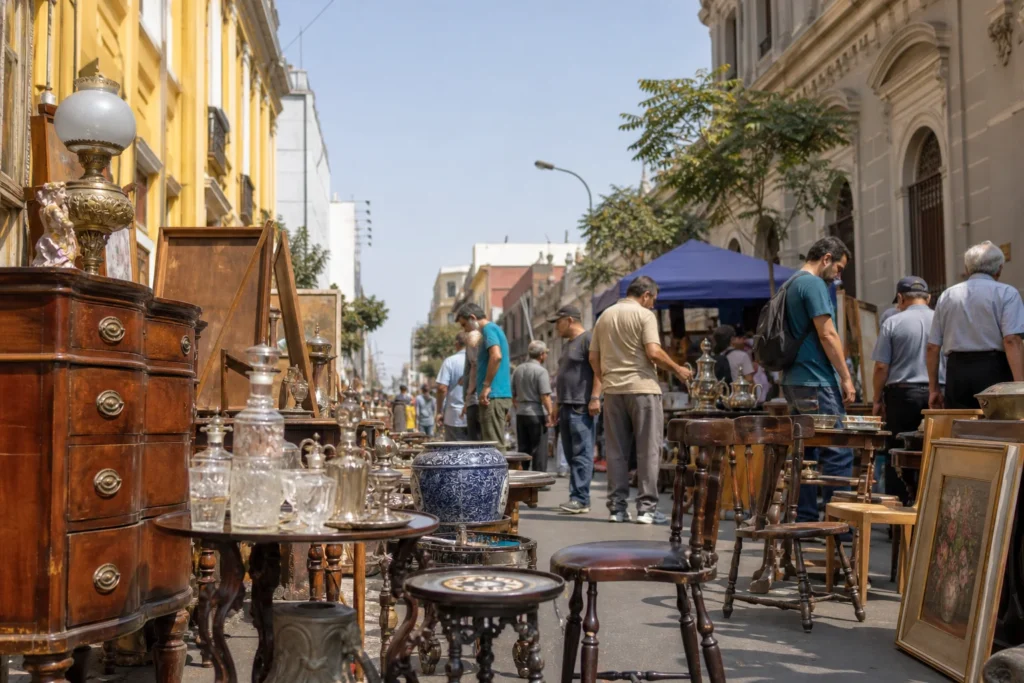
Between two of Miraflores's most distinctive landmarks, Alfonso Ugarte Street quietly hosts one of Lima's most rewarding antique markets. The Feria de Antigüedades San Miguel Arcángel occupies the pavement between the Casa Porras Barrenechea and the La Tarumba circus-workshop every Sunday from 11:00 to 17:00. The setting feels genuinely neighbourly — a serious market that still carries the unhurried rhythm of a Lima Sunday rather than the pressure of a commercial fair.
What separates this feria from a typical street market is the quality of the people running the stalls. Many vendors also operate permanent antique shops elsewhere in Lima, and they bring that professional depth with them. Ask about a piece and you are likely to get a considered answer covering provenance, condition and context. The conversation is part of what makes a visit here worth the time.
The decorative and household objects form the market's most visible layer. Crystal lamps and chandeliers draw the eye first. Biscuit porcelain, vintage glassware, and sets of cups and saucers fill the gaps between them. These pieces range from modest finds to genuinely rare examples, and vendors expect negotiation — prices tend to reflect actual rarity rather than tourist-facing markups, which rewards buyers who do a little research beforehand.
Move deeper into the stalls and the international range opens up in a way that catches most visitors off guard. English silverware sits close to Japanese decorative art. Chinese porcelain shares table space with Danish mid-century seating. That cross-cultural breadth within a single Lima street market is one of the feria's most distinctive qualities, and it gives collectors with a global perspective real reason to look carefully.
Smaller objects provide an entirely different kind of pleasure. Tin Cadillacs, vintage toy collections and old tin lunch boxes surface regularly among the more formal antiques. These pieces offer accessible entry points for buyers who are not yet ready to invest in furniture or significant decorative objects, and they add a lighter, more playful register to the market's overall character.
The atmosphere sits in a useful middle ground. It lacks the intimidation of a formal auction and the curation of a high-end shop, but it offers considerably more expertise than a generic flea ground. The pace is relaxed, the vendors are genuinely engaged, and unexpected finds tend to appear beside entirely expected ones.
The market suits the collector who values expert conversation as much as browsing. It also draws decorators hunting one strong statement piece and visitors who find formal auction settings off-putting. If you want the depth of a specialist dealer without the formality of a showroom, this corner of Alfonso Ugarte Street on a Sunday afternoon is a sound place to spend a few hours.
For visitors arriving by public transport, Estación Ricardo Palma sits approximately 72 to 78 metres from the market. The Embarque 2 platform at that station serves bus lines C, EX2, EX5 and L. The Pardo stop, roughly 268 metres away, adds bus lines 301 and 305 as an alternative. Several further stops cluster within about 300 metres, making Alfonso Ugarte Street straightforward to reach from across the city.
Frequently Asked Questions
Q: When does the Feria de Antigüedades San Miguel Arcángel take place, and where exactly is it?
A: The market runs every Sunday from 11:00 to 17:00 along Alfonso Ugarte Street in Miraflores, Lima, on the pavement between the Casa Porras Barrenechea and the La Tarumba circus-workshop.
Q: What kinds of objects can buyers expect to find here?
A: The stock covers a wide range: crystal chandeliers and lamps, biscuit porcelain, vintage glassware, and sets of cups and saucers sit alongside more surprising international pieces — English silverware, Japanese decorative art, Chinese porcelain, and Danish mid-century furniture. Smaller finds such as tin toy cars, vintage lunch boxes, and toy collections also surface regularly and offer accessible entry points for newer buyers.
Q: Is bargaining expected, and how are prices set?
A: Negotiation is part of the market's culture. Prices generally reflect the actual quality and rarity of individual pieces rather than tourist-facing markups, so arriving with some knowledge of what you are looking for gives you a useful advantage.
Q: How expert are the vendors — can I ask detailed questions about a piece?
A: Many dealers at the feria also run permanent antique shops elsewhere in Lima and bring that professional depth to their stalls. Ask about provenance, condition or history and you are likely to get a considered, specific answer — the conversation is genuinely part of the experience here.
Q: Is this market suitable for first-time antique buyers, or is it geared toward serious collectors?
A: Both find it worthwhile. The relaxed Sunday street setting is far less intimidating than a formal auction or high-end showroom, and the range of smaller, affordable objects means newcomers can browse without pressure. Dedicated collectors come to source specific pieces and talk directly with knowledgeable dealers.
Marketplace Highlights







Add a review