


Region
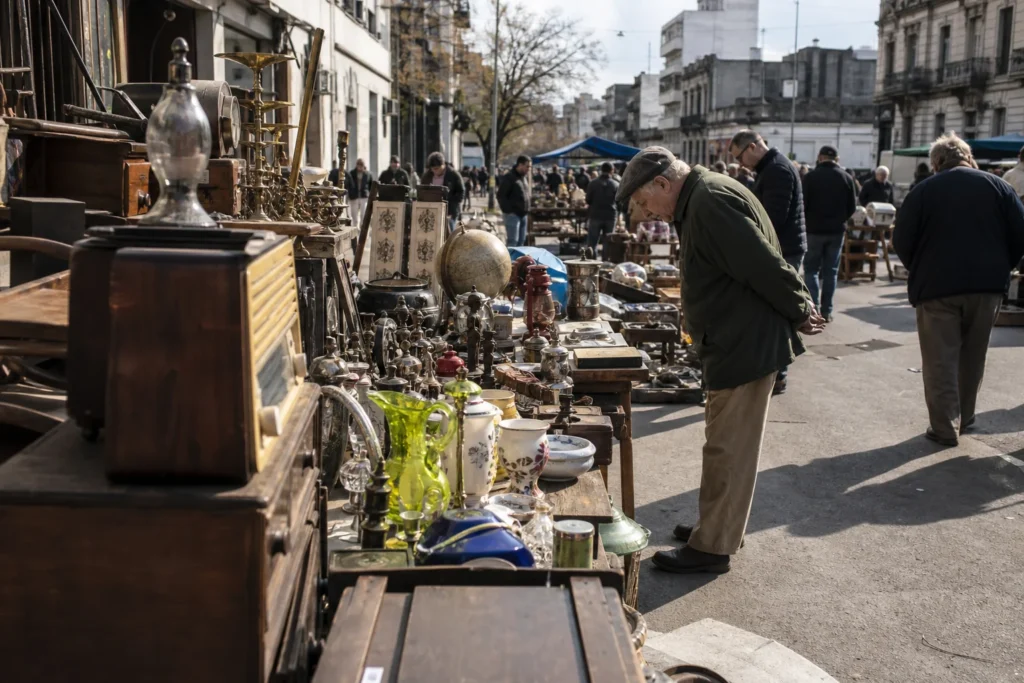
Sunday morning in Montevideo begins on Tristán Narvaja. By seven o'clock the vendors are already out, the street is filling with movement, and the market that has run here since at least 1909 is doing exactly what it has always done. This is not a curated antique fair or a boutique vintage event. It is a full-scale neighbourhood ritual that spills across more than twenty city blocks and runs until three in the afternoon.
The range of what you encounter is genuinely staggering. Fresh produce appears early, grocers stacking out fruit and vegetables while the light is still low. Food stalls crowd the corners, and the smell of something cooking carries down the street before you spot the source. The market has traditionally included caged birds and small animals alongside its other goods — a detail that signals how thoroughly domestic and eccentric this place has always been. Nothing here is arranged for easy consumption.
The strongest reason for collectors to make the trip is rooted in history. From the mid-nineteenth century onward, Uruguay received large waves of European immigrants who arrived with the objects of their former lives — furniture, tools, printed matter, decorative pieces, household goods from central and southern Europe. Those objects have filtered through Montevideo's secondhand market for generations. Feria de Tristán Narvaja is where a significant portion of that material surfaces each week.
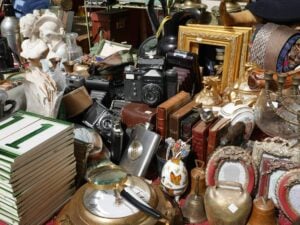
The specific finds reflect that inheritance directly. Antique lamps, early telephones and manual typewriters appear alongside oil paintings, coins, stamps, old posters and historical newspapers. Hand-painted china, decorative glassware and framed prints sit on folding tables in the open air. The European thread running through so much of the stock gives serious collectors a reason to look carefully. Pieces with genuine provenance turn up here with a regularity that would surprise anyone unfamiliar with the city's immigration story.
Beyond the antique material, the market carries vintage and modern clothing, books in Spanish and other languages, small furniture pieces and decorative objects across a wide range of price points. Not everything is rare or old. The depth of the stalls means patient browsing nearly always turns up something worth stopping for, whether you came to buy or simply to look.
Timing shapes the experience considerably. Arriving close to the seven o'clock opening gives shoppers the best access to undisturbed stock before the crowds build through mid-morning. The market rewards a slow pace. One visit rarely covers the full stretch, and regulars return week after week knowing the selection changes each time. Visitors with no intention of buying find the atmosphere alone worth the walk — the noise, the layered mix of people, and the sense of a city's material history spread openly across the pavement.
Feria de Tristán Narvaja suits serious antique collectors, casual browsers and anyone curious about the texture of Montevideo's everyday life. It is the kind of market that stays with you after you leave.
Getting there is straightforward. The Colonia y Gaboto public transport stop sits approximately 85 metres from the market street, making it the most convenient arrival point. Eduardo Acevedo y Colonia and Mercedes y Eduardo Acevedo are both public transport stops within roughly 150 metres. Bus stops at Parada suburbanos and Suburbanos serve the area within approximately 350 metres. Montevideo's public transport network covers this part of the city well, and most visitors arriving by bus or urban service will find themselves close to the market within a short walk.
Frequently Asked Questions
Q: What kinds of antique and vintage finds turn up at Feria de Tristán Narvaja?
A: The collector material here is rooted in Uruguay's European immigration history. Antique lamps, early telephones, manual typewriters, oil paintings, coins, stamps, old posters, historical newspapers and hand-painted china all surface regularly. Objects from central and southern European households have filtered through Montevideo's secondhand market for generations, which gives the stock a depth and specificity unusual for a street flea market.
Q: What time should I arrive, and how long does the market run?
A: Arriving close to 7 am gives you the best access to undisturbed stock before crowds build through mid-morning. The market runs until 15:00. A single visit rarely covers the full stretch of more than twenty city blocks, so arriving early also gives you time to walk it properly.
Q: Is Feria de Tristán Narvaja only for serious collectors, or is it worth visiting as a casual browser?
A: Both find it worthwhile. Serious collectors come for the European antique material; casual visitors come for the atmosphere — food stalls, the noise, the mix of people, and the layered variety of goods from fresh produce to vintage clothing to decorative objects. Not everything on sale is rare or old, and the pace is unhurried enough to reward wandering without an agenda.
Q: How do I get there by public transport?
A: The market is well served by Montevideo's public transport network. The nearest stop is a short walk from the market street. Check current routes before you go, as specific services are best confirmed locally.
Q: Does the market run year-round or only seasonally?
A: Feria de Tristán Narvaja runs every Sunday and has done so since at least 1909. Confirm any exceptional closures directly with local sources before making a special trip.
Marketplace Highlights










Add a review