


Region
Florence Antique Mall is permanently closed. The venue is retained as an editorial archive of the venue and its distinctive character.
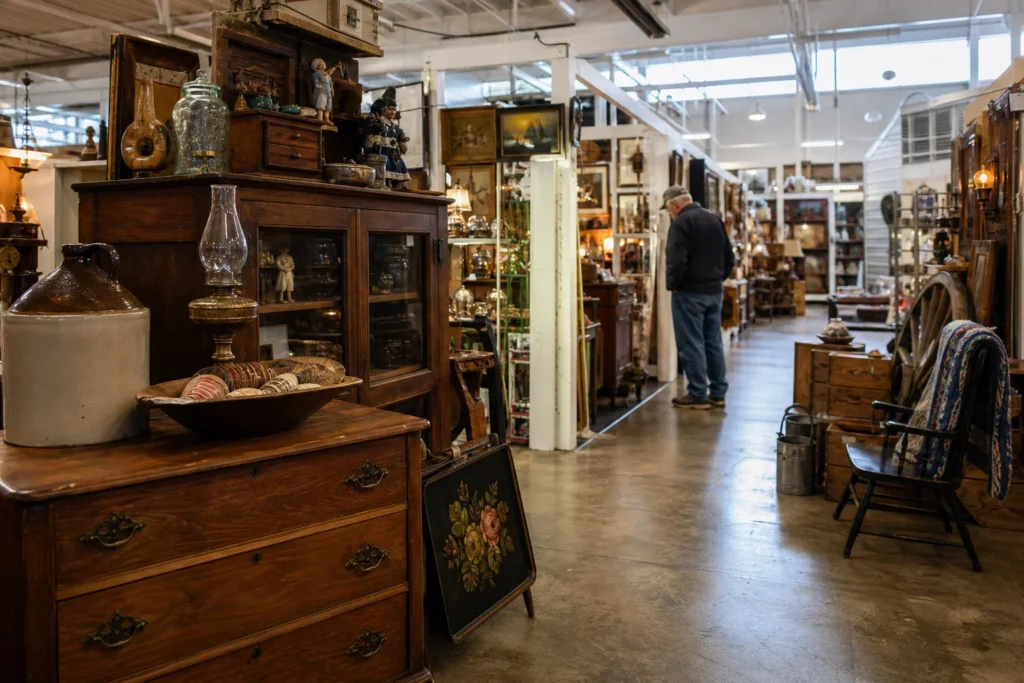
Florence Antique Mall brought together more than 300 individual vendor display areas under one climate-controlled roof in Northern Kentucky. Each area represented a distinct collecting niche, and the cumulative effect was closer to a curated collectors' district than a conventional antiques floor. Serious dealers set up alongside weekend enthusiasts, and the result was a mix that rewarded careful attention at every turn.
The militaria and early Americana holdings were particularly strong. Military medals, Native American artifacts, and early American ephemera drew focused collectors who knew exactly what they were looking for. Nearby, vintage timepieces and antique jewellery occupied their own concentrated corners, while hats and wearables added a more personal, biographical dimension to the browsing experience. These were not generalised mixed lots but genuinely specialist accumulations — the kind that take years to build.
Paper and print offered a different kind of depth. Lithographs, baseball cards, sports memorabilia, and photograph albums filled cases and shelves with decades of documented popular culture. Early telephones, lamps, and linens edged toward domestic history, while paintings and toys occupied the decorative end of the spectrum. Moving between these sections felt less like shopping and more like tracing the material evidence of several overlapping eras at once.
The 50,000-square-foot footprint placed Florence Antique Mall among the largest indoor antique venues in the Midwest. That scale mattered practically as well as symbolically. Visitors could spend a full afternoon inside and still encounter sections they had not yet reached. The climate-controlled interior removed the weather variable entirely, which meant browsing extended naturally without the fatigue that open-air markets can impose. Knowledgeable staff were willing to discuss provenance and period with genuine enthusiasm — a quality that separated the experience from a simple browse through secondhand goods.
The venue drew from a broad geographic catchment. Northern Kentucky sits close to Cincinnati, and the mall served collectors from across the Greater Cincinnati metropolitan area as well as those travelling specifically for antiques. It occupied a recognisable position within a wider Kentucky and Ohio collecting circuit, functioning as a reliable anchor point for those who planned routes around significant venues rather than individual market days.
Antique malls of this scale and merchandise breadth were uncommon anywhere in the Midwest. The combination of specialist vendor depth, an almost encyclopaedic range of categories, and a well-managed shared floor gave Florence Antique Mall a distinctive character. For researchers tracing the Greater Cincinnati antique trade, it represents a significant chapter in the region's collecting history.
Frequently Asked Questions
Q: What kind of antiques and collectibles was Florence Antique Mall best known for?
A: The mall developed particular strength in militaria and early Americana — military medals, Native American artifacts, and early American ephemera drew focused collectors from across the region. Vintage timepieces, antique jewellery, lithographs, baseball cards, sports memorabilia, and early telephones were also well represented, each in concentrated vendor areas rather than scattered through general mixed lots.
Q: How large was Florence Antique Mall, and how many dealers operated there?
A: The showroom spanned more than 50,000 square feet, placing it among the largest indoor antique venues in the Midwest. Over 300 individual vendor display areas filled the floor, each representing a distinct dealer and collecting niche, which meant a full afternoon's browsing still left sections unreached for many visitors.
Q: Was Florence Antique Mall suitable for both specialist collectors and casual browsers?
A: Yes. The density of stock rewarded specialists hunting a particular category — militaria, vintage watches, paper ephemera — with enough concentrated inventory to justify a dedicated trip. At the same time, the sheer variety across categories meant first-time or casual visitors encountered enough range to make the visit genuinely engaging rather than niche.
Q: Is Florence Antique Mall still open?
A: Florence Antique Mall is permanently closed. The venue is maintained as an editorial archive of the venue and its character within the regional antiques collecting circuit.







Add a review