

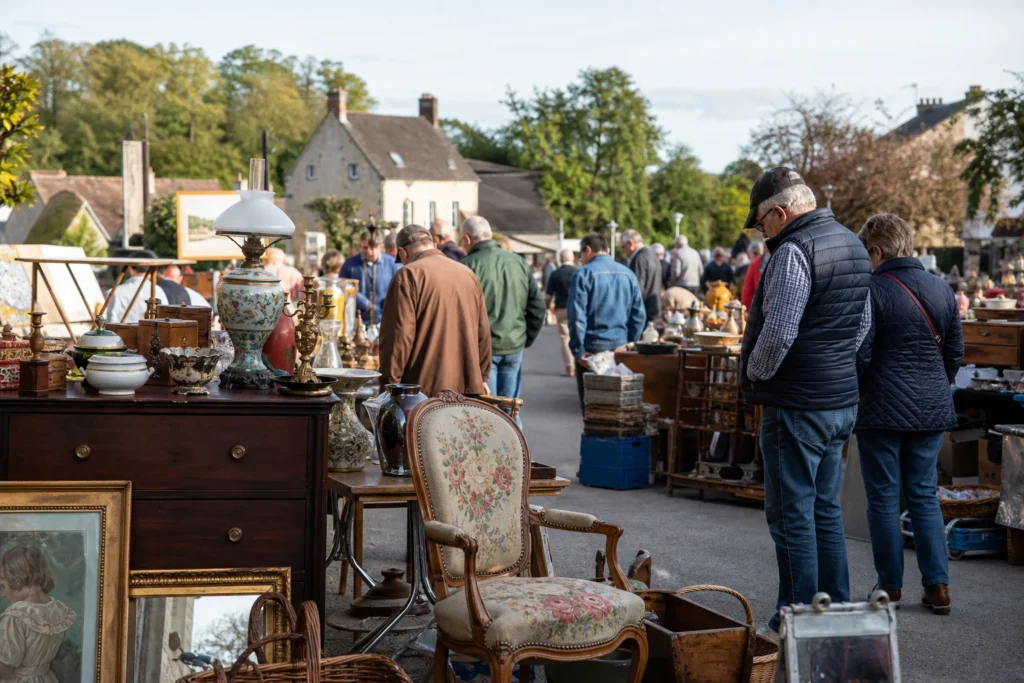

By six in the morning, the first vendors are already setting up along the Route d'Issoudun. The Foire à la brocante de Brion opens at 06:00 on one Sunday in March, and that early start is no accident — serious collectors know the best pieces go before most people have finished breakfast.
The fair takes place in Brion, a small commune in the Indre department of Centre-Val de Loire. Despite its rural setting, it pulls stallholders and visitors from well beyond the immediate area. With more than 300 vendors occupying the site, the fair spreads far enough that a single unhurried pass takes the better part of a day. That scale, in a setting this compact and local, gives the event a distinctive character — genuinely large in stock, without feeling like an urban trade show.
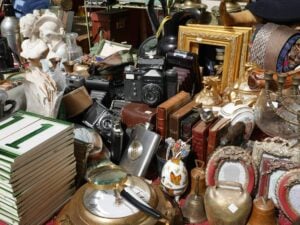
The merchandise splits naturally into two broad worlds. On one side sits the decorative and the wearable: vintage clothing, costume jewellery, fine pieces, accessories, ornaments, chinaware, and glassware. On the other, the practical and the curious: cameras, bicycles, books, old toys, gardening tools, luggage, and occasional items of furniture sturdy enough to strap to a roof rack. Almost every piece is a one-off. The same lamp or leather bag will not appear twice across 300 tables.
Arriving early rewards the prepared visitor. The collector-oriented stock moves fast in the first hours, and experienced vendors often know their neighbours' inventory well enough to redirect you. A clear idea of what you are looking for, combined with a willingness to ask, can cut hours off the search. That said, patient browsers who arrive mid-morning still find plenty worth stopping for — the fair's depth is real.
Refreshment stalls appear at natural intervals across the site. They offer a reason to pause, compare the morning's finds, and decide which rows still need a second look. For visitors who commit to the full day from 06:00 through to the 17:00 close, those breaks give the day a comfortable rhythm.
Reaching Brion most practically means arriving by car. The nearest train station is Neuvy-Pailloux, served by train lines P4 and P104, roughly 13 kilometres from the fair site in straight-line distance. No local bus connection between the station and Brion has been identified, so visitors travelling by rail should plan a taxi or private transfer for the final stretch. Confirming onward options locally before travel is advisable.
The fair suits a wide range of visitors. Dedicated antique hunters appreciate the vendor density and the genuine depth of stock across categories. Those searching for unusual home décor or a one-of-a-kind gift find that brocante's inherently non-repeating inventory works in their favour. Families and anyone new to French flea markets will find the atmosphere relaxed rather than pressured. For a long-running spring fixture that delivers real scale in a properly local setting, the Foire à la brocante de Brion makes a compelling case for an early March morning in the Indre.
Frequently Asked Questions
Q: When does the Foire à la brocante de Brion take place, and what are the opening hours?
A: The fair is held on one Sunday in March each year, opening at 06:00 and running through to 17:00. The exact date shifts from year to year, so check a local events listing or the organiser's page before making the trip.
Q: How big is the fair, and is a full day needed to see it properly?
A: With more than 300 vendors spread across the site, the fair takes the better part of a day to cover at an unhurried pace. Even experienced visitors rarely get around every row in a single pass, so a full day from early morning is the most rewarding approach.
Q: What kinds of goods can I expect to find?
A: The stock spans two broad worlds — collector-oriented pieces such as vintage clothing, cameras, fine jewellery, books and old toys sit alongside more domestic finds like furniture, chinaware, glassware, garden tools and luggage. Because most pieces are one-offs, the same item rarely turns up twice across the whole fair.
Q: Is it worth arriving at the 06:00 opening, or does mid-morning work just as well?
A: Arriving early gives a real advantage. Collector-oriented pieces move fast in the first hours, and experienced vendors often know their neighbours' stock well enough to point you toward what you are looking for. Mid-morning arrivals still find plenty of depth, but the sharpest finds typically go early.
Q: How do I get to Brion, and is public transport practical?
A: Most visitors arrive by car — Brion is a small rural commune in the Indre department and the site is on the Route d'Issoudun. The nearest train station is Neuvy-Pailloux, served by lines P4 and P104, roughly 13 kilometres away. No direct local bus connection has been identified, so rail travellers should arrange a taxi or private transfer for the final stretch and confirm options before setting out.
Marketplace Highlights








Add a review