



Featured
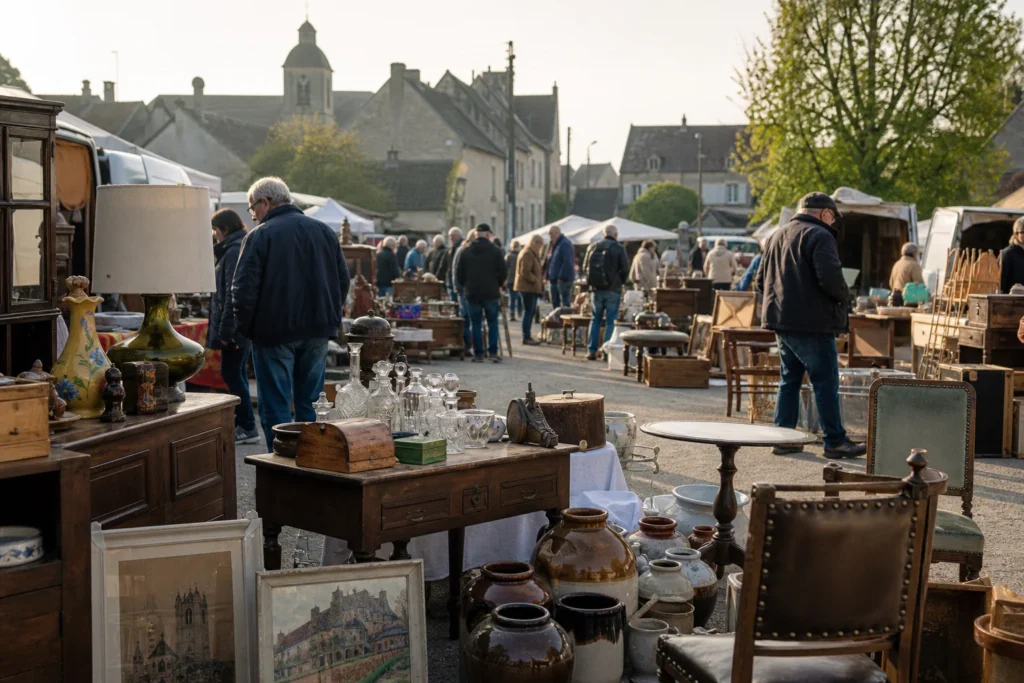
Every year on the second Sunday in March, the gates at Le Plessis-Brion open at six in the morning. Darkness still clings to the Oise countryside, and the first collectors are already moving through the stalls. That single fixed date is the engine behind everything. One day a year, no second chance — and that concentrated pressure gives the Grande Brocante de Le Plessis-Brion an edge most weekly or monthly markets simply cannot match.
The scale rewards the early arrival. Around 350 vendors spread across roughly 2,700 metres of exhibition space, which means serious coverage takes time. The most experienced pickers treat the pre-dawn slot as essential. They work systematically before the crowd thickens, watching what other buyers carry and doubling back through sections that reward a second look. The market runs until 17:00, so there is no need to rush — but the rhythm of a long day, unhurried and methodical, tends to produce the best results.
The vendor mix is one of the event's strongest arguments. Stallholders travel from across France, which explains both the range of stock and the level of specialist knowledge on offer. Antique furniture and mid-century decorative objects draw collectors after statement pieces. Vintage homewares, ceramics and glassware attract a different kind of buyer — patient, detail-focused, looking for the right example rather than the right price. Books, prints and ephemera occupy their own corner of the market. And then there are the genuinely unexpected finds: the oddly specific category piece that only appears when 350 vendors put out their full stock at once.
A village of just over a thousand residents hosting close to 20,000 visitors is a contrast worth pausing on. Le Plessis-Brion sits in the Oise, positioned roughly between Compiègne and Noyon, and its open village setting gives the brocante an unhurried quality that larger urban fairs rarely manage. The stalls are not squeezed into a car park or a convention hall. The space breathes, and conversations between buyers and sellers stay easy and informative. Vendors who specialise want to talk about what they carry, and that market culture feels genuinely established. The event has been running since the 1990s, and the long track record shows in how smoothly the day operates.
Comfortable footwear is not a suggestion here — it is a practical requirement. The exhibition run is generous, and covering it properly means being on your feet for hours. Plan to arrive early, work through the stalls in a loose sequence, and allow the afternoon for revisiting anything that caught your eye in the morning. The closing time at 17:00 gives a full day's scope.
For visitors arriving by public transport, Thourotte station sits approximately 1.1 kilometres away and is served by train line P14. Compiègne, about 7 kilometres distant, is the nearest major interchange — useful for travellers coming from Paris or connecting regional services, with lines C13, C14, K13, K14, P14 and P23 calling there. Local bus access is also possible via the Rue de Longueil stop in Thourotte, served by bus line 668 at approximately 1.2 kilometres from the market.
The Grande Brocante de Le Plessis-Brion suits the collector who plans their calendar around serious brocante days rather than casual Sunday browsing. Its scale, vendor diversity and single-day intensity place it well above the average Oise village fair. For anyone building a northern France brocante itinerary, this second Sunday in March is the date to mark first.
Frequently Asked Questions
Q: When does the Grande Brocante de Le Plessis-Brion take place?
A: The market is held once a year on the second Sunday in March, with gates opening at 6 am and the event running until 17:00. That single annual date is worth noting in your calendar well in advance — it does not repeat.
Q: How large is the market, and is it worth arriving early?
A: Around 350 vendors spread across roughly 2,700 metres of exhibition space, so covering it properly takes several hours. Experienced collectors treat the pre-dawn opening as essential, working through stalls before the main crowd builds. That said, with this many vendors the stalls stay well stocked well into the day.
Q: What kinds of goods and antiques can I expect to find?
A: Stallholders travel from across France, which produces genuine range. Antique furniture and mid-century decorative objects draw one kind of collector; ceramics, vintage homewares and glassware attract another. Books, prints and ephemera have their own corner, and the sheer scale of 350 vendors regularly turns up the kind of oddly specific category piece that only surfaces when this much stock is laid out at once.
Q: How do I get to Le Plessis-Brion without a car?
A: Thourotte station is approximately 1.1 kilometres from the market and is the nearest rail option for visitors arriving by public transport. Confirm current timetables before you travel, as early Sunday services on rural lines can be limited.
Q: What should I know to get the most out of the visit?
A: Comfortable footwear is essential — the exhibition run is generous and covering it properly means being on your feet for hours. A useful approach is to work through sections systematically in the morning, note anything promising, and use the afternoon to double back. The 17:00 closing time gives a full day's scope, so there is no need to rush.
Marketplace Highlights

Flea Market Trip Planner
Visiting Grande Brocante de Le Plessis-Brion? Build your full flea market itinerary
Plan your route by date, distance and market type







Add a review