


Region
Guildhall Antique Fairs is permanently closed. The market is retained as an editorial archive of the venue and its distinctive character.
Guildhall Antique Fairs built its reputation not by planting itself in one place, but by moving. The programme operated as a travelling circuit, carrying curated antique and vintage markets to towns across the United Kingdom and giving each location a periodic event that felt genuinely local. That itinerant logic was the foundation of the whole enterprise — fairs arrived, dealers set up, communities engaged, and then the programme rolled on to the next venue.
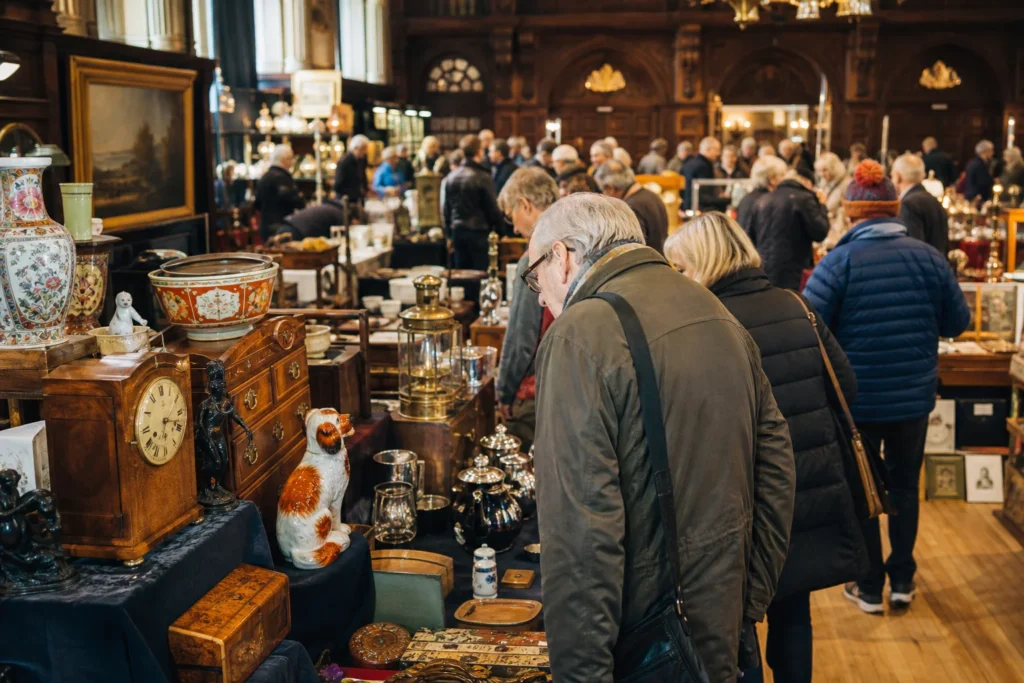
The scale shifted from event to event, and that variation was deliberate. Some Guildhall fairs filled large halls with hundreds of stalls, offering collectors the kind of range that rewards a full day's circuit. Others were intimate gatherings of fewer than sixty vendors, quieter in atmosphere and sharper in focus, where dealers knew their stock in unusual depth and conversation came easily. Neither format was simply a scaled version of the other; each had its own character and suited a different kind of visit.
Part of what made the seller mix interesting was its breadth across experience. Established professional dealers — people who had worked the fair circuit for years — set up alongside newer traders finding their footing. That combination kept pricing honest and stock unpredictable. Buyers who arrived with a specific piece in mind often left with something they hadn't anticipated, while trade buyers scanning for resale stock found enough volume to make the visit worthwhile.
The goods on offer ranged across several distinct collector territories. Period antiques — clocks, decorative ceramics, oil paintings and furniture — formed one strand of the programme. Paper and print collectors found original postcards and antique prints in reasonable supply. Militaria and war memorabilia appeared consistently, drawing a specialist audience with particular expectations. A fourth thread ran through architectural and outdoor pieces: garden furniture, ornamental ironwork and salvage items that appealed to buyers thinking beyond interior decoration. Antique toys gave the programme some of its most vivid individual moments — wooden rocking horses and early playthings carrying the kind of immediate, tactile appeal that photographs rarely convey.
Some events broadened into a fuller day out. Food vendors and occasional live music added texture around the stalls, making attendance feel less transactional and more like a community occasion. Other events kept the atmosphere strictly focused on the antiques, letting the objects lead. Across both formats, Guildhall maintained a consistent curatorial standard. Dealers arrived with well-considered stock rather than simply filling table space, and the organisers held that quality across the programme.
What gave Guildhall its archive value was ultimately the model itself. A mobile fair organiser willing to bring a curated antiques programme to smaller UK towns, rather than requiring collectors to travel to fixed city-centre venues, served a genuinely distributed audience. The programme connected rural and regional buyers with professional dealers on a rotating basis — a community-fair logic that gave antique collecting a more democratic geography than the permanent auction houses and fixed markets alone could provide.
Frequently Asked Questions
Q: What kind of antiques and collectables did Guildhall fairs typically offer?
A: The programme covered a genuinely broad spread. Period pieces — clocks, decorative ceramics, oil paintings and furniture — sat alongside paper and print collectables such as original postcards and antique prints. Militaria and war memorabilia drew a specialist audience, while garden furniture, ornamental ironwork and architectural salvage attracted buyers with outdoor spaces in mind. Antique toys, including wooden rocking horses, gave some events their most memorable individual moments.
Q: Did all Guildhall fairs follow the same format?
A: No — and that variation was deliberate. Some events filled large venues with hundreds of stalls, suited to buyers wanting maximum range in a single visit. Others were intimate gatherings of fewer than sixty dealers, quieter in atmosphere and sharper in focus, where vendors tended to know their stock in unusual depth. Each format had its own character rather than simply being a scaled version of the other.
Q: Was Guildhall Antique Fairs based at a single permanent venue?
A: No. The programme operated as a travelling circuit, moving between towns across the United Kingdom. Each location received a periodic fair that felt genuinely local, rather than the fair being anchored to one fixed site.
Q: Is Guildhall Antique Fairs still operating?
A: Guildhall Antique Fairs is permanently closed. The market is retained as an editorial archive of the programme and its distinctive character.
Marketplace Highlights







Add a review