


Region
On Ward Avenue in Honolulu, two related show formats have been drawing collectors to the same floor since 1991. The Hawaii All Collectors Show runs once a year, typically on the second or third Sunday in July. The Wiki Wiki One Day Vintage Shows fill three more Sundays across the year — in March, September, and November or December. That gives serious buyers four chances annually to find something genuinely hard to source anywhere else.
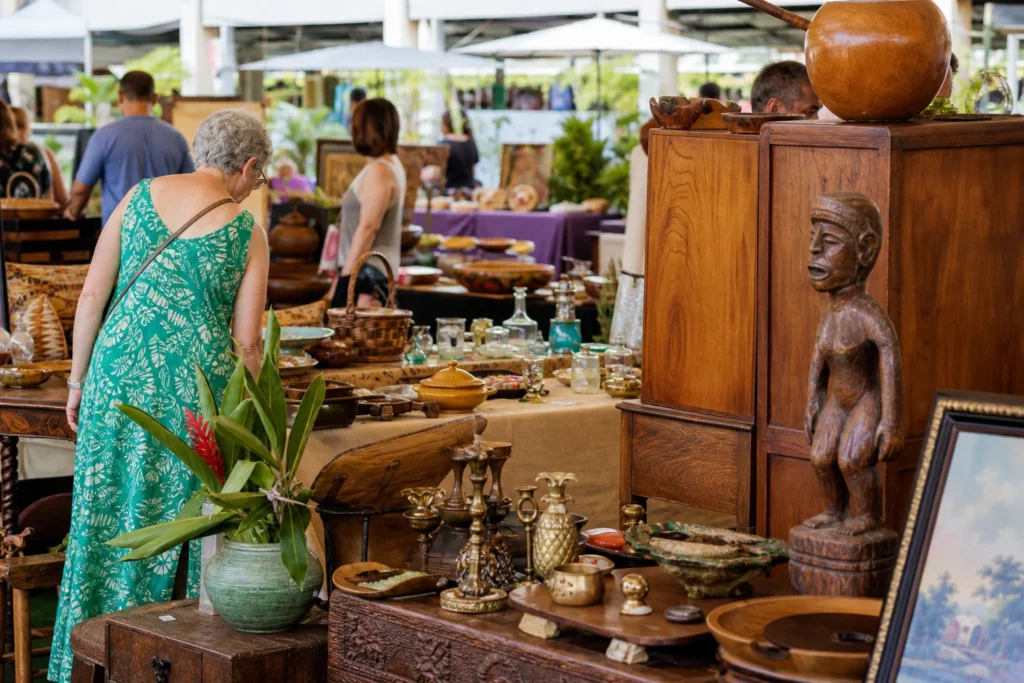
What separates these shows from a typical mainland flea market is the inventory. Koa woodwork, Niihau shell leis, lauhala hats, tiki pieces, and vintage aloha shirts all appear on vendor tables here. Hawaiian monarchy memorabilia surfaces occasionally — items that carry real historical weight and rarely reach the open market in any condition. Traditional ukuleles and Pacific-made objects round out a collecting category that simply does not exist at the same depth outside the Islands.
The floor also draws Pacific Rim collectors with broader interests. Antique jewellery, Chinese and Japanese antiques, stamps, coins, vintage prints, postcards, textiles, tribal art, and beads all find a place here alongside the Hawaiian-specific material. The range is wide enough that most collectors will find at least one corner of the floor that speaks directly to their focus.
Both formats enforce a strict 20-year minimum age rule on everything sold. That single policy keeps the floor honest. Mass-produced reproduction goods and tourist-shop clutter simply do not qualify, and vendors know it. Shoppers can browse with reasonable confidence that the pieces on offer have earned their place. Vendors tend to talk openly about provenance and history, so conversations at the tables often run longer than the transaction itself.
The shows suit a wide range of visitors. Seasoned dealers come hunting for regional pieces unavailable on the mainland. Visitors looking for a meaningful keepsake rather than a generic souvenir find the atmosphere welcoming and the stock genuinely curated. Families can move through at a relaxed pace, and refreshments are available on site. Bargaining is part of the culture, so going in with a clear sense of your interests pays off.
TheBus makes the Ward Avenue venue easy to reach. The stop at Kapiolani Boulevard and Ward Avenue sits approximately 100 metres from the venue and is served by bus routes 3, 13, 40, 51, 52, 53 and 123. A second stop opposite Kamakee Street on Kapiolani Boulevard, roughly 300 metres away, adds express routes A, C and E to that mix. A third stop at Ward Avenue and South King Street, also around 300 metres away, is served by routes 1 and 123. Drivers will find the Ward Avenue address straightforward to reach from central Honolulu.
Frequently Asked Questions
Q: What kinds of items are most distinctive about these shows compared to mainland antique fairs?
A: The Hawaiian-specific inventory sets them apart. Koa woodwork, Niihau shell leis, lauhala hats, vintage aloha shirts, tiki pieces, traditional ukuleles, and Hawaiian monarchy memorabilia all appear on vendor tables — material with genuine regional scarcity that rarely surfaces on the mainland. Pacific Rim collectors will also find antique jewellery, Chinese and Japanese antiques, stamps, coins, vintage prints, postcards, and tribal art alongside the Island-focused pieces.
Q: How does the 20-year age rule affect the buying experience?
A: Both show formats enforce a strict minimum: everything on the floor must be at least 20 years old. That policy filters out reproductions and tourist-shop goods before they reach the tables, so shoppers can browse with reasonable confidence. Vendors tend to discuss provenance openly, which makes conversations at the tables as useful as the browsing itself.
Q: How many times a year do the shows run, and when?
A: There are four shows annually across two formats. The Hawaii All Collectors Show runs once a year, typically on the second or third Sunday in July. The Wiki Wiki One Day Vintage Shows fill three more Sundays — in March, September, and November or December. Check the organizer's official page before you go to confirm exact dates for the current year.
Q: Can I get to the Ward Avenue venue by public transit?
A: Yes. TheBus serves the area well. The stop at Kapiolani Boulevard and Ward Avenue is around 100 metres from the venue and is served by routes 3, 13, 40, 51, 52, 53, and 123. Express routes A, C, and E stop a little further along Kapiolani Boulevard opposite Kamakee Street, and routes 1 and 123 also stop at Ward Avenue and South King Street.
Q: Is this event worth attending for a visitor rather than a dedicated collector?
A: Yes, particularly for anyone interested in Hawaiian culture or Pacific history. The 20-year minimum keeps the floor curated, the pace is relaxed, and refreshments are available on site. Families move through comfortably. For visitors wanting something culturally grounded rather than a generic souvenir, the inventory here is genuinely hard to replicate anywhere else. An entrance fee applies, so factor that into your plan.
Marketplace Highlights







Add a review