



Featured
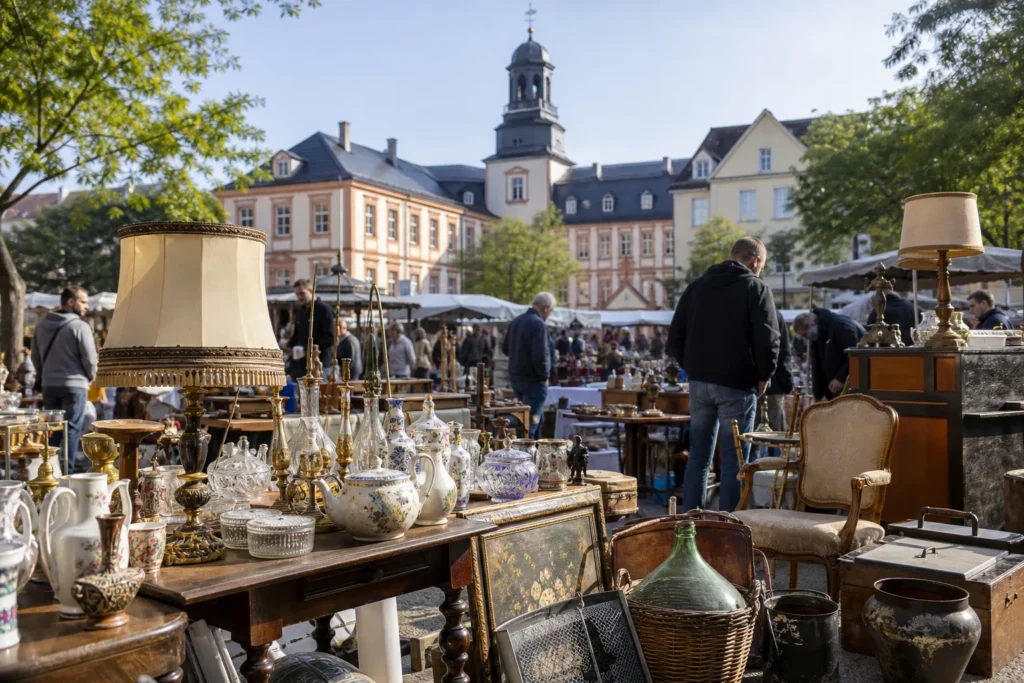
Once a month, on the first Saturday, an ordinary German town centre becomes something else entirely. Stalls spill out from the square around the town hall, swallow the nearby parking lots and push into green spaces across central Homburg. By 08:00, up to 1,500 vendors have taken their positions. The transformation the Homburger Flohmarkt performs has been repeating since 1975, making it one of the most enduring open-air markets in southwest Germany.
The market covers a serious amount of ground. Serious enough that approaching it without a plan means missing whole sections. Vendors from across Germany arrive early, claim their pitches and arrange goods that often require two passes to take in properly. The first pass filters; the second is where decisions happen. Anyone who arrives at 09:30 expecting the same experience as the 08:00 crowd will be disappointed. The best pieces move fast, and some vendors begin packing down well before 16:00.
The stock here has real range and genuine depth. WW1 and WW2 militaria turn up regularly, drawing dedicated collectors who know what they are looking at. Crates of vinyl records, demijohns, and pre-war glassware sit alongside mid-century furniture and stacked china. Silverware, old crockery and boxes of books form the reliable backbone of the market. The variety reflects the distance vendors travel to be here. Homburg sits close to the French border, and the market carries a cross-border character — goods from both sides of the Saarland frontier appear regularly, which gives European antique collectors a specific reason to make the trip rather than staying closer to home.
Price tags are mostly handwritten. Bargaining is informal and common. Many vendors with international stock communicate comfortably across language barriers, though a few German phrases help when haggling at a stall piled with unlabelled finds. Cash is essential — vendors here do not take cards, and nearby ATM access can be limited. Bring enough before you arrive. A bag with structure, or a small folding trolley, will earn its place if heavier furniture or multiple boxes catch your eye.
The Homburg Forum bus stop sits approximately 50 metres from the market site, served by bus lines 501, 507, 508 and R14. A short distance further, Homburg (Saar), Talstraße offers broader connections including lines 501, 505, 507, 508, 511, 512, 551, N2, R7 and R14 — a useful option for visitors arriving from further afield. All services are bus routes; there is no direct tram or rail stop at the market itself.
The Homburger Flohmarkt suits collectors who want scale over curation — people hunting specific categories like militaria, vinyl or European antiques rather than browsing a curated boutique selection. Its founding year, the consistent vendor count and its location on the Franco-German edge of the Saarland give it a character that smaller regional markets rarely match. A single visit tends to leave at least one section unexplored, which is a fair reason to come back.
Frequently Asked Questions
Q: When does the Homburger Flohmarkt take place?
A: The market runs on the first Saturday of each month. Stalls are set up and trading by 08:00, and some vendors begin packing down before 16:00, so an early arrival makes a real difference.
Q: How big is the market, and what kinds of things can I expect to find?
A: With up to 1,500 vendors spreading across the town hall area, nearby parking lots and green spaces, this is one of the largest open-air flea markets in southwest Germany. Stock ranges from WW1 and WW2 militaria, crates of vinyl records and demijohns through to mid-century furniture, silverware, pre-war glassware and stacked books. The mix shifts each month, and the cross-border location near the French frontier means goods from both sides of the Saarland boundary appear regularly.
Q: Do I need to bring cash?
A: Yes — vendors at the Homburger Flohmarkt work cash-only, and nearby ATM access can be limited on market days. Come well-stocked before you arrive. A structured bag or small folding trolley is also worth bringing if heavier furniture or multiple boxes catch your eye.
Q: How do I get there by public transport?
A: The Homburg Forum bus stop is roughly 50 metres from the market and is served by lines 501, 507, 508 and R14. For broader connections, Homburg (Saar), Talstraße is a short walk further and adds lines 505, 511, 512, 551, N2 and R7. There is no direct tram or rail stop at the market itself. Check current timetables before you travel.
Q: Do I need to speak German to shop here?
A: It helps at the margins — handwritten price tags and informal haggling are part of the experience, and a few phrases go a long way at unlabelled stalls. That said, many vendors with international stock are well practised at communicating across language barriers, and it is far from a barrier to a productive visit.
Marketplace Highlights

Flea Market Trip Planner
Visiting Homburger Flohmarkt? Build your full flea market itinerary
Plan your route by date, distance and market type






Add a review