

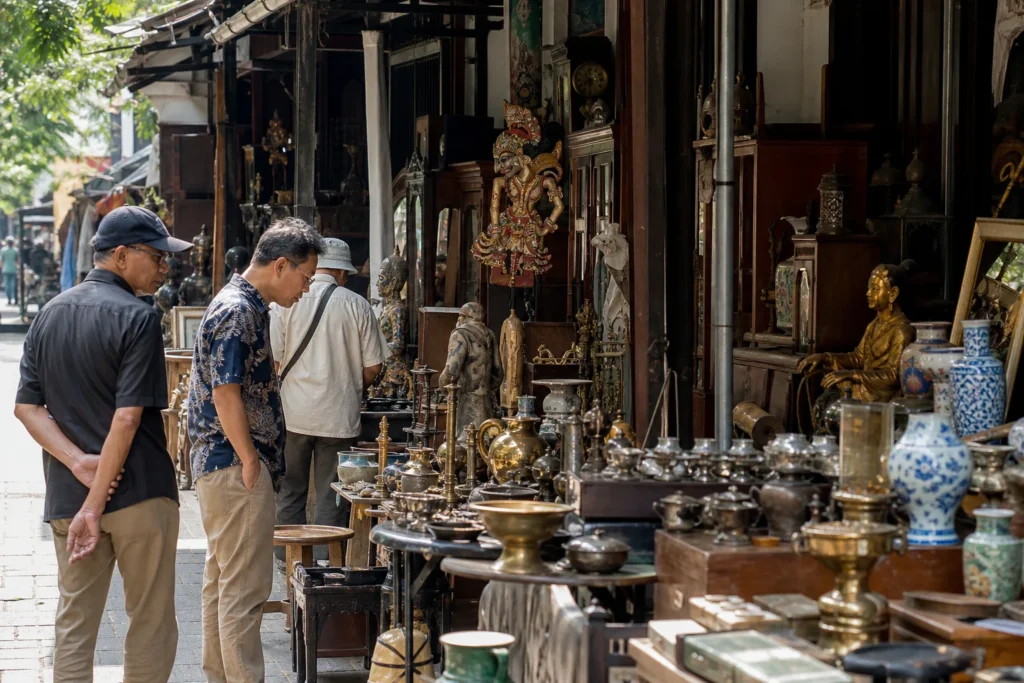

Every morning by nine, Jalan Surabaya wakes up. Vendors lift shutters, arrange glass cabinets and set objects out onto pavements along a compact stretch of road in Menteng, one of Central Jakarta's most quietly composed residential districts. The market runs daily from 09:00 to 17:00, and with more than 150 shops and stalls lining the street, it is less a passing curiosity than a full destination. The neighbourhood lends it a certain temperament — unhurried, slightly formal, with a residential calm that keeps the atmosphere closer to a collector's quarter than a tourist bazaar.
The most historically resonant material here reflects the archipelago's centuries as a trading crossroads. Dutch colonial objects — old coins, silverware, porcelain, chandeliers — appear across multiple stalls, sometimes in surprisingly complete condition. Alongside them, nautical hardware surfaces with a frequency that feels almost deliberate: portholes, diving helmets and maritime fittings that speak directly to the sea-trading history that shaped Indonesia. For an antique market of this size, the depth of maritime material is genuinely unusual and gives Jalan Surabaya a clear edge over more generalist antique streets in the city.
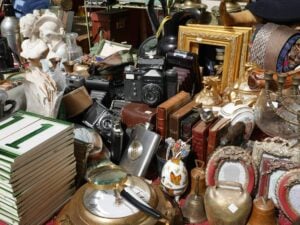
A separate stratum runs through the market that rewards browsers who care less about colonial provenance and more about mid-century design. Vintage cameras sit beside rotary telephones; worn leather luggage shares shelf space with vinyl records and record players. These pieces draw design-minded visitors and casual collectors who may not know exactly what they want but recognise something worth picking up when they see it.
Alongside the imported and colonial material, Indonesian heritage pieces carry real weight here. Javanese shadow puppets, hand-painted and made for use rather than display, appear throughout the stalls. Batik cloth and hand-carved wooden objects fill the gaps. For visitors seeking a souvenir with genuine cultural depth, Jalan Surabaya offers far more than the typical tourist market manages.
The market opens daily, but the morning hours are the practical sweet spot. Jakarta's heat builds quickly, and arriving early keeps the experience comfortable and the light good for examining detail work on smaller pieces. Allow at minimum a few hours — the street rewards slow attention, and vendors are generally open to conversation. Some English is spoken along the strip; a few words of Bahasa Indonesia go a long way with sellers whose stock is worth talking about.
Getting here by public transport is straightforward. DPD Golkar station sits approximately 150 metres away and serves both Train line B and bus lines 5M, 6H, JAK010A, JAK010B, JAK10A and JAK10B, making it the natural primary access point. RS Mata Menteng bus stop is about 220 metres away and is served by bus lines 5M, JAK010A, JAK010B, JAK10A and JAK10B — a close alternative if you are arriving from a different direction. Both distances are approximate straight-line distances.
Jalan Surabaya suits serious collectors chasing Dutch colonial silver or rare maritime hardware, design browsers drawn to mid-century cameras and records, and culturally curious travellers who want Indonesian pieces with genuine provenance rather than mass-produced replicas. What distinguishes the street is the combination of daily availability and genuine historical range — a market you can visit on any morning of the week and still find something that requires a second look.
Frequently Asked Questions
Q: What kinds of antiques and vintage items can I find at Jalan Surabaya?
A: The market covers a wide material range across roughly 150 shops and stalls. Dutch colonial objects — coins, silverware, porcelain and chandeliers — sit alongside nautical hardware including portholes and diving helmets. A mid-century layer runs through the market too: vintage cameras, rotary telephones, vinyl records, record players and worn leather luggage. Indonesian heritage pieces, including Javanese shadow puppets, batik cloth and hand-carved wooden objects, appear throughout.
Q: When is the best time of day to visit?
A: The market opens daily at 09:00 and the morning hours are the practical sweet spot. Jakarta's heat builds quickly through the day, so arriving early keeps the visit comfortable and gives better light for examining smaller pieces and detail work. The earlier hours also tend to feel calmer before midday crowds build.
Q: How much time should I allow?
A: A few hours is a realistic minimum if you want to cover the street properly — stopping to examine pieces, ask questions and negotiate. The market rewards slow attention rather than a quick pass-through, and with 150-plus shops, rushing means missing things.
Q: How do I get there by public transport?
A: DPD Golkar station is the closest access point, approximately 150 metres from the market, and is served by Train line B as well as several bus lines including 5M, 6H, JAK010A, JAK010B, JAK10A and JAK10B. RS Mata Menteng bus stop is around 220 metres away and serves lines 5M, JAK010A, JAK010B, JAK10A and JAK10B. Check current schedules locally before travelling.
Q: Do vendors speak English?
A: Some English is spoken along the strip. A few words of Bahasa Indonesia are worthwhile — sellers with genuinely interesting stock tend to respond well to visitors who make the effort, and conversation is often how you learn what a piece actually is.
Marketplace Highlights







Add a review