


Region
Junk Bonanza Vintage Market Portland is permanently closed. This listing is retained as an editorial archive of the venue and its distinctive character.
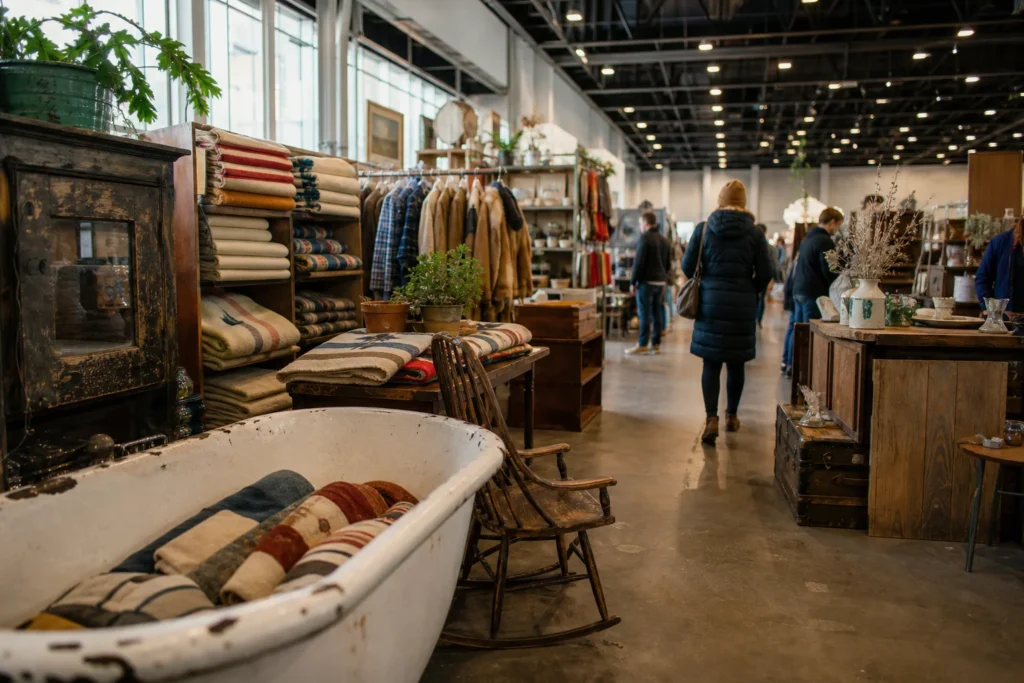
Junk Bonanza Portland was a curated indoor vintage market that brought a distinctive Twin Cities sensibility to the Pacific Northwest. It ran annually at the Oregon Convention Center, a large modern venue sitting just east of downtown Portland, and drew vintage collectors from across the region for a day of serious browsing in a well-organized, weatherproof setting.
The event grew out of a Minneapolis tradition founded by Ki Nassauer, editor of Flea Market Style magazine. What began as a small garage sale concept evolved into a twice-yearly Minneapolis institution with a strong curatorial identity. The Portland edition arrived as a deliberate West Coast extension — a single annual event that introduced the Junk Bonanza format to a Pacific Northwest audience already deeply interested in vintage and salvage culture.
The Oregon Convention Center gave the market a practical edge that outdoor shows in the region rarely enjoyed. Pacific Northwest weather being what it is, the covered venue meant shoppers could concentrate entirely on the goods rather than the sky. Wide aisles kept the space from feeling crowded even at peak attendance, and the convention center's proximity to Portland's MAX light rail made it genuinely easy to reach from across the city.
Around fifty vendors filled the exhibit hall at each edition, and the lineup held together because the rules were strict. No reproductions were permitted. Any handmade items had to incorporate primarily vintage or recycled materials. That policy shaped the entire atmosphere — vendors weren't simply selling old things, they were presenting them as part of a considered collection. Each stall reflected an individual aesthetic, which gave the show an exhibition-like quality rather than the loose sprawl of a typical flea market.
The merchandise ranged widely but coherently. Everyday vintage wear — flannel shirts, mid-century kitsch, retro housewares — sat alongside more elevated finds: European furniture, fine linens, and decorative antiques. The mix rewarded both the casual browser and the focused collector who arrived with a specific gap to fill.
Beyond the shopping floor, the event built in programming that kept the atmosphere relaxed and social. Raffles ran through the day, and meet-the-author sessions and interactive photo opportunities — including a wall assembled from old game boards — gave the market a personality that extended past the transaction. Vendors tended to be knowledgeable and genuinely engaged with the objects they sold, which made conversations part of the experience.
In the broader landscape of Pacific Northwest vintage markets, Junk Bonanza Portland stood out for one consistent reason: its editorial foundation. Ki Nassauer's background in vintage media gave the event standards that most shows of its size did not attempt. The no-reproductions rule, the handmade-with-vintage requirement, and the hand-picked vendor selection all pointed back to a genuine point of view about what curated vintage should look like. That seriousness of purpose was what distinguished it.
Frequently Asked Questions
Q: What kind of vendors and merchandise did Junk Bonanza Portland feature?
A: Around fifty vendors filled the Oregon Convention Center's exhibit hall at each edition. The lineup covered a wide but coherent range — everyday vintage wear and mid-century kitsch on one end, European furniture and fine linens on the other. Reproductions were strictly prohibited, and any handmade goods had to incorporate primarily vintage or recycled materials, which gave every stall a curated, exhibition-like character.
Q: Was the event suitable for serious collectors as well as casual browsers?
A: Yes. The no-reproductions policy and strong vendor curation made it genuinely useful for focused collectors hunting specific pieces, while the relaxed atmosphere, wide aisles, and social programming — raffles, meet-the-author sessions, and photo installations — made it equally welcoming for casual vintage enthusiasts.
Q: Why was the Oregon Convention Center chosen as the venue?
A: The indoor setting was a deliberate practical advantage in a region where weather is unpredictable. Shoppers could browse without watching the sky, and the convention center's wide aisles kept the floor comfortable even at peak attendance. It sat just east of downtown Portland with access to the MAX light rail network.
Q: Is Junk Bonanza Portland still running?
A: No. The Portland edition is permanently closed. This listing is retained as an editorial archive of the event and its character. The parent Junk Bonanza series originated in Minneapolis — check current sources for any active editions elsewhere.
Marketplace Highlights








Add a review