

Region
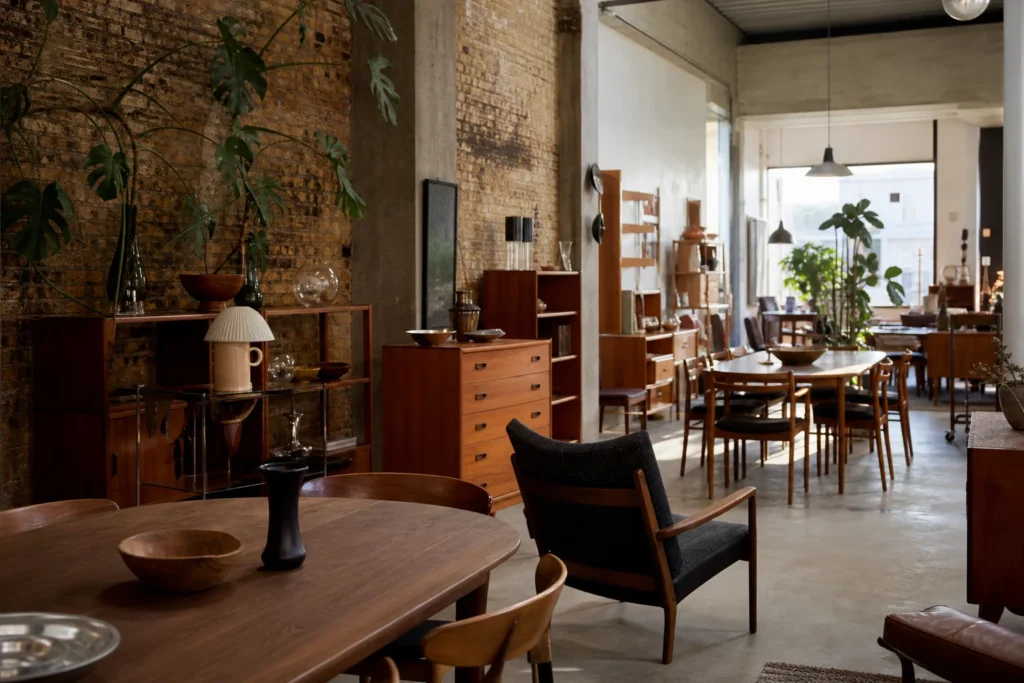
At Bredgade 3, a short walk from the inner harbour, Klassik has earned its reputation the slow way. Since the early 1990s this has been Copenhagen's most dependable address for Danish mid-century furniture — not replicas, not approximations, but original pieces and expertly restored classics handled by people who clearly know the difference. The shop communicates that seriousness the moment you step inside: the space is calm, the arrangement unhurried, and nothing competes for attention in a way that feels accidental.
The marquee names are all here. Hans Wegner, Arne Jacobsen, Finn Juhl and Børge Mogensen appear regularly, as you would expect from any serious dealer in this field. What sets Klassik apart is the depth behind those names — a consistent rotation of lesser-known designers who shaped the period without ever becoming household references. That breadth is what makes the shop genuinely interesting to collectors rather than just legible to tourists.
The stock falls into three distinct tiers, and the distinction matters depending on why you are buying. Original vintage pieces carry their full provenance and patina intact. Professionally restored examples bring worn or structurally compromised furniture back to working life without cutting corners. Then there is Klassik Studio, the in-house line that revives historical designs using period-correct techniques and materials. For a collector, the difference between these categories is everything. For someone furnishing a home with intention, it shapes budget, expectation and long-term value.
Restoration at Klassik is done in-house by craftspeople who treat each piece as an object worth taking seriously. Nothing is hurried or cosmetically masked. The staff work the floor the same way: present when useful, invisible when not. The atmosphere feels closer to a working design archive than a conventional shop, which is exactly right for what the place sells.
The Roxy Klassik Showroom in Amager operates on a different logic entirely. Bookings are required, and that format is a genuine editorial advantage. A converted warehouse arranged at domestic scale gives buyers the space to see how pieces actually live together — chairs around a table, a sofa in a room, storage in context. Interior designers and serious buyers who need time and scale rather than a high-street browse will find this format particularly valuable. The main Bredgade shop opens Monday to Friday from 11:00 to 18:00 and Saturday from 10:00 to 16:00, and is closed on Sundays. The Roxy showroom requires a separate appointment.
Getting to Bredgade 3 is straightforward from most parts of Copenhagen. Kongens Nytorv station, served by Metro lines M3 and M4, sits approximately 250 metres away and makes a natural starting point for visitors arriving from the city centre or the airport. Bus 23 stops at Dronningens Tværgade around 200 metres from the door, useful for journeys across the inner districts. Visitors combining Klassik with a waterfront itinerary can also reach the area via the Nyhavn ferry stop, roughly 500 metres away, served by ferry lines 991 and 992.
Klassik suits collectors chasing specific pieces, design professionals sourcing for projects, and anyone curious about why Danish furniture from this era still commands serious attention worldwide. It is not a flea market and does not try to be — but for anyone tracing where well-made objects end up, this is one of Copenhagen's most reliable stops.
Frequently Asked Questions
Q: What is the difference between the original vintage pieces, the restored stock and Klassik Studio?
A: Original vintage pieces retain their full provenance and patina as found. Professionally restored examples have been brought back to working condition in-house by craftspeople — nothing cosmetically patched or rushed. Klassik Studio is the in-house collection that revives historical Danish designs using period-correct techniques and materials. If you are buying as a collector, that distinction shapes value and authenticity significantly. If you are furnishing a home, it shapes budget and expectation.
Q: What is the Roxy Klassik Showroom and do I need an appointment?
A: The Roxy Klassik Showroom in Amager is a separate location operating in a converted warehouse. Yes, a booking is required — it does not operate as a walk-in shop. The appointment format gives you the space to see complete furniture arrangements at domestic scale, which makes it far easier to assess how pieces actually live together. It suits interior designers and serious buyers who need time and room that a high-street floor cannot provide.
Q: When is the Bredgade shop open?
A: The main shop at Bredgade 3 opens Monday to Friday from 11:00 to 18:00 and Saturday from 10:00 to 16:00. It is closed on Sundays. Confirm current hours on Klassik's official site before visiting, particularly around public holidays.
Q: Which designers does Klassik stock regularly?
A: Hans Wegner, Arne Jacobsen, Finn Juhl and Børge Mogensen appear consistently, as you would expect from a serious mid-century dealer. What makes the shop particularly interesting for collectors is the rotation of lesser-known designers who shaped the Danish furniture period without ever becoming household names — pieces that reward a more patient and knowledgeable eye.
Q: How do I get to the Bredgade shop by public transport?
A: Kongens Nytorv Metro station, served by lines M3 and M4, is approximately 250 metres from Bredgade 3 and is the most convenient approach from most parts of Copenhagen.
Marketplace Highlights









Add a review