

Region
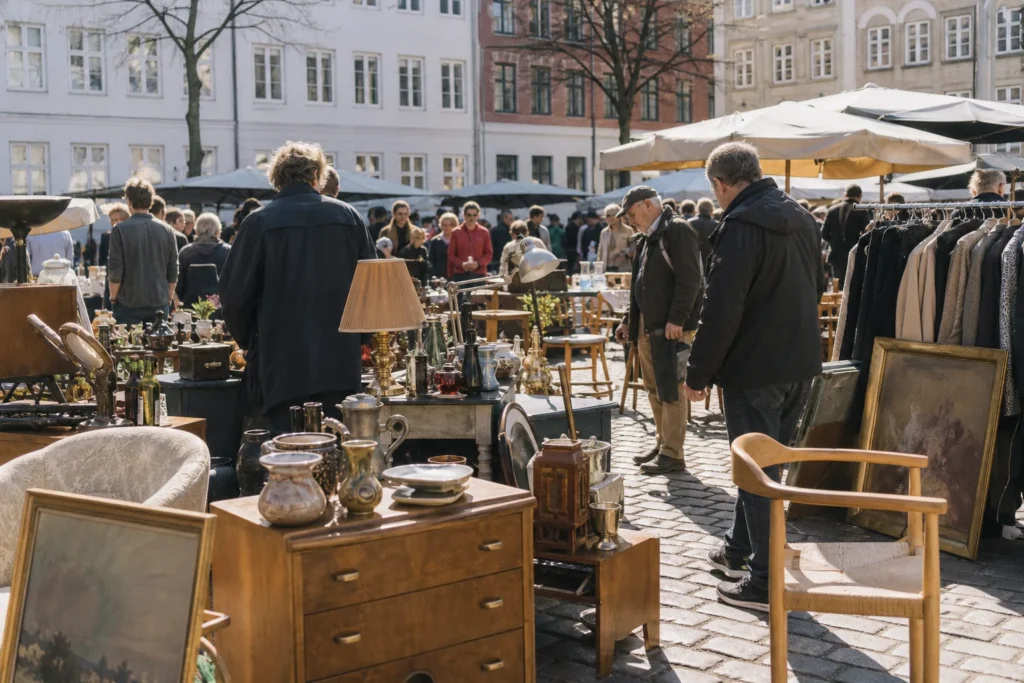
On a Saturday morning at Israels Plads, the city feels like it has slowed down just enough. Stalls spread across the open square, vendors arrange their finds, and a steady stream of Copenhageners begins working through the rows. This is Københavns Loppetorv — a weekly market that has occupied this central square since 1976, when an antique and fine art dealers' association established it as a curated trading ground. Nearly five decades later, it still carries that founding character, even as it has grown into something far more eclectic.
The market runs every Saturday from 11:00 to 16:00, through the warmer months from March into autumn. The Israels Plads location puts it at the heart of central Copenhagen, with excellent onward connections in every direction. The open-air setting suits the pace of the market well — unhurried, sociable, and easy to navigate without a plan.
The stall mix rewards a slow circuit. Some vendors bring goods with clear collector intent: ceramics with age on them, vintage audio equipment, instruments, and furniture that has earned its wear. These stalls reflect the market's antique-dealer origins and tend to run deeper in quality than you might expect from a neighbourhood flea market. The provenance isn't always documented, but the selection is considered. Nearby stalls shift register entirely — books, toys, lamps, bicycles, electronics, and the kind of useful everyday objects that change hands without ceremony.
Clothing and accessories carry a strong presence across the market. Women's vintage and secondhand pieces appear at multiple stalls, and Københavns Loppetorv organises themed Saturdays with a specific focus on clothing. These sessions draw a regular crowd and reward shoppers who arrive with intent. The focused format lifts the clothing offer above ordinary jumble-sale browsing.
The market operates under a "Make Green Sense" ethos, positioning circular commerce as both practical and social. Copenhagen has a genuinely strong culture of conscious consumption, and Københavns Loppetorv fits that culture without advertising it loudly. Goods find new owners, the format is simple, and the weekly ritual carries on.
The market suits several kinds of visitors well. Collectors hunting ceramics, records or vintage audio will find stalls worth lingering over. Vintage clothing shoppers benefit most from the themed Saturday sessions. Tourists looking for a non-staged window into Copenhagen life will find the atmosphere honest and the scale manageable.
Getting here is straightforward. Nørreport station sits approximately 180 metres away and connects Metro lines M1 and M2 with S-tog and light rail lines A, B, Bx, C, E and H, as well as several regional train services. Bus stop Nørreport St., approximately 100 metres from the square, serves routes 6A, 14, 15E, 150S, 184, 185 and 350S. Few markets in Copenhagen are this easy to reach by public transport, which adds to its appeal as a reliable Saturday fixture for locals and visitors alike.
Frequently Asked Questions
Q: When does Københavns Loppetorv run, and how long does it last each week?
A: The market runs every Saturday from 11:00 to 16:00, from March through the autumn months. Four hours is a comfortable window for a full circuit, though serious hunters tend to arrive closer to opening.
Q: What kinds of goods are worth looking for here?
A: The stall mix is genuinely layered. Some vendors bring ceramics, vintage audio equipment, instruments and old furniture that reflect the market's antique-dealer origins — these stalls tend to run deeper in quality than a standard flea market. Alongside them you will find books, lamps, clothing, bicycles and everyday secondhand objects. Vintage clothing and accessories have a strong presence across multiple stalls.
Q: Are there specific Saturdays that focus on clothing?
A: Københavns Loppetorv organises themed Saturdays with a concentrated clothing focus. These sessions draw a regular crowd and reward shoppers who arrive with intent. Check the organiser's official channels before you go to confirm upcoming themed dates.
Q: How easy is Israels Plads to reach by public transport?
A: Very straightforward. Nørreport station is around 180 metres away and connects Metro lines M1 and M2 with S-tog, light rail and regional train services. A bus stop approximately 100 metres from the square serves several routes including lines 6A, 14, 15E and 150S.
Q: Does the market run year-round?
A: No — Københavns Loppetorv operates seasonally through the warmer months, broadly March into autumn. Confirm the exact closing date for the current season via the organiser's official page before planning a late-season visit.
Marketplace Highlights








Add a review