

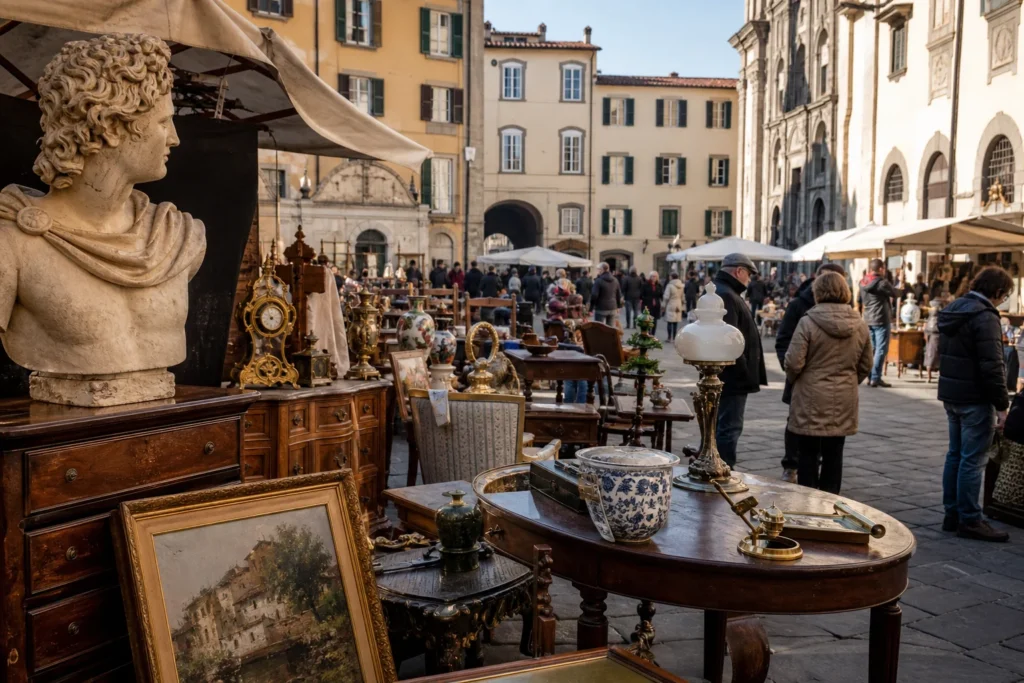

Six piazzas, a web of medieval lanes, and over two hundred dealers at peak season — the Mercatino dell'Antiquariato a Lucca is one of the most physically expansive antique markets in Tuscany. Stalls stretch from Piazza San Martino and Piazza Antelminelli through Piazza San Giovanni, Piazza San Giusto, Piazza Bernardini and Via del Battistero, filling the historic core with furniture, objects and ephemera pressed up against stone walls that are, in many cases, older than the market's oldest stock.
The market runs on the third weekend of the month, Saturday and Sunday from 09:00 to 19:00. Both days are worth attending, but Sunday tends to be the stronger of the two. Dealers are more fully set up, the range runs deeper, and the crowd moves at a more considered pace. The event has reportedly been running since the 1970s, and that history shows in the trade. Most vendors are Tuscan professionals who know their inventory and their prices. Serious buyers travel from across Italy to work these stalls, and a proportion come from further afield.
The large-scale pieces dominate first impressions. Carved wooden cabinets and marble-topped console tables occupy the wider pitches. Wrought-iron beds lean against the facades of buildings that predate them by centuries. Marble sculptures surface alongside mid-century linens, tapestries and carpets. Drill further in and you find silverware, jewellery, oil paintings stacked against a city wall, vintage postcards, militaria from both World Wars, and the occasional 1950s household appliance still wearing its original enamel. The variety is wide enough that most visitors find something that surprises them.
What makes the market worth a full morning — rather than an hour's pass — is the depth that only reveals itself slowly. Piazza San Martino alone, with the cathedral rising above the stalls, offers a quality of backdrop that few markets in Europe can match. The setting is not incidental; it shapes the browsing experience and the scale of ambition dealers bring to their displays.
The crowd reflects the market's range. Lucchese residents shop for practical pieces. Collectors arrive with specific lists and leave having deviated from them. Travellers who stumbled in out of curiosity tend to leave carrying something unexpected. The market is old enough to have regulars and broad enough to keep rewarding new visitors. Arriving early on Sunday, before the piazzas fill, gives the best access to the larger furniture pieces and the dealers most willing to talk.
Lucca train station sits approximately 450 metres from the market and is served by trains on the Firenze–Lucca, Lucca–Pisa and Lucca–Viareggio lines, making the market straightforward to reach from Florence, Pisa or the coast. Bus line 4 stops at Del Peso, roughly 220 metres away, and at Arrigoni 2, approximately 250 metres from the market — both are useful if you are already moving around the city by local bus.
Frequently Asked Questions
Q: When does the Mercatino dell'Antiquariato a Lucca take place?
A: The market runs on the third weekend of every month, Saturday and Sunday from 09:00 to 19:00. Sunday is generally the stronger day to attend — dealers are more fully set up and the range of stock on display tends to be at its deepest.
Q: How large is the market, and which parts of the city does it cover?
A: At peak season the market draws reportedly over two hundred dealers, spread across six locations in Lucca's historic core: Piazza San Martino, Piazza Antelminelli, Piazza San Giovanni, Piazza San Giusto, Piazza Bernardini and Via del Battistero. Budget a full morning rather than a quick pass — the depth only reveals itself slowly.
Q: What kinds of antiques and collectables can I expect to find?
A: The range is genuinely wide. Large furniture dominates the wider pitches — carved wooden cabinets, wrought-iron beds, marble-topped consoles and marble sculptures. Dig further and you find silverware, jewellery, oil paintings, WWI and WWII militaria, vintage postcards, mid-century Italian linens, carpets and the occasional 1950s household appliance in original enamel.
Q: How do I reach the market by public transport?
A: Lucca train station sits around 450 metres from the market and is served by lines connecting Florence, Pisa and the Versilia coast, making the journey straightforward from any of those cities. Confirm current timetables before you travel, as regional rail schedules vary by season.
Marketplace Highlights








Add a review