


Mercatino dei Parioli is permanently closed. The market is retained as an editorial archive of the venue and its distinctive character.
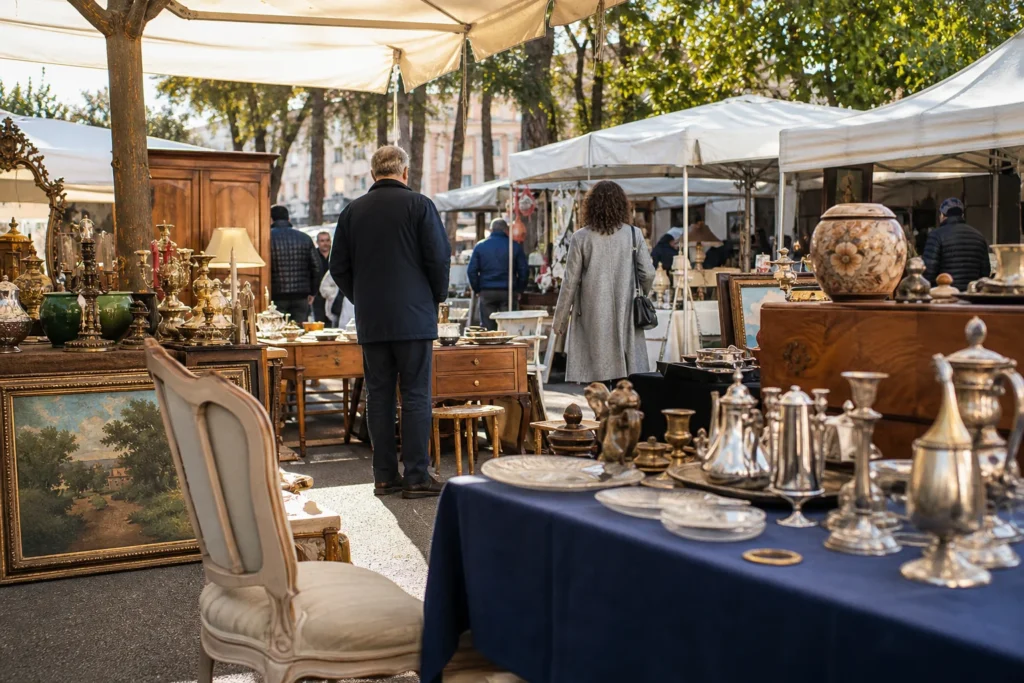
Tucked into one of Rome's most quietly prosperous residential quarters, the Mercatino dei Parioli brought a particular kind of refinement to the city's flea market scene. Parioli has long carried a reputation for old money and understated elegance, and the market that bore its name reflected exactly that character. This was never a sprawling outdoor bazaar of mixed salvage and discount goods. It was something more deliberate — a specialist antiques event that felt closer in spirit to the brocante stalls at Vanves in Paris or the curated vintage dealers of Brick Lane's Tea Rooms than to a typical Italian mercatino.
The comparison held because the approach was the same: specialist sellers, high-value objects and a browsing atmosphere designed for people who knew what they were looking for. Around thirty booths filled the space at Via Salaria 138, and the offer skewed sharply toward quality over quantity. Old furniture and paintings drew collectors with serious intentions. Antique silverware and lace occupied a notably refined upper register of the market, the kind of inventory that tends to attract interior designers as readily as private buyers. Crockery and a range of curios filled out the mix, giving the market enough breadth to reward the curious browser alongside the dedicated specialist.
That balance was no accident. The two organisers behind the Mercatino dei Parioli brought decades of experience in the antiques trade and the exhibitions world to the project. Their background showed in the curation: this was a focused antiques proposition rather than a general secondhand affair, and the seller selection reflected genuine expertise in sourcing high-value objects. The founders established a twice-monthly format, a rhythm that suited the market's ambitions well. Regular enough to build a loyal returning audience, it was also infrequent enough to keep the offer feeling considered and fresh rather than routine.
There was room to grow, too. The venue at Via Salaria 138 could accommodate up to forty-five vendor positions, and the founding vision clearly reached toward a larger community of sellers and collectors as the market found its footing in the city.
Within Rome's wider flea market landscape, the Mercatino dei Parioli occupied a distinct niche. It was smaller and more intimate than the well-established giants of the Roman market scene, but it traded that scale for coherence and character. For collectors who found the larger markets too diffuse, and for anyone drawn to the slower, more considered pleasure of browsing genuine antiques among people who understood what they were selling, it offered something genuinely worth seeking out. That clarity of identity is what makes it worth recording here.
Frequently Asked Questions
Q: What kind of market was the Mercatino dei Parioli?
A: It was a specialist antiques market rather than a general secondhand affair. Around thirty booths focused on high-value objects — old furniture, paintings, silverware, antique lace, crockery and curios — giving it a curated, collectors-oriented character closer in spirit to Paris's Vanves or Brick Lane's Tea Rooms than to a typical Italian mercatino.
Q: Where was the Mercatino dei Parioli located?
A: The market was held at Via Salaria 138 in the Parioli neighbourhood of Rome, one of the city's more quietly prosperous residential quarters.
Q: How often did the market run, and how large was it?
A: The founders established a twice-monthly format, which suited the market's ambition well — frequent enough to build a loyal audience, infrequent enough to keep the offer feeling considered rather than routine. At launch it hosted around thirty vendor booths, with capacity for up to forty-five as the market grew.
Q: Who ran the Mercatino dei Parioli, and what was their background?
A: The market was the project of two organisers with decades of experience in the antiques and exhibitions world. That background shaped everything from seller selection to the deliberate focus on high-value objects over general bric-a-brac.
Q: Is the Mercatino dei Parioli still operating?
A: The market is permanently closed. It is retained here as an editorial archive record of the venue and its character within Rome's flea market scene.
Marketplace Highlights







Add a review