


Mercatino di “Polvere di Ricordi” is permanently closed. This listing is retained as an editorial archive of the venue and its distinctive character.
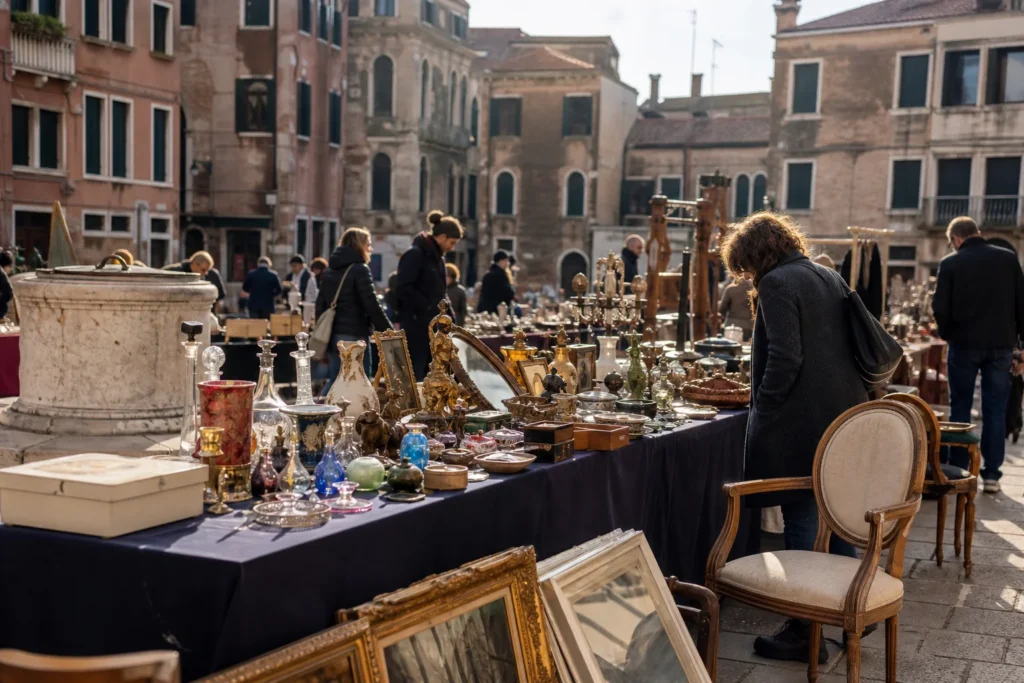
Polvere di Ricordi — "Dust of Memories" in Italian — was a name that suited its market perfectly. Held across several of Venice's historic campos, it gathered sellers and collectors around tables piled with objects that carried the particular weight of time. The church setting that occasionally anchored the event gave the whole affair an atmosphere that few urban flea markets could replicate: candled shadows, stone floors, and the quiet shuffle of browsers who had come specifically to find something they couldn't quite name in advance.
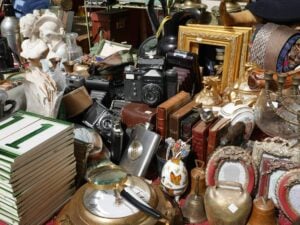
The merchandise ranged widely and rewarded close attention. Vinyl records leaned in crates beside trays of silverware. Shelves of ceramic pieces sat next to folded textiles and art prints. Jewellery, vintage toys, shabby-chic furniture and carefully arranged collectables filled the stalls with the kind of density that made you want to slow down. Some vendors were professional antique dealers who brought curated stock and deep knowledge of what they sold. Others were private enthusiasts — people who clearly loved the objects they parted with — and that mix gave the market a character that distinguished it from more commercial antiques fairs.
The market's itinerant nature was one of its defining quirks. It rotated between Campo Sant'Agnese in the Dorsoduro sestiere, the Herbarium Field in San Polo, and Campo San Silvestro, also in San Polo. Each setting brought its own mood, and regulars learned to follow the market rather than assume a fixed address. It ran just three times a year — a schedule that concentrated its appeal and made a well-timed visit feel genuinely worthwhile.
The atmosphere was notably unhurried. Vendors took time to talk, to explain provenance, to share a little history behind a piece. Customers lingered. The market attracted both serious collectors and curious day-visitors, and both felt at home. The sellers returned regularly, which meant the stall holders knew each other and knew their returning customers. That continuity gave the event a community warmth that is harder to manufacture than it sounds, particularly in a city as heavily visited as Venice.
What Polvere di Ricordi represented went beyond its individual stalls. It offered a version of Venice that sat apart from the main tourist circuits — rooted in the neighbourhoods, shaped by local sellers, and best appreciated at a pace closer to a Sunday passeggiata than a shopping trip. Its small scale was a virtue. In a city where grandeur is the default register, a market this modest and this carefully curated stood out precisely because it made no effort to be anything other than what it was: a gathering of objects, a community of enthusiasts, and a few hours of unhurried looking in some of the most quietly beautiful corners of the city.
Frequently Asked Questions
Q: What kind of goods did Polvere di Ricordi typically sell?
A: The market was known for a varied but carefully chosen mix: vinyl records, silverware, ceramics, art prints, jewellery, vintage toys, shabby-chic furniture, and general collectables. Stalls ranged from professional antique dealers with curated, knowledgeable stock to private sellers parting with pieces they genuinely loved — a combination that gave the browsing experience real depth.
Q: Where did the market take place?
A: It rotated between three locations across Venice: Campo Sant'Agnese in the Dorsoduro sestiere, the Herbarium Field in San Polo, and Campo San Silvestro, also in San Polo. Each setting had its own character, and regulars learned to follow the market rather than expect a fixed address.
Q: How often did the market run?
A: Polvere di Ricordi was held just three times a year — a deliberately limited schedule that made a well-timed visit feel worthwhile and kept the event from becoming routine.
Q: Is this market still running?
A: Mercatino di "Polvere di Ricordi" is permanently closed. This listing is maintained as an editorial archive of the market and its place in Venetian secondhand culture.
Marketplace Highlights










Add a review