


Mercatino di Villa Glori a Roma is permanently closed. The market is retained as an editorial archive of the venue and its distinctive character.
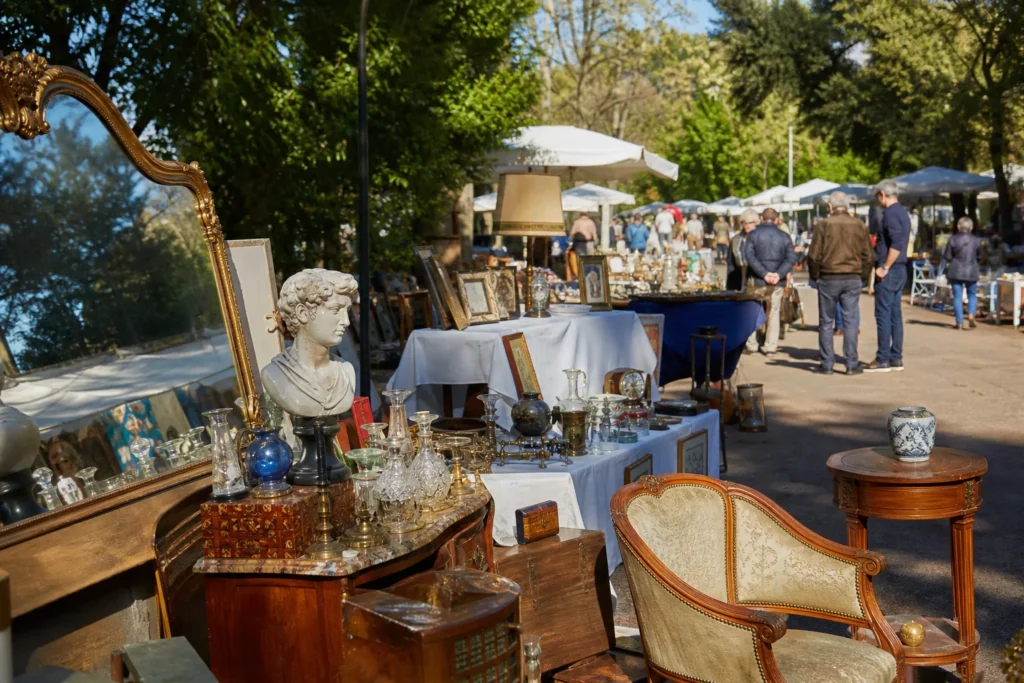
Few markets in Rome belonged so naturally to their surroundings as the Mercatino di Villa Glori. It occupied the parking lot on the right side of Viale Pilsudski — a broad, tree-lined avenue in Parioli — with stalls stretching along the pavement in long, colourful rows. The green slopes of Villa Glori formed a quiet backdrop, giving the whole scene an unhurried, almost residential calm rather than the bustle associated with Rome's more tourist-facing markets.
Parioli itself shaped the market's character in ways that set it apart. One of Rome's more refined residential neighbourhoods, it attracted a buyer community that was knowledgeable, selective and largely local. Collectors returned month after month. The atmosphere was closer to a specialist fair than an open bric-à-brac scramble, and that distinction was felt immediately in the quality and curation of what vendors brought to the avenue.
The market gathered more than a hundred dealers and private sellers, many travelling from other parts of Italy to take part. This was not simply a local affair. The seller network reflected a serious, Italy-wide trade in antiques, and the breadth of stock on offer confirmed it. Browsing the stalls felt purposeful — an experience geared toward people who arrived with specific knowledge and intentions, alongside those content to absorb the atmosphere and discover something unexpected.
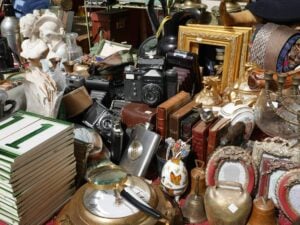
Merchandise across the market was notably varied yet consistently high in register. Decorative and wearable pieces — silverware, jewellery, small collectibles — drew collectors who prized craftsmanship and provenance. Furniture and clocks attracted those furnishing period interiors. Antique books and musical instruments gave the market an additional layer of specialist depth. Taken together, the range read as a curated cross-section of Italian decorative history rather than a general sale of second-hand goods.
The market ran on Sunday mornings, a rhythm that suited both the neighbourhood and the loyal audience it served. For Parioli residents and collectors arriving from across the city, a Sunday spent at Villa Glori carried a particular quality — unhurried, sociable, anchored to the slow pace the neighbourhood naturally encouraged. The regularity of a monthly calendar meant that familiar faces returned, relationships between dealers and buyers deepened, and the market developed a continuity rare in Rome's flea market scene.
What distinguished the Mercatino di Villa Glori most was precisely that sense of continuity and community. Set away from the historic centre and from the well-worn tourist circuits, it served a Roman public that prized authenticity and quality over novelty or volume. It occupied a specific and valued place in Rome's antique calendar — a monthly gathering where the city's collector culture expressed itself on its own terms, in a neighbourhood where that culture felt entirely at home.
Frequently Asked Questions
Q: What kind of items did the Mercatino di Villa Glori specialise in?
A: The market leaned strongly toward quality antiques rather than general second-hand goods. Vendors brought silverware, jewellery, furniture, clocks, antique books and musical instruments — a range that reflected an Italy-wide dealer network and a buyer community that valued craftsmanship and provenance.
Q: Was this a tourist market or more of a local affair?
A: It was firmly local in spirit. Set in Parioli — one of Rome's more refined residential neighbourhoods — and positioned well away from the historic centre and tourist circuits, the Mercatino di Villa Glori drew a knowledgeable, loyal Roman audience alongside serious collectors arriving from across Italy.
Q: How large was the market and where exactly was it held?
A: The market occupied the parking lot on the right side of Viale Pilsudski, with stalls stretching along the avenue in long rows against the green backdrop of Villa Glori. At its height it gathered more than a hundred dealers and private sellers.
Q: Is the Mercatino di Villa Glori still running?
A: No. The market is permanently closed. The market is kept as an editorial archive of the venue and its character.
Marketplace Highlights







Add a review