


Region
Milford Antiques Show is permanently closed. The market is retained as an editorial archive of the venue and its distinctive character.
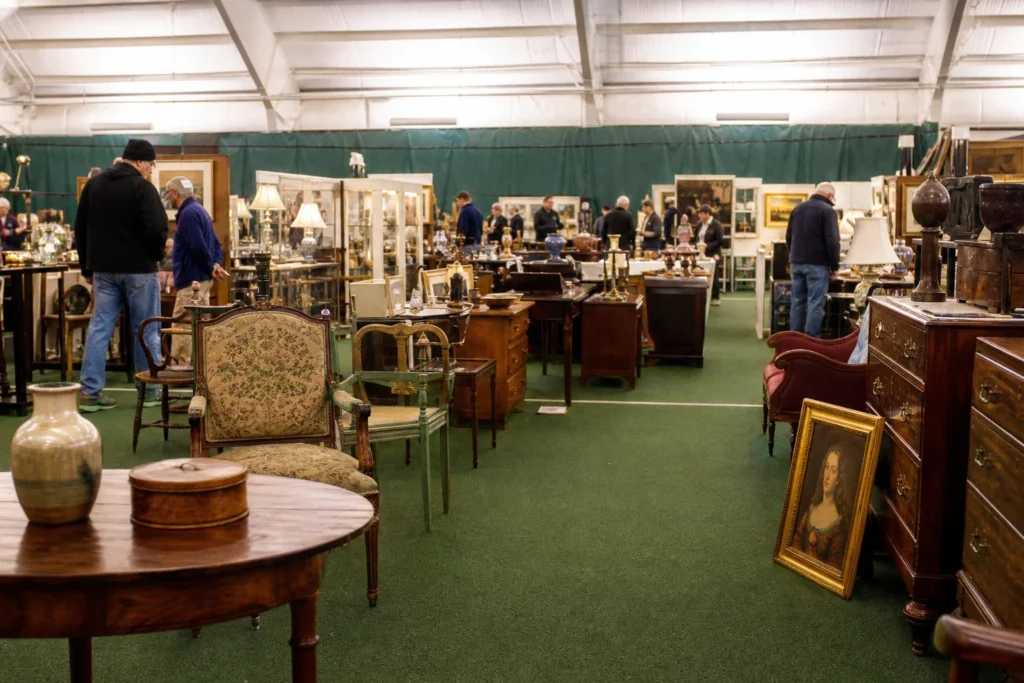
Two indoor tennis courts in a New Hampshire athletic club made for an unlikely antiques market. Every Sunday morning from late October through early April, Hampshire Hills Athletic Club in Milford transformed its courts into a compact, warmly lit hall filled with dealers, collectors and the particular quiet energy of people who take objects seriously. The contrast between the sports facility outside and the antique world within gave the show a quietly distinctive character from the start.
The format was deliberately compressed. Each session ran for roughly two and a half hours, a constraint that shaped the whole atmosphere. With fifty to seventy dealers setting up across the converted courts, the scale was large enough to offer genuine variety but small enough to remain navigable. Repeat visitors could work the room thoroughly in a single focused morning, which suited the show's loyal following well.
Dealer setup began at daybreak, with sellers rolling carts of stock through the back of the building as the light came up. Serious collectors paid a premium to enter during this window, before general admission opened to the public. That early-buyer culture was central to the show's identity. Pieces changed hands quickly at the tables during setup, and anyone chasing a specific category — a particular style of silver, a run of vintage cameras, a mid-century ceramic — learned early that arriving after the general crowd had consequences.
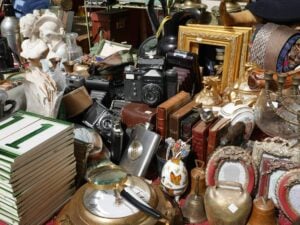
The merchandise ranged widely but with coherence. Furniture and decorative objects anchored most tables: clocks, Asian ceramics, silverware and jewelry appeared regularly alongside antique rugs and textile pieces. A separate current of paper and numismatic material ran through the hall each week — coins, stamps and artwork drew a different kind of collector who moved through the stalls with a practiced eye. Vintage clothing surfaced too, mixing with the decorative categories in ways that rewarded browsers who were not hunting for anything specific. The dealer roster rotated across the season, which meant the overall inventory shifted week to week and gave the show genuine archive variety across its winter run.
The social texture was as much a part of the market as the merchandise. Many of the sellers and regulars knew one another well, and conversations at the tables tended to run long. A café on site served breakfast and lunch alongside coffee, and the food gave the morning a settled, unhurried quality even within its short window. The show felt less like a commercial event and more like a weekly gathering of people who genuinely cared about what they were buying and selling.
What made the Milford Antiques Show worth recording was its combination of unlikely setting, compressed format and tight community. Indoor winter markets were never uncommon in New England, but the tennis-court conversion, the early-buyer premium access and the focused two-and-a-half-hour session gave this one a distinct shape. It occupied a particular niche in the regional antiques calendar — small enough to feel personal, consistent enough to build real dealer and collector loyalty across the winter months.
Frequently Asked Questions
Q: What kind of antiques and collectibles did the Milford Antiques Show typically carry?
A: The show offered a broad but coherent mix. Furniture, clocks, Asian ceramics, silverware, jewelry and Persian rugs were regular anchors. A strong numismatic and paper current ran alongside — coins, stamps and artwork drew their own steady crowd — and vintage clothing surfaced often enough to reward browsers without a fixed agenda. The dealer roster rotated week to week, so the inventory shifted meaningfully across the October-to-April season.
Q: Was there an advantage to arriving early?
A: Yes, and it was significant. Serious collectors paid a premium admission to enter during the dealer setup window before general doors opened. That access let buyers handle freshly unloaded stock — particular categories like silver, vintage cameras or mid-century ceramics could effectively disappear before the general crowd came through. Anyone chasing something specific learned quickly that timing mattered at this show.
Q: How large was the show, and how long did each session run?
A: Between fifty and seventy dealers set up across two converted indoor tennis courts, making the show large enough for genuine variety but compact enough to work thoroughly in one focused morning. Each session ran for roughly two and a half hours — a deliberately short window that gave the room a purposeful, concentrated energy quite different from all-day fairs.
Q: Was there food available at the show?
A: A café inside Hampshire Hills Athletic Club served breakfast, lunch and coffee. Having food on site in the same building made it a practical and sociable part of the morning rather than an afterthought, especially given the early start time.







Add a review