


Region
Mission Road Antique Mall is permanently closed. The venue is retained as an editorial archive of the venue and its distinctive character.
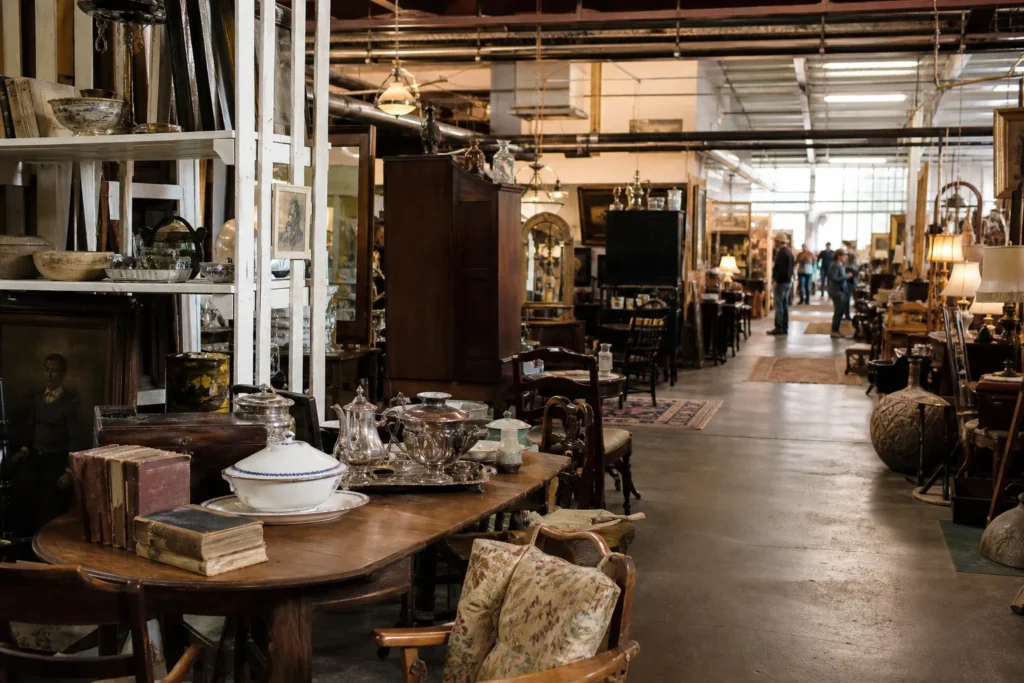
Mission Road Antique Mall occupied a remarkable place in the Midwest antique landscape. With more than 300 vendors spread across roughly 48,500 square feet, the scale went far beyond what most shoppers expected on arrival. The overall effect felt closer to a museum district than a conventional retail space.
What gave the mall its distinctive character was the individual showroom model. Each vendor arranged and curated their own room, which meant the browsing experience shifted noticeably every time you crossed a threshold. One showroom might present formal dining sets, oak sideboards and period bedroom furniture in careful arrangements. The next might lean entirely into decorative objects, architectural salvage or a single tightly focused collecting category. That variety kept long visits feeling fresh rather than repetitive.
Furniture formed the backbone of the inventory, but the depth of stock ran much wider. Lamps and light fixtures appeared throughout the building. Rugs, silver, glass and pottery filled corners and display cases across dozens of rooms. Collectors of linens, quilts and antiquarian books found dedicated stock as well. The jewellery selection stood out in particular, covering antique and vintage pieces across a broad range of periods and price points, from modest finds to serious acquisitions.
Pricing reflected the care and selectivity that vendors brought to their showrooms. Serious collectors and interior designers sourcing period pieces found the investment worthwhile. Casual browsers on tighter budgets encountered fewer bargains than at a general flea market, but the visual richness of the space rewarded a visit even without a purchase. Walking through well-stocked, thoughtfully arranged rooms carried its own kind of appeal.
The layout could feel genuinely labyrinthine on a first visit, and regulars often reported discovering entirely new corners after multiple trips. Vendors refreshed their stock regularly, which gave repeat visitors a reason to return. Something new appeared in familiar sections often enough to sustain a loyal following over many years.
Staff at the front desk helped orient first-time visitors and could direct shoppers toward specific dealers or collecting categories. That practical human touch mattered in a space of this size. It made the experience navigable for buyers who arrived with a particular object in mind, and it gave the mall a more welcoming atmosphere than its scale might otherwise suggest.
Mission Road Antique Mall suited collectors, designers and anyone drawn to the slower, considered rhythm of serious antique browsing. It represented the kind of destination Midwest antique enthusiasts planned dedicated trips around. The showroom model, the breadth of stock and the sheer accumulated depth of the inventory gave it a character that was genuinely difficult to replicate at the regional scale.
Frequently Asked Questions
Q: What made Mission Road Antique Mall different from a typical antique shop?
A: The scale was the first thing visitors noticed — roughly 48,500 square feet across more than 300 individual vendor showrooms. Each dealer arranged and curated their own room, so the atmosphere shifted noticeably as you moved through the building. The overall effect felt closer to a museum district than conventional retail browsing.
Q: What kinds of antiques and collectibles did vendors carry?
A: Furniture formed the backbone — formal dining sets, period bedroom pieces, oak sideboards and architectural salvage — but the depth ran much wider. Decorative objects, lamps, rugs, silver, glass, pottery, quilts, linens and antiquarian books all had dedicated stock across multiple showrooms. The jewellery selection was particularly well regarded, covering antique and vintage pieces across a broad range of periods and price points.
Q: Was Mission Road Antique Mall worth visiting for serious collectors, or was it more of a casual browse?
A: It suited both, though in different ways. Pricing reflected the care vendors put into their showrooms, so serious collectors and interior designers sourcing period pieces found the investment worthwhile. Casual browsers encountered fewer bargains than at a general flea market, but the visual richness of the space — well-stocked, thoughtfully arranged rooms — rewarded a visit even without a specific purchase in mind.
Q: How did first-time visitors navigate a space that large?
A: Staff at the front desk helped orient new arrivals and could direct shoppers toward specific dealers or collecting categories. That practical guidance mattered in a building of this size. Regulars often reported discovering entirely new corners after multiple visits, and vendors refreshed their stock regularly enough to give repeat visitors a genuine reason to return.
Marketplace Highlights








Add a review