

Region
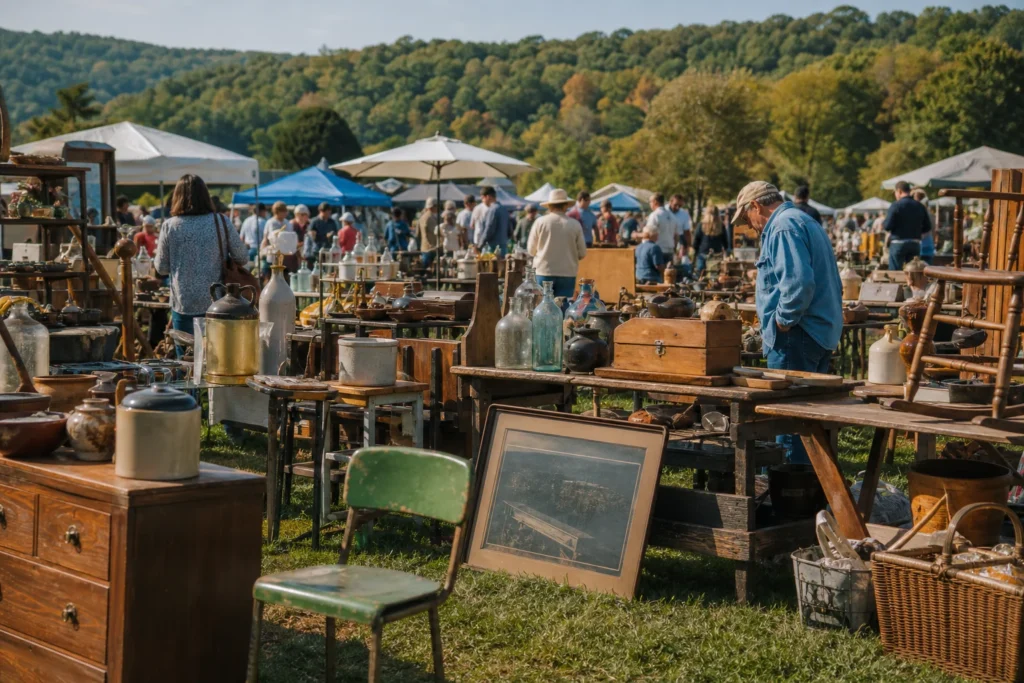
Eleven Maple Lane doesn't look like much from the road. But on a Saturday or Sunday morning between May and October, that two-acre field off Maple Lane in Woodstock, New York, fills with vendors, folding tables and the particular energy of a market that has been running since the late 1970s. Mower's Saturday Sunday Flea Market opens at 8:00 both days, closes at 17:00 on Saturdays and runs a little later on Sundays, closing at 18:00. The open-field layout means shopping here is genuinely outdoors — bring layers on a cool morning, sunscreen if the Hudson Valley decides to deliver a proper summer afternoon.
Woodstock's identity as a haven for artists, musicians and independent thinkers isn't just reputation. It shapes what people bring to sell. Vendors arrive with objects that reflect a town where vintage and handmade have never really gone out of fashion. The mix is wide without feeling random.
Record collectors tend to do well here. Crates of jazz, rock and folk records surface regularly, often alongside vintage cameras, radios and small electronics with actual character. Mid-century lamps and hand-thrown pottery appear on the same tables as Depression glass and old postcards. A second pass through the field sometimes turns up something the first pass missed — a shelf of glassware, a watch that just needs a battery, a piece of small furniture worth loading into the back of a car.
Vintage clothing, jewellery and kitchenware round out the stock. The jewellery in particular tends toward pieces with a history rather than reproduction goods. None of this is curated in any formal sense, which is exactly the point.
Mower's has stayed family-owned and operated across its decades of weekend seasons. That continuity shows in the way regulars and returning vendors greet each other across the tables. New vendors join each year, which keeps the inventory honest and prevents the market from calcifying into the same twenty stalls. The rhythm of the season — the first open weekends in May, the busy July and August crowds, the quieter Sunday mornings of early October — is something the surrounding community genuinely marks.
Bargaining is expected, not awkward. Prices lean accessible, and most vendors treat negotiation as a normal part of the transaction. Arriving early with a number in mind and being willing to talk is a practical strategy, not an imposition.
Getting to Woodstock is easiest by car, and the market reflects a region where driving is the default. That said, two bus stops sit within roughly 150 metres of 11 Maple Lane. The Woodstock stop serves ADT bus lines P702, P704, P706, P707, P707F, P708, P709, P711, P757, P758 and P775. A second stop — Woodstock at Route 212 and Rock City Road — serves lines Z-NB and Z-WB. Weekend service frequency on rural New York bus routes varies, so anyone relying on these services should check current schedules before travelling.
Mower's suits the Hudson Valley day-tripper who wants a specific reason to land in Woodstock rather than just pass through — and it especially rewards anyone with a serious interest in records, cameras or mid-century domestic objects. The outdoor setting, the decades of accumulated local knowledge at the tables, and the expectation of a real conversation with sellers give it a different texture from a conventional antique mall.
Frequently Asked Questions
Q: When does Mower's Saturday Sunday Flea Market run, and what are the hours?
A: The market runs every Saturday and Sunday from May through October. Both days open at 8:00. Saturdays close at 17:00 and Sundays run a little later, closing at 18:00.
Q: What kinds of things turn up at Mower's, and is it worth the trip for serious collectors?
A: The vendor mix reflects Woodstock's long counterculture streak. Record collectors regularly find crates of jazz, rock and folk vinyl alongside vintage cameras and radios. Decorative finds include Depression glass, hand-thrown pottery, mid-century lamps and small furniture. Vintage clothing, watches and jewellery — pieces with genuine history rather than reproduction goods — also appear. A second walk through the field often turns up something the first pass missed.
Q: Is bargaining normal at Mower's, or are prices fixed?
A: Bargaining is expected and entirely normal. Prices tend to be accessible, and most vendors treat negotiation as a standard part of the transaction. Arriving early with a figure in mind and being willing to talk is a practical approach, not an imposition.
Q: Can I reach the market without a car?
A: Two bus stops sit within roughly 150 metres of 11 Maple Lane. The Woodstock stop serves ADT lines P702, P704, P706, P707, P707F, P708, P709, P711, P757, P758 and P775. A second stop at Route 212 and Rock City Road serves lines Z-NB and Z-WB. Woodstock is primarily a car-accessed destination, but bus access is closer than you might expect. Check current schedules before travelling.
Q: Is the market fully outdoors, and does weather affect the experience?
A: Yes — Mower's is set on a two-acre open field, and shopping is largely outdoors. Some vendors add overhead shelter, but the market as a whole is an open-air experience. Layers are useful on a cool Hudson Valley morning; sunscreen earns its place on a proper summer afternoon.
Marketplace Highlights









Add a review