


Region
Namesti Miru Flea Market is permanently closed. The market is retained as an editorial archive of the venue and its distinctive character.
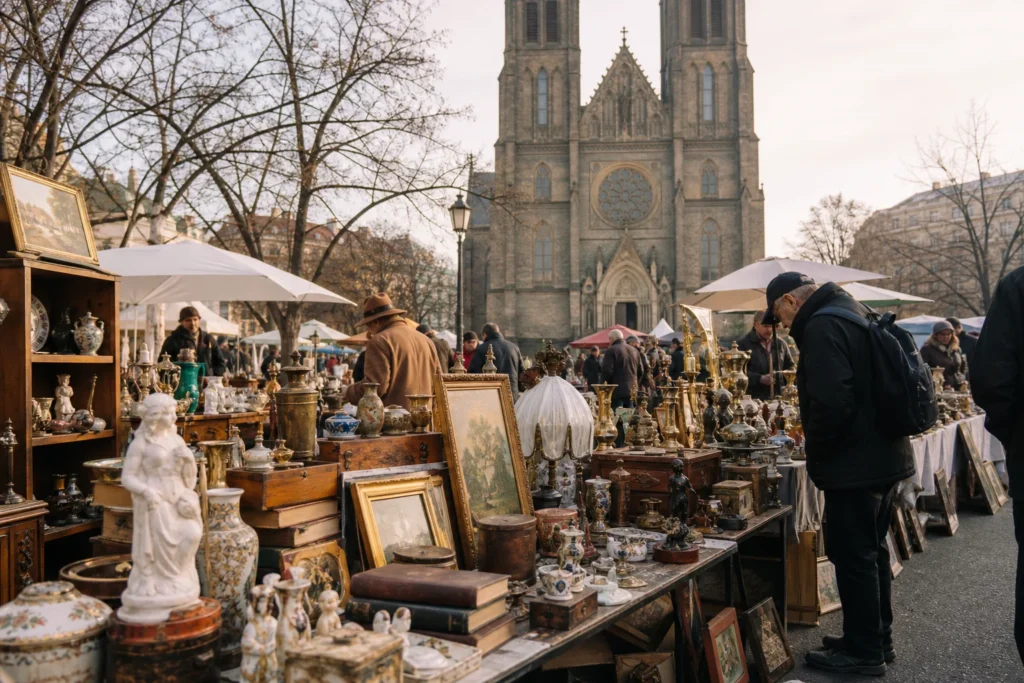
The neo-Gothic towers of St Ludmila Church rose above the market stalls like a stage flat that nobody had thought to move. That juxtaposition was the first thing visitors noticed. The broad open square of Náměstí Míru in Prague's Vinohrady district gave the monthly gathering a grandeur that warehouse venues and car parks simply never could. Around the church's base, folding tables and rails fanned outward across the cobbles, framed on all sides by the art nouveau apartment facades that made Vinohrady one of the city's most handsome residential quarters.
What made the market genuinely interesting was what the accessible stall-fee structure produced in practice. Keeping entry costs low meant the seller mix stayed wide open. Established dealers set up beside complete newcomers trying their first pitch. A dedicated allocation of spaces went to makers — people selling jewellery, ceramics or clothing they had produced themselves. The result was a floor that felt lived-in and lateral rather than curated. Stock shifted from visit to visit in ways that rewarded return visits and resisted easy summary.
Collectors working through specific fields found reliable ground here. Printed matter appeared steadily — old paintings, antique books, framed prints and occasional ephemera. Wearable and decorative pieces ranged from vintage jewellery and leather bags to clothing with genuine age behind it. Popular culture and nostalgia ran alongside: vinyl records, toys and the kind of domestic objects that carry more memory than monetary value. The merchandise reflected neither a specialist fair nor a general jumble sale, but something between the two. Prices were understood to be a starting point. Sellers expected negotiation, and the pace of the market supported it.
The monthly rhythm set Náměstí Míru apart from Prague's more frequent alternatives. It did not show up every weekend. That infrequency gave it a distinct quality of occasion. Regulars planned around it; they did not stumble into it. The gap between editions kept stock fresh and maintained a sense that something specific was happening on the square that day, not just a routine market filling an available slot.
Food stalls operated within the market, offering a practical reason to stay rather than browse and leave. The surrounding streets deepened that case for lingering. Independent cafés, bakeries and wine bars made Vinohrady a neighbourhood worth spending a full morning or afternoon in. The market slotted into that character without friction — it felt like something the neighbourhood had grown rather than something installed for visitors.
In Prague's wider flea market landscape, Náměstí Míru occupied a particular position. It sat well outside the tourist-heavy centre, drawing a crowd that was largely local and purposeful. The church backdrop, the art nouveau surroundings and the unpredictable seller mix gave it a character that felt embedded in the city. It was a market that reflected the neighbourhood it inhabited — unhurried, eclectic and specific to its place.
Frequently Asked Questions
Q: What kinds of things could you find at Náměstí Míru Flea Market?
A: The stock covered a genuinely wide range. Printed matter — old paintings, antique books and framed prints — appeared regularly, alongside vintage jewellery, leather bags and clothing with real age behind it. Popular culture and nostalgia ran through the mix too: vinyl records, toys and everyday domestic objects. Because professionals set up beside first-time sellers and dedicated makers, what turned up shifted from month to month in ways that rewarded return visits.
Q: Was bargaining expected at the market?
A: Yes. Sellers generally treated quoted prices as a starting point and expected some back-and-forth. Taking time at a stall rather than moving quickly through tended to work in a buyer's favour.
Q: How often did the market run, and did that affect the experience?
A: The market ran on a monthly basis rather than every weekend. That infrequency gave each edition a distinct sense of occasion — regulars planned around it, and the gap between markets kept the stock feeling fresh rather than familiar.
Q: Is the Náměstí Míru Flea Market still operating?
A: The market is permanently closed. It is retained here as an editorial archive of the venue and its character.
Q: What made the Vinohrady location distinctive compared to other Prague flea markets?
A: The setting was unusually striking. The neo-Gothic towers of St Ludmila Church rose directly above the stalls, and the surrounding art nouveau apartment facades gave the square a grandeur that warehouse or car park venues simply could not match. It also sat within a neighbourhood full of independent cafés and bakeries, making a longer visit easy to build around the market itself.
Marketplace Highlights







Add a review