


Region
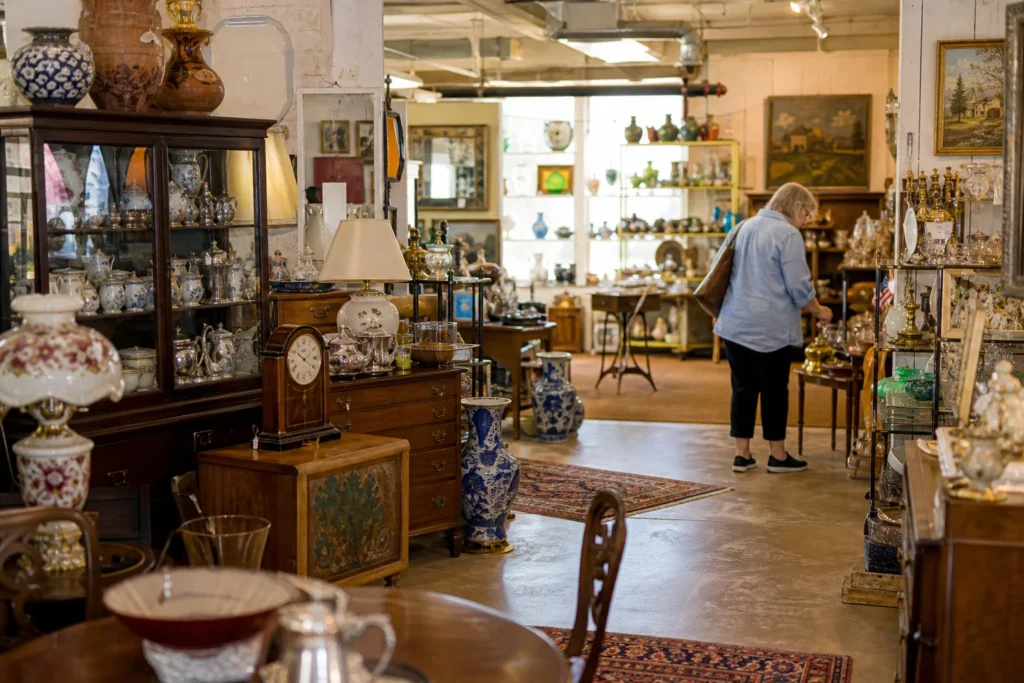
On any given weekday morning at the New Hampshire Antique Co-Op in Milford, you might find a piece of Federal furniture standing a few feet from a shelf of vintage toys, with a case of sterling silver and a Viennese bronze just around the corner. That kind of proximity — unlikely but strangely logical — is what a floor of more than 20,000 square feet and roughly 200 individual vendors produces. It is not curated to feel like a museum. It feels like a working marketplace where serious collecting actually happens.
The scale takes a moment to absorb. Each vendor manages their own section, which means the floor divides naturally into zones of expertise rather than blurring into one undifferentiated mass. Ancient Chinese art occupies a different register than fine jewellery or early American pottery. Artwork and period furniture sit alongside vintage telephones and decorative bronzes. The variety is real, not padded — and moving between categories rarely feels random once you get your bearings.
What keeps collectors coming back is turnover. Stock rotates consistently, with new pieces arriving regularly from vendors adding to and refreshing their sections. Someone who visits every few weeks will still find items they have not seen before. That rhythm gives the co-op an energy that larger, more static antique centres often lack. The floor never quite settles.
Vendor knowledge runs deep here. Most dealers specialise in a specific period, material or category, and they tend to know their inventory with precision. If you arrive with a focused search — a particular style of pottery, a specific silver hallmark, a type of early American furniture — it is worth asking. Staff and dealers regularly point visitors directly to the right part of the building rather than leaving them to cover the floor alone.
The co-op also offers a range of in-house professional services that make it genuinely useful beyond buying. Estate sale management, consignment, appraisals and professional restoration are all available on site. For someone navigating an inherited collection, dealing with a piece that needs expert repair, or looking to sell rather than acquire, having those services available in the same building removes a significant logistical barrier.
The co-op opens Tuesday through Sunday, 10:00 to 17:00, with Mondays closed. Milford sits in the Merrimack Valley region, making it a natural anchor for a broader antiquing run through southern New Hampshire. The town's modest historic centre adds context without demanding attention. The co-op itself draws buyers from across New England — dealers sourcing stock, collectors chasing specific periods, and browsers willing to give the floor the time it takes to reward them properly.
Frequently Asked Questions
Q: When is the New Hampshire Antique Co-Op open?
A: The co-op opens Tuesday through Sunday, 10 a.m. to 5 p.m. Mondays are closed.
Q: What kinds of antiques and collectibles can I expect to find?
A: The floor covers a wide range — period Federal furniture, ancient Chinese art, sterling silver, Viennese bronze, fine jewellery, early American pottery, vintage toys and decorative artwork, among other categories. Around 200 individual vendors each manage their own section, so the mix is genuine rather than padded.
Q: Is it worth visiting more than once, or does the stock stay the same?
A: Regular visitors find it consistently rewarding. New pieces arrive daily as vendors refresh their sections, so the floor shifts often enough that even frequent shoppers encounter items they haven't seen before.
Q: Can I get help finding something specific, or do I need to cover the whole floor myself?
A: It's worth asking. Most dealers specialise in a particular period, material or category and know their inventory well. Staff and vendors regularly direct visitors to the right part of the building rather than leaving them to navigate 20,000 square feet alone.
Q: Does the co-op offer any services beyond buying?
A: Yes. Estate sale management, consignment, appraisals and professional restoration are all available in-house — useful if you're dealing with an inherited collection, a piece that needs repair, or something you'd like to sell rather than keep.
Marketplace Highlights










Add a review