


Region
Oddfellows Antiques is permanently closed. The market is retained as an editorial archive of the venue and its distinctive character.
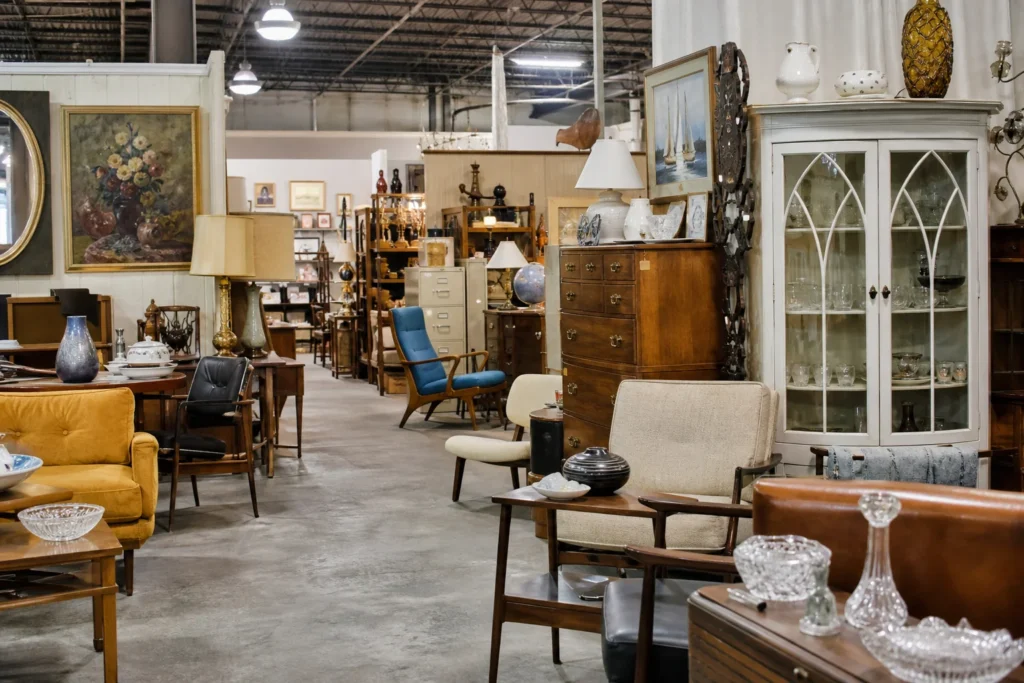
Roughly 12,000 square feet of warehouse space sets the conditions for everything Oddfellows Antiques did well. That scale was not decorative. It meant the store could absorb an inventory that would have overwhelmed a conventional shop, stacking categories across booths without any single era or style dominating the floor. Moving through it felt less like shopping and more like excavation — systematic if you came with a list, pleasantly disorienting if you did not.
The furniture told its own story of eclectic accumulation. Mid-century modern pieces sat a few feet from French provincial tables and chairs, with no apparent effort to separate them by period or provenance. That proximity was part of the point. Serious buyers could cross-reference styles and proportions in a way that a boutique with curated vignettes would never allow. The decorative arts section ran deep. Rose-patterned china and art deco crystal occupied the same shelf runs. Stained glass panels caught whatever light came through, leaning against walls near porcelain figurines and Depression-era toys. The glassware selection in particular rewarded patience — there was enough of it, and enough variety, that collectors focused on a specific form or period could work through it methodically.
Textiles and curiosities filled another register entirely. Vintage clothing hung on racks near latch hook rugs. Oil landscapes in heavy frames occupied corners and high walls, lending the space a slightly moody, accumulated quality that warehouse lighting usually works against. The collectibles ran the full gamut — objects that arrived without obvious category and stayed that way, waiting for someone who knew exactly what they were looking at.
Despite the volume, the layout held together. Main aisles gave shoppers genuine room to move, and individual booths were organised rather than chaotic. Staff were available to help track down specific pieces, which mattered in a store where a single item could be tucked behind three others in a booth near the back. That combination of density and navigability suited the store's audience well. Pickers and dealers worked the floor systematically. Collectors with a specific niche — period glassware, vintage textiles, mid-century furniture — found enough depth to justify the time. Casual browsers wandered in without a list and usually left with something they had not expected to find.
What distinguished Oddfellows from merely large antique spaces was the sense that the inventory had real range rather than bulk for its own sake. The unexpected combinations — a porcelain figurine beside a Depression-era toy, an art deco decanter near a latch hook rug — were not accidental. They reflected the store's character: genuinely broad, idiosyncratic, and rewarding for anyone willing to look past the first layer.
Frequently Asked Questions
Q: What kind of antiques and collectibles did Oddfellows Antiques carry?
A: The store ranged across several collecting categories within its 12,000-square-foot warehouse floor. Furniture ran from mid-century modern to French provincial. Decorative arts included art deco crystal, rose-patterned china, stained glass panels, and porcelain. Textiles and curiosities covered vintage clothing, latch hook rugs, oil landscapes in heavy frames, and Depression-era toys — enough variety that collectors focused on a specific niche could work through the stock methodically.
Q: Was Oddfellows Antiques suitable for both serious collectors and casual browsers?
A: It suited both well. Pickers and dealers tended to work the floor systematically, while collectors focused on glassware, period furniture, or vintage textiles found enough depth to justify a longer visit. Casual browsers who arrived without a list generally left with something unexpected — the density and range of the stock made that kind of discovery fairly reliable.
Q: How was the store laid out, and was it easy to navigate despite the size?
A: Despite the volume of goods on the floor, wide main aisles gave shoppers genuine room to move through the space, and individual booths were organised rather than chaotic. Staff were available to help track down specific pieces, which was useful given that a single item could easily be tucked behind several others in a booth toward the back of the warehouse.
Q: Is Oddfellows Antiques still open?
A: Oddfellows Antiques is permanently closed. It is preserved here as an editorial archive of the venue and its character.
Marketplace Highlights







Add a review