

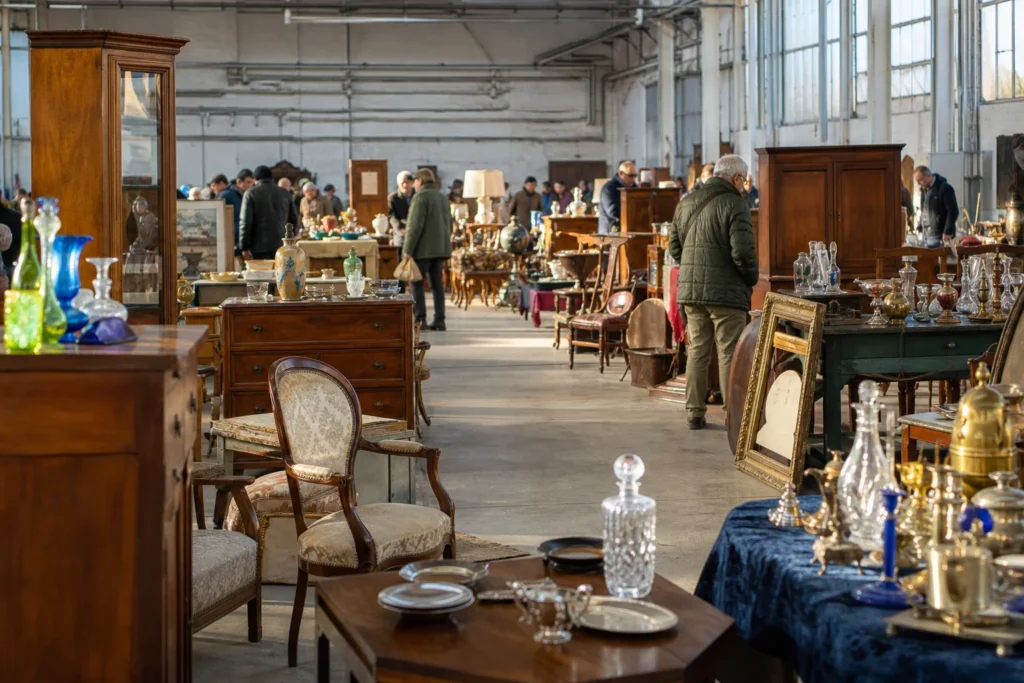

On the second Saturday and Sunday of each month — except in July and August — a converted train factory warehouse on Via Sandro Pertini fills with dealers, collectors and the quiet commerce of serious antique hunting. The Mercato Antiquario di Pistoia typically runs from 09:00 to 19:00, giving visitors a full day inside a spacious industrial building that keeps the weather entirely out of the equation. Tuscany in summer and winter both cooperate poorly with outdoor markets. Here, none of that matters.
The indoor setting shapes the whole character of the event. Dealers have room to display properly — framed prints leaning against full-height mirrors, furniture pieces given enough space to be walked around, decorative objects arranged rather than piled. The market feels considered rather than crammed, and the layout rewards a methodical pass through the whole floor without doubling back.
Most dealers come from Tuscany and Liguria. That regional concentration is not incidental. It means the stock tends to carry genuine local provenance — pieces that reflect where they were made, owned and used, rather than the eclectic catch-all mix of larger, tourist-facing fairs. Some vendors travel from further afield, which adds a degree of variety, but the market's regional Italian identity holds firm.
The merchandise divides naturally into two registers. The larger stalls anchor themselves with vintage furniture, oil paintings, antique prints and decorative mirrors, often accompanied by wall sconces, brass hardware and old lanterns. Smaller stalls yield the detail-hunter's rewards: porcelain, glassware, silver cutlery, vintage jewellery, collectible ceramics and odd lots of old keys and hardware that resist easy categorisation. Focused collectors working a specific brief will find enough to justify the trip. So will anyone who simply browses well.
Pistoia itself earns a longer look than most day-trippers allow. The city centre is compact and historically dense, with the Piazza del Duomo and its medieval surroundings reachable on foot. Arriving before the market opens or staying into the early evening leaves time for both without feeling rushed. The combination of a serious market and a genuinely under-visited city makes Pistoia a more rewarding day trip than its modest profile suggests.
Collectors who have found Arezzo's Fiera Antiquaria increasingly crowded or expensive will recognise what Pistoia offers in exchange: less spectacle, more direct dealer engagement, and prices shaped by regional rather than tourist demand. The market suits the buyer who wants to talk to someone who knows the piece, not just the price tag.
Pistoia train station sits approximately 350 metres from the market's Via Sandro Pertini address and serves as the most practical arrival point for visitors coming from Florence or further afield. FlixBus 503 also calls at the station. For local bus connections, the stop at Via Sandro Pertini Biblioteca San Giorgio is roughly 150 metres away, and Linea 3 (Pistoia Ovest–Piazza Dante Alighieri) serves the P. Dante stops approximately 300 metres from the venue.
Frequently Asked Questions
Q: When does the Mercato Antiquario di Pistoia take place?
A: The market runs on the second Saturday and Sunday of each month, from 09:00 to 19:00. It closes for July and August, so check the monthly schedule before making the trip.
Q: Is the market indoors, and does weather affect it?
A: Yes — the market occupies a converted train factory warehouse on Via Sandro Pertini, so rain, heat and Tuscan winter cold have no bearing on the day. Dealers can display properly and shoppers can take their time without any weather anxiety.
Q: What kind of stock does the market carry?
A: Expect two broad registers: larger stalls anchored by vintage furniture, oil paintings, antique prints, decorative mirrors, wall sconces and old lanterns; and smaller stalls yielding porcelain, glassware, silver cutlery, vintage jewellery, collectible ceramics and oddments like old keys and brass hardware. Most dealers come from Tuscany and Liguria, so pieces tend to carry genuine regional provenance rather than the eclectic mix of larger, tourist-facing fairs.
Q: How do I get there, and is Pistoia worth more than a quick visit?
A: Pistoia train station is approximately 350 metres from the Via Sandro Pertini address, making it a straightforward arrival by rail. The city's compact historic centre — including the Piazza del Duomo and the medieval streets around it — is easily walkable. Arriving before the market opens or staying on into the early evening makes the combination of market and city feel unhurried.
Q: How does this market compare to Arezzo's Fiera Antiquaria?
A: Collectors who find Arezzo increasingly crowded or expensive will recognise what Pistoia offers in return: a quieter, more trade-facing atmosphere, dealers who know their material well, and prices shaped by regional rather than tourist demand. It suits buyers who want to talk to someone who understands the piece, not just someone who knows its ticket price.
Marketplace Highlights








Add a review