

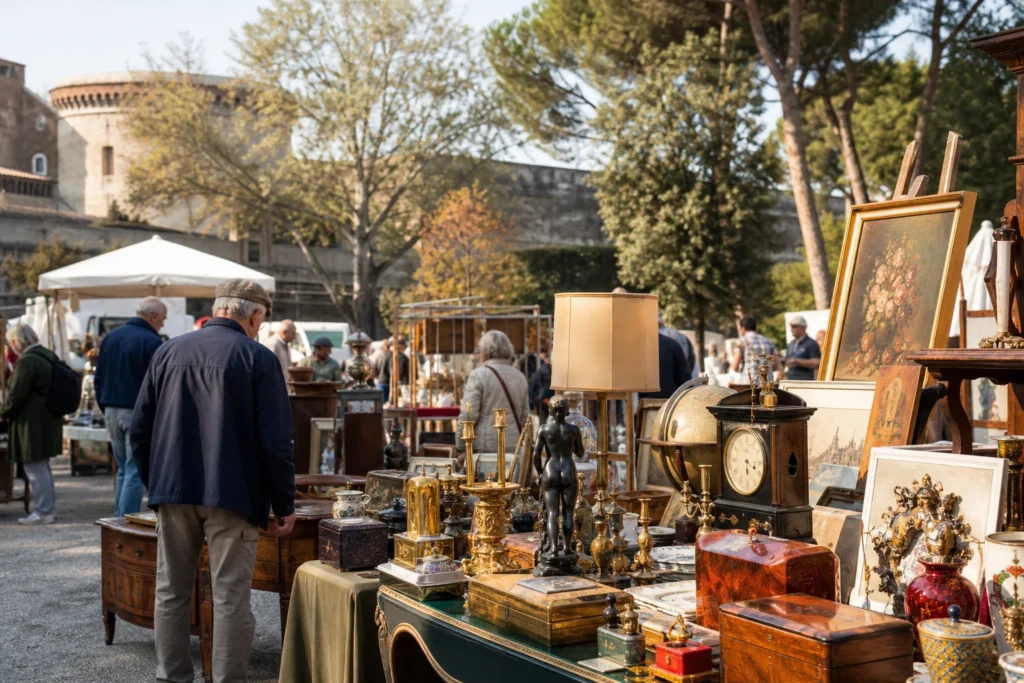

On the third Saturday and Sunday of each month, the gardens near Piazza Indipendenza in Florence fill with dealers who have driven from across Italy. Stalls open at 08:00 and trade runs through to 19:00, giving serious browsers a long window. The market now operates as Indipendenza Antiquaria — worth confirming before you travel, since the legacy name Mercato dell'Antiquariato ai Giardini della Fortezza da Basso still circulates widely online. The market originally occupied the gardens of the Fortezza da Basso before expanding and relocating to its current address at Piazza dell'Indipendenza. Both names refer to the same long-running event.
The scale is the first thing that strikes newcomers. The open-air site spreads across enough ground that a casual loop takes well over an hour. Thorough shoppers regularly fill both days of the weekend, returning to promising stalls on Sunday after assessing the full picture on Saturday. Plan accordingly and wear comfortable shoes.
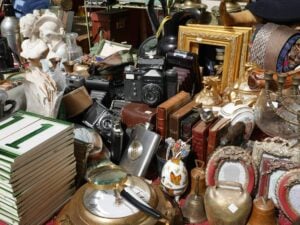
The merchandise mix rewards patience. Dealers bring vintage books, old clocks, early cameras, prints and postcards, antique birdcages, hand tools, toys and vintage clothing. Furniture appears at every size — compact occasional tables sit near pieces that would challenge a removal van. Curiosities turn up between the larger displays: objects that resist easy categorisation but tend to stop browsers mid-step. Collectors hunting Italian printed ephemera, decorative ceramics or mid-century photographic equipment will find this market particularly concentrated.
Bargaining is standard practice and dealers expect it. Most vendors are professionals who know their stock in detail and often enjoy discussing a piece's history before settling on a price. The atmosphere rewards genuine curiosity. Coming in with a hard opener and no interest in the object rarely works as well as approaching with questions first. The overall tone is convivial rather than pressured — noticeably different from more formal antique fairs, where the transactional dynamic can feel rigid.
Weather shapes the experience at this open-air site. Conditions in Florence are usually cooperative, but the cooler months from November through February can feel sharp by mid-morning. A light layer makes a real difference. Note that the market takes a summer break and closes entirely in July and August, so visits in those months need to be planned around a different destination.
Getting to Piazza dell'Indipendenza is straightforward by public transport. The nearest local stop is Indipendenza Ridolfi, immediately adjacent to the site, served by bus lines 31 and 32. Tram line T2 stops at Lavagnini Fortezza, approximately 200 metres away. Visitors arriving by intercity or regional train — including Frecciarossa, Italo and regional services — will find Firenze Santa Maria Novella station roughly 500 metres from the market, making it an easy approach on foot from most parts of Italy.
Indipendenza Antiquaria draws a wide mix of professional dealers, dedicated collectors and curious travellers passing through the city. That combination gives the market an energy that smaller curated fairs rarely match. Arriving at or shortly after 08:00 puts you ahead of the crowds and gives you first access to fresh stock before the peak Saturday morning rush builds. For anyone with a serious interest in Italian decorative arts, printed ephemera or everyday objects from the last two centuries, this is one of the most rewarding mornings — or full weekends — Florence's antique calendar offers.
Frequently Asked Questions
Q: When does the market take place, and are there months when it doesn't run?
A: The market runs on the third Saturday and Sunday of each month, with stalls open from 08:00 to 19:00. It closes entirely in July and August, so plan visits in those months around a different destination.
Q: Where exactly is the market, and how do I get there without a car?
A: The market is held in the gardens near Piazza dell'Indipendenza in Florence. Bus lines 31 and 32 stop at Indipendenza Ridolfi, directly adjacent to the site. Tram line T2 stops at Lavagnini Fortezza, roughly 200 metres away.
Q: What kinds of things do dealers sell here?
A: The mix is genuinely broad — vintage books, prints and postcards, old clocks and cameras, decorative ceramics, antique birdcages, furniture in all sizes, vintage clothing and toys. Collectors focused on Italian printed ephemera or mid-century photographic equipment tend to find the selection particularly concentrated.
Q: Is bargaining expected, and how should I approach it?
A: Bargaining is standard practice and dealers expect it. Most vendors are knowledgeable professionals who enjoy discussing a piece's history. Starting with genuine curiosity about an object tends to open a better conversation — and a better price — than leading with a hard opener.
Q: How much time should I set aside for a visit?
A: More than most first-timers expect. A casual loop of the full site takes well over an hour, and thorough shoppers regularly use both days of the weekend, returning on Sunday to revisit promising stalls from Saturday. Comfortable shoes matter, especially during the cooler months from November through February.
Marketplace Highlights








Add a review