

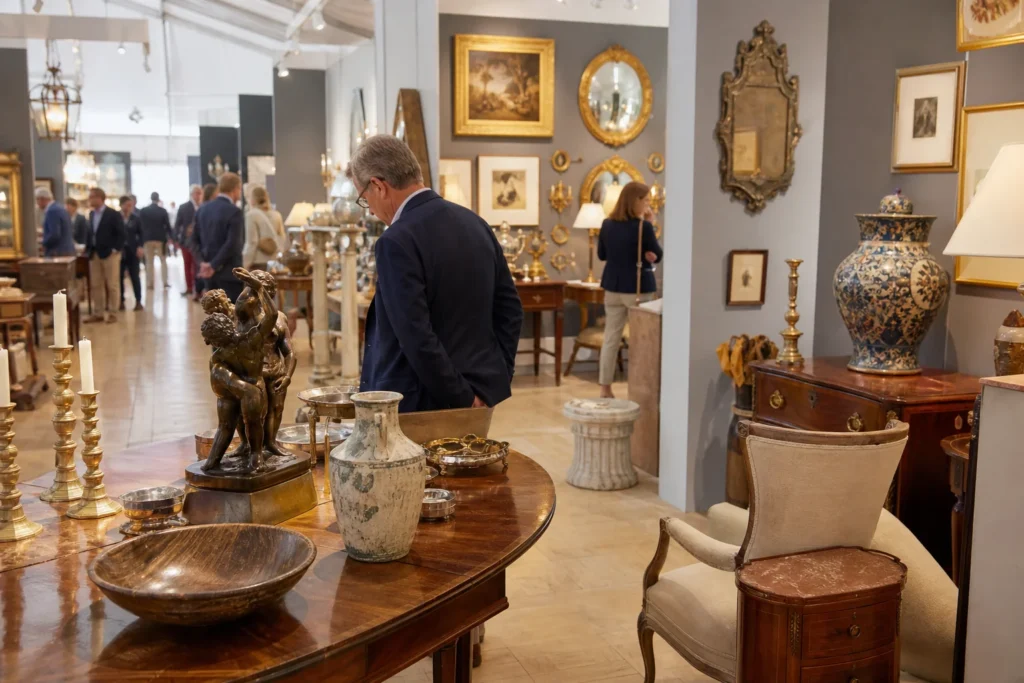

Every October, the Merchandise Mart in Chicago becomes the address for one of North America's most distinguished antiques and fine art fairs. The Chicago Show runs across a three-day Friday-to-Sunday weekend, drawing serious collectors, interior designers, and art buyers from across the United States and abroad. Few fairs of this calibre land in the American Midwest, which makes this one genuinely matter on the national circuit.
More than 70 dealers exhibit each year, mixing established American galleries with prominent international houses. The organizers rotate exhibitors deliberately, balancing familiar names with newer participants. Even returning visitors tend to find inventory they haven't encountered before. That curatorial instinct keeps the fair feeling dynamic rather than predictable.
The merchandise spans several centuries without losing focus. Visitors move through the hall encountering 17th, 18th, and 19th-century antiques alongside modernist 20th-century pieces and contemporary design objects. Fine furniture, decorative arts, paintings, and sculpture sit alongside one another, each given generous floor space. The standard of display throughout approaches that of a curated museum exhibition rather than a conventional market floor.
The opening-night reception sets a tone that carries through the whole weekend. Serious buyers gain early floor access before the public sessions begin, browsing works over cocktails and hors d'oeuvres. Complimentary valet parking adds to an atmosphere that feels closer to a major auction house preview than a fair opening. For collectors focused on acquiring, Friday evening is the session worth targeting.
Lectures and keynote speakers extend the fair beyond buying alone. These sessions draw visitors who want to develop their knowledge of specific periods, collecting strategies, or movements in design history. A single entrance ticket covers all three days, running 11:00 to 16:00 each day — a practical structure that rewards return visits and lets attendees spread their time across multiple talks and exhibitors. That combination of programming depth and multi-day access makes the Chicago Show unusually good value for anyone treating it seriously.
The fair suits dedicated collectors shopping with clear intent, design professionals sourcing pieces for clients, and curious visitors who simply want time among exceptional objects. It also offers a rare opportunity for American buyers to browse leading international dealers without travelling overseas. Whether you arrive for the opening-night reception or walk in on the final Sunday afternoon, the depth and quality on the floor hold up across every session.
Getting to the Merchandise Mart is straightforward from most parts of Chicago. The Orleans & Merchandise Mart stop — served by the CTA Brown and Purple subway lines, plus bus routes 37 and 125 — sits approximately 110 metres from the building, making it the most direct public transport option for most visitors. Those coming from a wider range of city neighbourhoods can use Clark & Lake (CTA), approximately 370 metres away, where the Blue, Brown, Green, Orange, Pink, and Purple subway lines converge alongside buses 22, 24, and N22. Commuter rail passengers travelling in from Chicago's suburbs can reach the area via Ogilvie Transportation Center, approximately 650 metres away, served by the UP-N, UP-NW, and UP-W Metra lines.
Frequently Asked Questions
Q: When does the Chicago Show take place, and how long does it run?
A: The Chicago Show runs across a Friday-to-Sunday weekend each October at the Merchandise Mart in Chicago. A single entrance ticket covers all three days, so there's no need to choose between sessions — you can return across the weekend to revisit exhibitors or attend talks. Check the official Chicago Show website for the specific dates of the current edition before you plan your visit.
Q: What kind of antiques and objects will I find on the floor?
A: The fair spans several centuries of collecting, from 17th, 18th, and 19th-century antiques through to modernist 20th-century pieces and contemporary design objects. Fine furniture, decorative arts, paintings, and sculpture are all well represented. Each dealer receives generous floor space, so pieces can be assessed properly rather than competing for room — the browsing experience is closer to a curated museum installation than a conventional market floor.
Q: How many dealers exhibit, and does the mix change year to year?
A: More than 70 dealers take part annually, combining established American galleries with prominent international houses. The organizers deliberately rotate exhibitors, balancing returning names with newer participants, which means the inventory is genuinely fresh even for loyal repeat visitors. For US-based collectors, the international representation is a practical draw — it's one of the few chances to browse distinguished overseas dealers without travelling abroad.
Q: Is the opening-night reception open to everyone, and is it worth attending?
A: The Friday-evening reception gives buyers early floor access before the public weekend sessions begin, with cocktails and complimentary valet parking. The atmosphere sits closer to a private auction-house preview than a typical fair opening. Serious collectors consistently treat it as the priority session. Confirm current ticket or access arrangements on the official Chicago Show website, as event details can vary by edition.
Q: Does the fair offer anything beyond buying and browsing?
A: Yes — lectures and keynote speakers run alongside the exhibitor floor, covering specific periods, collecting strategies, and movements in design history. These sessions give the Chicago Show an educational dimension that most peer fairs don't match. Because a single entrance ticket covers all three days, it's easy to build an itinerary that combines floor time with programming across the full weekend.
Marketplace Highlights










Add a review