


Region
Inside a Grade II* listed Edwardian bathhouse on Hathersage Road, something unexpected happens three times a year. The tiled archways and original ironwork of Victoria Baths form the backdrop for a carefully assembled gathering of specialist dealers in mid-century furniture, retro lighting and post-war decorative objects. The Vintage Home Show is a touring event with a strong editorial identity, and Manchester is one of its regular stops.
The show runs on Sundays from 10:30 to 16:00, appearing in spring, summer and autumn. Those three annual dates matter. This is not a standing weekly market — it is a planned occasion, and visitors tend to arrive with purpose. The concentrated format keeps the quality high and the energy focused.
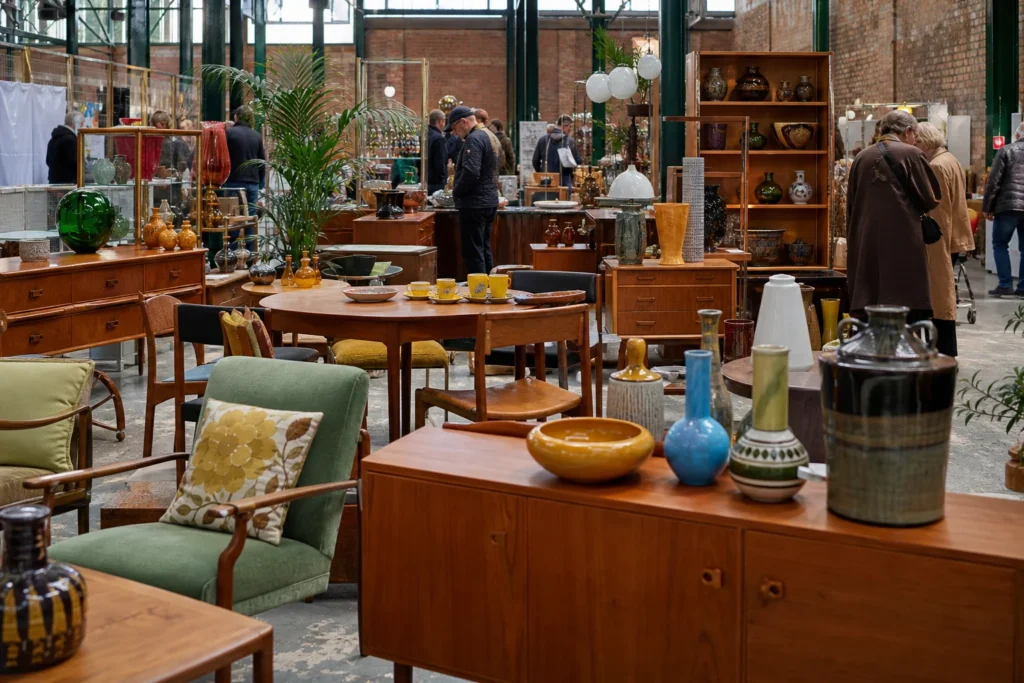
The merchandise has a clear era arc, running from optimistic post-war design through to the bolder shapes and colours of the late 1960s and 1970s. Period furniture anchors many stalls — sideboards, armchairs, shelving and occasional tables that carry genuine age and provenance. Retro lighting fixtures, decorative ceramics, vintage textiles, kitchenware and original artwork fill the gaps. The mix covers both the purely decorative and the quietly functional, which suits buyers with a specific room in mind as much as those simply browsing.
What lifts the show above a general secondhand market is the calibre of the dealers. Most specialise rather than generalise. Sellers typically know their stock well — era, manufacturer, materials, and how a given piece might read in a contemporary interior. That working knowledge turns a browsing trip into something more useful. Conversations happen easily, and practical advice on upcycling, sourcing or restoration is genuinely offered rather than performed.
The atmosphere reads more like a design fair than a market. Stalls are laid out with some thought — items are displayed to suggest how they might live in a home rather than simply piled for volume. That presentation style draws interior designers, stylists and prop buyers alongside private collectors. It also makes the event feel calm and considered rather than rushed.
Three types of visitor tend to find the show particularly rewarding. Collectors targeting a specific era or category benefit from the specialist focus and depth of stock. Interior designers and stylists looking for pieces with genuine provenance find the dealer knowledge saves time. And home buyers who want something with history — rather than a high-street replica — tend to leave with a clearer sense of what they're looking for, even when they arrived uncertain. The Vintage Home Show rewards a slow pace and a willingness to ask questions.
For those travelling by public transport, the Manchester Royal Infirmary stop on Upper Brook Street at Hathersage Road serves bus 50 at approximately 250 metres from the venue. Bus services 191 and 197 also stop on Plymouth Grove near Winterford Avenue, around 275 metres away. Central Manchester is well connected, making the event straightforward to reach from across the city and the wider region.
Frequently Asked Questions
Q: How often does The Vintage Home Show come to Manchester, and when does it run on the day?
A: The show visits Manchester three times a year — in spring, summer and autumn — and runs on Sundays from 10:30 to 16:00 each time. It is a planned occasion rather than a regular weekly market, so checking the upcoming dates before you travel is worthwhile. Confirm the next date on the organizer's official page before you go.
Q: Where does the Manchester edition take place?
A: The show is held at Victoria Baths on Hathersage Road, a Grade II* listed Edwardian bathhouse. The original tiled archways and ironwork make it an unusual setting for a vintage fair, and it is served by public transport — the Manchester Royal Infirmary stop on Upper Brook Street at Hathersage Road is nearby.
Q: What kind of stock should I expect to find there?
A: The era runs from post-war design through to the bolder shapes and colours of the late 1960s and 1970s. Furniture tends to anchor the stalls — sideboards, armchairs, shelving, occasional tables — alongside retro lighting fixtures, decorative ceramics, vintage textiles, kitchenware and original artwork. The mix covers both decorative pieces and genuinely functional items, which suits buyers with a specific room in mind as much as those browsing freely.
Q: Are the dealers specialists, or is it more of a general secondhand market?
A: Most dealers specialise rather than generalise, and many bring solid working knowledge of era, manufacturer and materials. That makes conversations genuinely useful — practical advice on how a piece might work in a contemporary interior, or thoughts on restoration and sourcing, tends to come naturally rather than being performed for the sale.
Q: Who gets the most out of visiting The Vintage Home Show?
A: Three types of visitor tend to leave particularly satisfied: collectors targeting a specific era or category, who benefit from the specialist depth of stock; interior designers and stylists sourcing pieces with real provenance; and home buyers who want something with history rather than a high-street replica. The atmosphere is calm and considered — closer to a design fair than a flea market — so a slower pace and a willingness to ask questions tends to be rewarded.
Marketplace Highlights









Add a review