

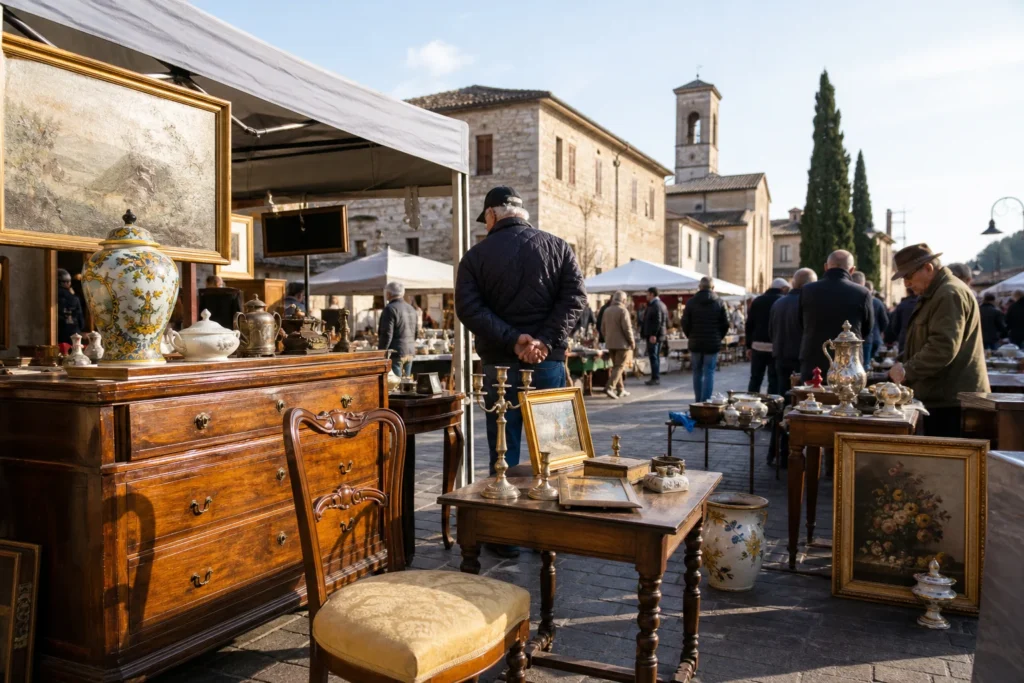

By eight in the morning, the stalls are already open along the lanes of Pissignano, a small hamlet in the municipality of Campello sul Clitunno. The Fiera dell'Antiquariato e del Collezionismo di Pissignano gathers on the first Sunday of each month and runs through until eight in the evening — a full twelve-hour span that sets it apart from the brief village markets common across Umbria. Spoleto lies a short drive to the south, Foligno to the north, and the fair draws visitors from both directions as well as from further afield in the province of Perugia.
The scale here is serious. Over 250 vendors reportedly fill the site, bringing enough variety to keep a dedicated collector moving for several hours without doubling back. That density gives the fair a weight that casual countryside antique events rarely match. It functions as a genuine regional fixture rather than a seasonal attraction.
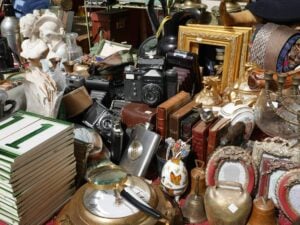
Decorative and applied arts form one of the fair's strongest currents. Vendors bring porcelain, ceramics and silverware that range from modest domestic pieces to genuinely collectable items. These stalls reward patience — the best finds tend to sit behind the obvious front-row display. A separate cluster of interest runs through period furniture, oil paintings and decorative objects that reflect the accumulated domestic history of central Italy. Timepieces, curiosities and small household items occupy another layer of the market, the kind of material that surfaces here but rarely reaches specialist dealers. Collectors with a focused brief in Italian ceramics or decorative silverware will find real depth. Visitors with no particular agenda will find plenty to hold their attention.
The setting amplifies everything. Pissignano sits close to the Fonti del Clitunno, a spring-fed river site that drew travellers and poets long before the market existed. Nearby, the Tempietto sul Clitunno — a striking early Christian structure beside the water — forms part of a UNESCO World Heritage inscription covering Lombard-era sites across Italy. The presence of that kind of layered history gives the surroundings an atmosphere that feels genuinely earned. Few antique fairs can offer a monument of that calibre within easy reach of the stalls.
Food is woven into the day. Local producers bring Umbrian products to the fair, and black truffle appears among the edible highlights — an unmistakably regional touch. Combining a morning at the stalls with a locally sourced lunch is a natural way to spend a first Sunday in this corner of Umbria.
The fair suits collectors chasing Italian furniture, applied arts or decorative silverware, but also rewards visitors passing through the region with no collecting agenda. The combination of a long market day, a riverside setting and Umbrian food culture makes Pissignano worth the detour from either Spoleto or Foligno. Arrive early for the best selection; the fair's full-day schedule means there is no real pressure to rush.
Frequently Asked Questions
Q: When does the Fiera dell'Antiquariato e del Collezionismo di Pissignano take place?
A: The fair is held on the first Sunday of each month, running from eight in the morning until eight in the evening. That twelve-hour span is unusually generous for an Umbrian market day. Dates can occasionally shift, so check with the organiser or the municipality of Campello sul Clitunno before making the journey.
Q: How large is the fair, and is it worth travelling from Spoleto or Foligno?
A: With reportedly more than 250 vendors filling the lanes of Pissignano, this is a serious regional event rather than a casual village market. Spoleto lies a short drive to the south and Foligno to the north — either makes a practical base, and collectors regularly make the trip from both directions.
Q: What kinds of antiques and collectables can I expect to find?
A: The mix covers decorative and applied arts — ceramics, porcelain and silverware among them — alongside period furniture, oil paintings and domestic curiosities such as timepieces and household objects that rarely surface in specialist shops. Collectors with a focused interest in Italian ceramics or decorative silverware will find real depth; browsers with no fixed agenda tend to do well here too.
Q: Is there food at the fair, or nearby?
A: Local producers bring Umbrian products to the fair, and black truffle features among the edible highlights — a characteristically regional touch. Combining a morning at the stalls with a locally sourced lunch is a natural way to spend a first Sunday in this corner of Umbria.
Q: Is there anything else worth seeing near Pissignano on the same day?
A: The village sits close to the Fonti del Clitunno, a spring-fed river site with a long history of drawing travellers. Nearby stands the Tempietto sul Clitunno, an early Christian structure beside the water associated with a UNESCO World Heritage inscription covering Lombard-era sites across Italy. Both are within easy reach of the market stalls and add genuine weight to a day in the area.
Marketplace Highlights











Pamela Townsend
9th May 2024 at 13:40This was basically a garage sale. There were very few antiques. Several items also appeared damaged. The quality was not good.