

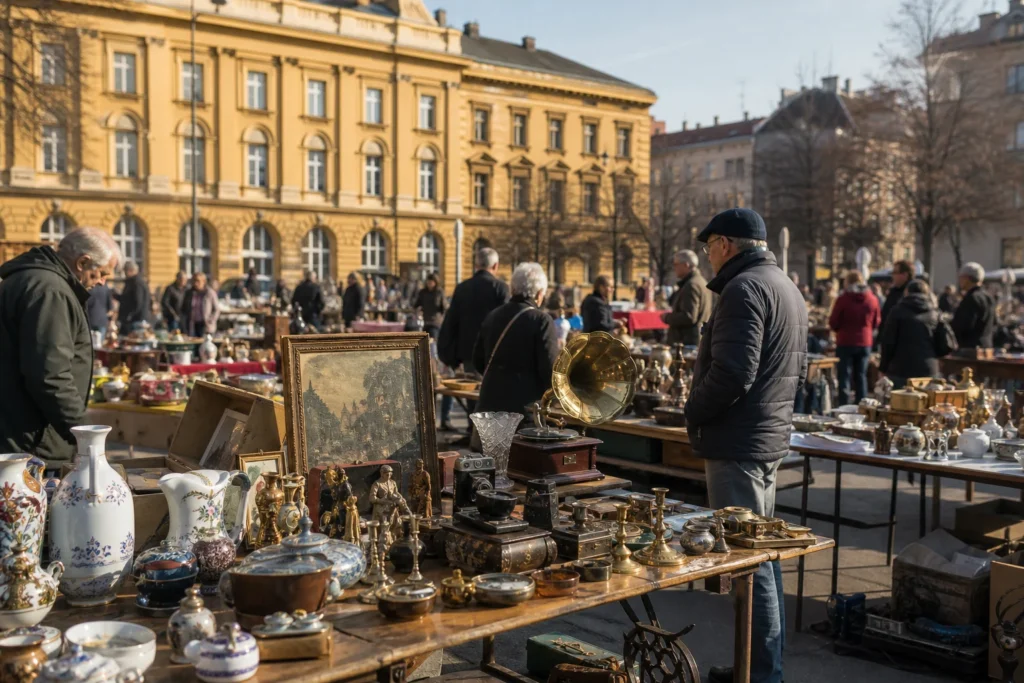

Every Sunday morning, Britanski trg undergoes a quiet transformation. The fruit and vegetable stalls that occupy this handsome square during the week pack away, and in their place scores of traders lay out their wares across wooden tables. By eight o'clock, the market is already moving. Collectors crouch over trays of old currency and badges, while other visitors drift between stands stacked with picture frames, gramophones and stacks of vinyl that somehow survived decades in someone's attic.
The market sits in Zagreb's inner city, a short walk from the main city hub around Ban Jelačić Square. That central position gives Britanski trg a different character from Hrelić, the city's large bric-a-brac sprawl south of the Sava River. Where Hrelić runs wide and rough, Britanski trg feels more curated, closer to an antiques fair than a jumble sale. Serious dealers trade here alongside weekend vendors clearing out family homes, and the mix produces a genuinely unpredictable range of goods.
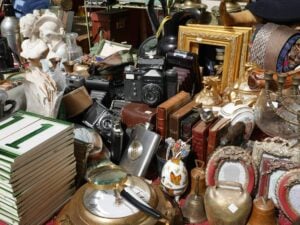
The most distinctive finds tend to reward patience. Glass-plate photographs, antique cameras, optical instruments and old maps surface regularly among the tables. Gramophones sit alongside their original records, and antique books — some in languages that require a moment to identify — appear in well-thumbed stacks. These are the items that make Britanski trg worth arriving early for.
A second current of goods runs through the market's decorative and religious category. Religious icons, decorative mirrors, silver pieces, porcelain and painted picture frames fill the gaps between the more technical collector items. Old agricultural tools, lamp shades, badges and hand-painted crockery show up in roughly equal measure. Prices are generally open to negotiation, and a confident but unhurried approach usually works in a buyer's favour.
The market runs every Sunday from 08:00 to 14:00 Zagreb time. Six hours is enough for a thorough browse, but the better pieces tend to move in the first couple of hours. Arriving close to opening gives collectors the first look; arriving later suits anyone happy to wander and let something unexpected catch their eye. The atmosphere stays relaxed throughout — part market, part neighbourhood ritual.
Britanski trg suits collectors with a taste for Central European decorative arts, travellers after Yugoslav-era memorabilia, or anyone searching for a gift that carries a genuine backstory. It rewards specificity more than casual curiosity, but there is enough variety that even an uncertain visitor rarely leaves without finding something interesting. For those who want Zagreb's market scene without the drive and the sprawl of Hrelić, this is the natural choice.
Getting here is straightforward. The British Square tram stop sits approximately 100 metres from the market and serves tram lines 1, 6, 11 and 31. Bus lines 102 and 105 stop at Britanski trg peron 2, which places riders almost at the market entrance. Tram lines 1, 6, 11 and 31 also call at Frankopanska, around 350 metres away, offering a useful alternative approach from a slightly different direction.
Frequently Asked Questions
Q: When does the Britanski trg Flea Market run, and what time should I arrive?
A: The market runs every Sunday from 08:00 to 14:00. Arriving close to opening gives you the first look at the more distinctive pieces — glass-plate photographs, antique cameras, gramophones and old maps tend to move early. Arriving later is fine for a relaxed browse, but expect the sharper finds to already be gone.
Q: How does Britanski trg compare to Zagreb's other major flea market, Hrelić?
A: The two markets have quite different characters. Hrelić, south of the Sava River, is a large, sprawling bric-a-brac site. Britanski trg is more compact and closer to an antiques fair in feel, with a mix of serious dealers and weekend vendors. If you want collectibles, decorative antiques and Yugoslav-era memorabilia without a long drive, Britanski trg is the more focused choice.
Q: What kinds of things can I realistically find here?
A: The range runs from the genuinely collectable — antique optical instruments, glass-plate photographs, gramophones with their original records, old maps and books — through to decorative pieces like religious icons, porcelain, silver, picture frames and painted crockery. Old currency, badges and agricultural tools also surface regularly. The selection is unpredictable, which is part of the appeal.
Q: Are prices fixed, or is bargaining expected?
A: Prices are generally open to negotiation. A confident but unhurried approach tends to work in a buyer's favour. Pushing too hard or too quickly is less effective than showing genuine interest and taking your time.
Q: How do I get to the market by public transport?
A: The British Square tram stop, served by lines 1, 6, 11 and 31, is approximately 100 metres from the market and is the most convenient option. Bus lines 102 and 105 also stop at Britanski trg, essentially at the market entrance. Check current timetables before you travel.
Marketplace Highlights







Add a review