

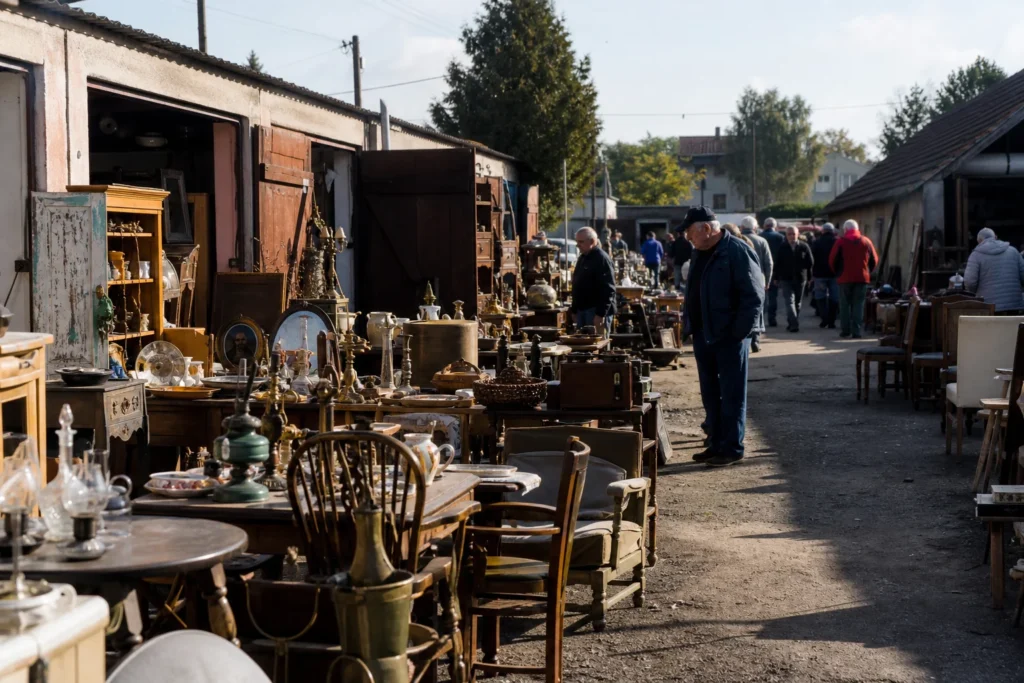

Czacz is not a market that happens inside a village. Czacz is a village that functions as a market. Nearly every garage, yard and plot along its streets holds goods for sale — antiques, furniture, kitchenware, curiosities — and the trading runs seven days a week. The place operates Monday to Friday from 10:00 to 18:00, and at weekends from 10:00 to 15:00. Those looking to get the most out of a visit should aim for a Thursday or Friday morning. Weekday crowds are thinner, the atmosphere is quieter, and serious collectors get more room to negotiate.
The village sits roughly 30 miles south of Poznań on the main road toward Wrocław. Its old German name, Schatz, means treasure — a coincidence that local traders are justifiably fond of. The crowd here blends regional day-trippers with dedicated collectors, and the mix regularly includes visitors from Germany and the Netherlands. The atmosphere is loud in places and unhurried throughout. Czacz does not perform vintage charm. It sells things.
The stock spans a genuinely wide range. Solid oak tables sit alongside porcelain dinner sets and cut-glass decanters. Wardrobes, carpets and sofas occupy one end of a plot; tap handles, bicycles and stacked DVDs occupy the other. Oil paintings lean against garden walls. Toys share tables with silverware. The inventory rotates constantly, which rewards repeat visits and early arrivals. Market legend holds that someone once paid almost nothing for a battered old piano here, only for it to turn out to be a limited series made for the King of Spain. Nobody confirms this definitively, but that is exactly the kind of story that keeps collectors arriving hopeful.
Prices have risen since Czacz found its way into Polish travel media. Indicative figures suggest a leather sofa with two armchairs can sell for around 2,000 to 3,000 złoty, a restored 1930s chest of drawers for around 300 złoty, and a twelve-piece 1960s dinnerware set for around 350 złoty. These figures shift with the vendor and the season. Bargaining is standard practice and persistence tends to pay off.
Some vendors have moved toward upcycled, shabby-chic pieces in recent years, converting garages into small workshops and pricing accordingly. The raw, unfiltered energy of Czacz's earlier reputation has softened at the edges. The scale and variety, however, remain hard to match anywhere in Kościan County.
Most visitors arrive by car, and the village format suits it. For those travelling by train, Przysieka Stara on the KW line sits approximately 4.6 km away and serves as the closest station. Stare Bojanowo, also on the KW line, is around 5.7 km distant. Onward travel from either station to the village itself would require a taxi or local arrangement. The drive from Poznań is straightforward and short.
Czacz suits furniture hunters willing to dig, collectors comfortable with a working rather than curated environment, and anyone who prefers a full village of stock to a single field. The density here — spread across an entire settlement rather than a staked-out car park — is the thing that keeps it distinct. For a market of this scale and character, the Wielkopolska region offers nothing else quite like it.
Frequently Asked Questions
Q: When is Czacz open, and which days are best for serious collectors?
A: The village trades Monday to Friday from 10:00 to 18:00, and at weekends from 10:00 to 15:00. Thursday and Friday mornings tend to draw thinner crowds, which means less competition, more room to browse and better conditions for negotiating with vendors.
Q: What kinds of things can you find at Czacz?
A: The range is unusually wide. Furniture and decorative pieces include solid oak tables, restored 1930s chests of drawers and upcycled shabby-chic items from vendor workshops. On the collectibles side, expect porcelain, silverware, cut-glass decanters, oil paintings and dinnerware sets. Everyday goods — bicycles, kitchen appliances, carpets, sofas, wardrobes — fill out the rest. Stock rotates constantly, so repeat visits regularly turn up different finds.
Q: Are prices negotiable, and what should I expect to pay?
A: Bargaining is standard practice at Czacz and persistence generally pays off. As a rough guide, a leather sofa with two armchairs has sold for around 2,000–3,000 złoty, a restored 1930s chest of drawers for around 300 złoty, and a twelve-piece 1960s dinnerware set for around 350 złoty. Prices vary by vendor and season, so treat these as indicative rather than fixed.
Q: How do I get to Czacz from Poznań?
A: By car is the most practical option — the village sits roughly 30 miles south of Poznań on the main road toward Wrocław, and the drive is straightforward. Visitors travelling by train can use Przysieka Stara or Stare Bojanowo on the KW line, approximately 4.6 km and 5.7 km away respectively, though onward transport from either station to the village would require a taxi or local arrangement.
Q: Is Czacz worth visiting if I'm not a dedicated antique collector?
A: It depends on what you enjoy. Czacz is an entire village given over to trading, not a curated vintage fair, and the atmosphere is unhurried and unpretentious rather than polished. Casual browsers and day-trippers do visit alongside serious collectors, but anyone expecting a tidy, themed market experience may find the raw, find-it-yourself character more rewarding than they anticipated — or not quite what they had in mind.
Marketplace Highlights








Add a review