


Few antique markets in Poland occupy a setting as raw or as fitting as the Stara Rzeźnia Antique Market in Poznań. The name translates as Old Slaughterhouse, and the industrial complex that gives it that name delivers on the atmosphere. What was once a working meat factory on the edge of the city closed in the 1990s and gradually transformed into a cultural and commercial hub. Today it hosts one of the country's most serious antique trading events — the monthly Giełda Antyków — drawing collectors and dealers from across Poland.
The Giełda Antyków runs on the second Saturday of every month, opening at 06:00 and trading through until 14:00. That early start is not incidental. The first hour of trading is when the stock is freshest and the competition among buyers is lowest, so serious collectors arrive close to opening. Between these monthly fairs, the weekly Pchli Targ keeps the site active every Sunday on the same 06:00 to 14:00 schedule. Twice a year the market also hosts a dedicated Collectors' Fair, a more specialist event that attracts buyers with specific interests.
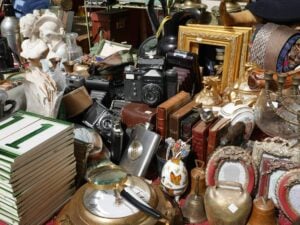
The stock at Giełda Antyków rewards focused browsing. Decorative arts are a particular strength: Art Nouveau and Art Deco pieces sit alongside mid-century furniture and design objects from the 1950s through the 1970s. Vintage clothing and accessories draw a fashion-conscious crowd, while antique books and vinyl records attract their own regulars. Elsewhere, stalls carry pre-war bathroom fixtures, silverware, clocks, glassware and pottery. Jewellery, sculptures, stamps and vintage toys complete a range that suits both the specialist and the opportunistic browser.
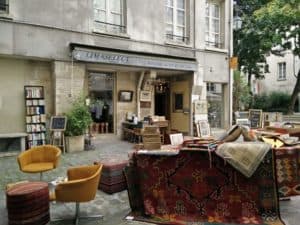
The market's physical setup is part of its appeal. Many vendors spread wares directly on blankets around the old factory buildings. Others sell from small tables or straight from the backs of vehicles. There are no polished display cases here. Private sellers and trade dealers operate side by side, and the informality gives the market a purposeful, knowledgeable energy that is hard to replicate in a curated antique hall.
Bargaining is standard. Vendors quote opening prices, not final ones. A clear counter-offer and a willingness to walk away are reliable tools at any stall. The process is the same whether or not you speak Polish — pointing and gesturing work well enough in an open-air trading environment.
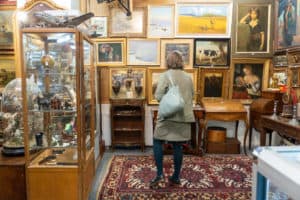
For buyers who want a more curated experience, the complex also houses a permanent antique furniture shop on site. It offers a quieter complement to the outdoor stalls and suits visitors who prefer browsing at slower pace.
Getting to Stara Rzeźnia is straightforward by public transport. The Szwajcarska tram stop sits approximately 200 metres away and is served by trams 1, 16, 18 and 202. Bus lines 166, 184 and 218 stop at Szwajcarska Centrum Handlowe, roughly 250 metres from the site. A second tram stop, Szwedzka, about 300 metres distant, uses the same tram lines and offers an easy alternative approach from a slightly different direction.
Frequently Asked Questions
Q: When does the Giełda Antyków antique fair take place?
A: The Giełda Antyków runs on the second Saturday of every month, opening at 06:00 and trading through until 14:00. A weekly flea market, Pchli Targ, fills the Sundays in between on the same 06:00–14:00 schedule. The site also hosts a specialist Collectors' Fair twice a year.
Q: Is it worth arriving early?
A: Yes — arriving close to the 06:00 opening gives you first access to freshly laid-out stock and fewer competing buyers. The early hours are when the most interesting pieces surface, before other collectors have worked through the stalls.
Q: What kinds of antiques and vintage goods can I expect to find?
A: The range is broad. Decorative arts are a particular strength — Art Nouveau, Art Deco and mid-century design objects from the 1950s through the 1970s, alongside glassware, silverware, clocks and jewellery. Antique books, vinyl records and stamps attract their own regulars, and furniture, pre-war fixtures, vintage clothing and toys all appear regularly.
Q: Is bargaining expected, and do I need to speak Polish?
A: Bargaining is standard — vendors quote opening prices, not final ones. A calm counter-offer and willingness to walk away are your most useful tools. Polish is not required; pointing and gesturing work well in an open-air trading environment, and dealers accustomed to mixed crowds adapt quickly.
Q: How do I get to Stara Rzeźnia by public transport?
A: The Szwajcarska tram stop is approximately 200 metres from the site, served by trams 1, 16, 18 and 202. Several bus lines also stop nearby. Check the local transport authority's journey planner for current routes and any service changes before you travel.
Marketplace Highlights








Add a review