


Region
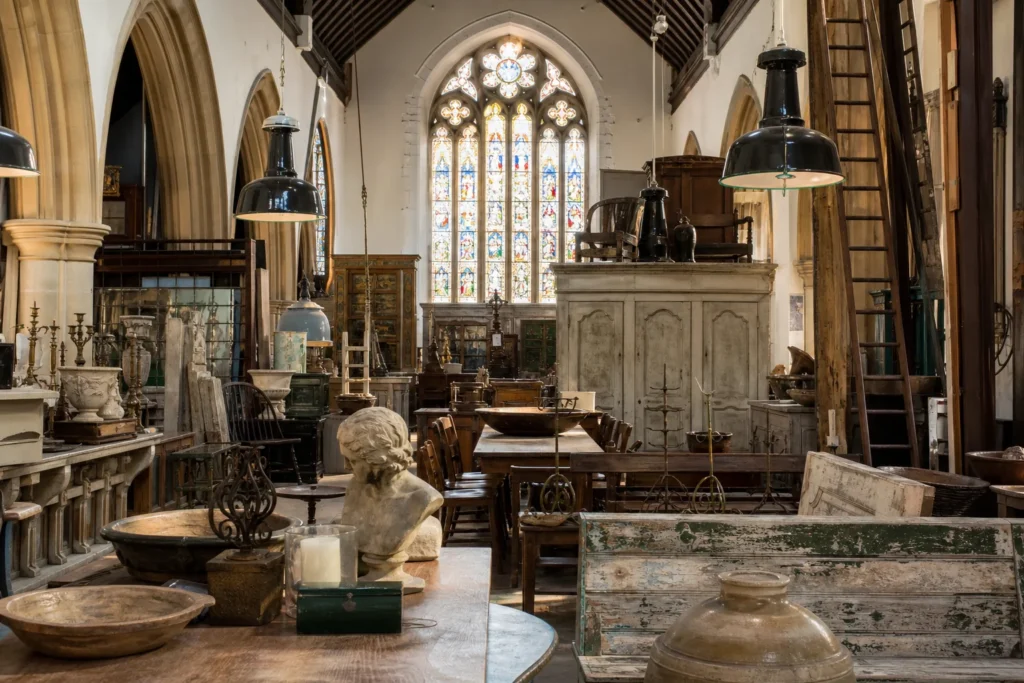
Drew Pritchard Ltd occupies a striking former church building on High Street in Conwy, a medieval walled town in North Wales. The setting feels deliberate. Few places suit a collection built around objects with deep histories quite as well as a town enclosed by thirteenth-century walls.
Pritchard came to dealing through an unusual route — he trained first as a stained-glass restorer. That background shaped everything that followed. Ecclesiastical pieces carry particular weight here: carved choir stalls, altar furniture, fragments of stained glass, and architectural salvage that still bears traces of its original purpose. These are not curiosities arranged for effect. They reflect a collector who understands what these objects were before they became antiques.
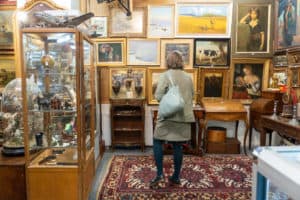
The shop floor rewards a slow walk. Industrial lighting rigs hang overhead near sculptural busts. Garden urns appear alongside campaign desks. A seventeenth-century chair might sit a few feet from a mid-twentieth-century factory lamp, and both feel purposeful rather than mismatched. Pritchard's selection follows accumulated knowledge and instinct rather than any fixed period or style agenda. That is precisely what makes the stock hard to predict and worth returning to see.
Active sourcing drives the collection. Pritchard travels widely — European flea markets, private estates, and salvage yards across the continent — and the inventory turns over often enough that repeat visitors consistently find new material. The shop also offers a custom sourcing service for buyers with a specific type of piece in mind, which has helped build long-term client relationships that go beyond a single transaction. For those who cannot reach Conwy in person, the shop maintains an online presence where new stock appears and pieces can be purchased remotely.
Pritchard is familiar to a wider public through Salvage Hunters, the television series that follows his sourcing trips across Britain and Europe. The show introduced many viewers to architectural salvage as a serious collecting discipline. The Conwy shop is where that sensibility has a permanent home — and where the results of years of sourcing accumulate into something that feels genuinely curated rather than simply gathered.
The shop currently operates by appointment only across all days. Appointments can typically be scheduled Monday to Saturday between 10:00 and 17:00, and on Sundays between 11:00 and 16:00. It is worth contacting the shop directly before making a journey, particularly for visitors travelling from outside North Wales.
Conwy station sits approximately 100 metres from the shop and is served by Transport for Wales trains running between Holyhead and Manchester Airport. Bus route 5 stops at Conwy Railway Station, roughly 70 metres away. Visitors travelling from Liverpool, Birmingham or further afield can connect at Llandudno Junction, approximately 1.5 kilometres distant, where a wider range of Transport for Wales services arrives including routes from Liverpool Lime Street and Birmingham International. Conwy's castle and medieval walls make the town well worth a longer visit, and the shop fits naturally into a day that takes in the wider area.
Frequently Asked Questions
Q: Is the shop open to walk-in visitors?
A: Drew Pritchard Ltd currently operates by appointment only, every day of the week. Appointments can typically be arranged Monday to Saturday between 10:00 and 17:00, and on Sundays between 11:00 and 16:00. Contact the shop directly before making a journey, especially if you are travelling from outside North Wales.
Q: What kind of stock does Drew Pritchard Ltd carry?
A: The collection is deliberately unpredictable. Ecclesiastical pieces — carved choir stalls, altar furniture, fragments of stained glass — sit alongside industrial lighting, architectural salvage, sculptural busts, campaign desks, and garden urns. No single period or decorating style dominates. Pieces tend toward strong physical presence rather than decorative subtlety.
Q: How often does the stock change?
A: Turnover is regular. Pritchard sources actively across European flea markets, private estates, and salvage yards, which means repeat visitors consistently find new material. It is one of the practical reasons serious buyers return more than once.
Q: Can I browse or buy if I cannot visit Conwy in person?
A: The shop maintains an online presence where new stock appears and pieces can be purchased remotely. The range online reflects the same editorial approach as the physical gallery.
Q: How do I get to the shop using public transport?
A: Conwy station is approximately 100 metres from the shop and is served by Transport for Wales trains on the Holyhead to Manchester Airport line. Bus route 5 also stops at Conwy Railway Station, around 70 metres away.
Marketplace Highlights







Add a review