

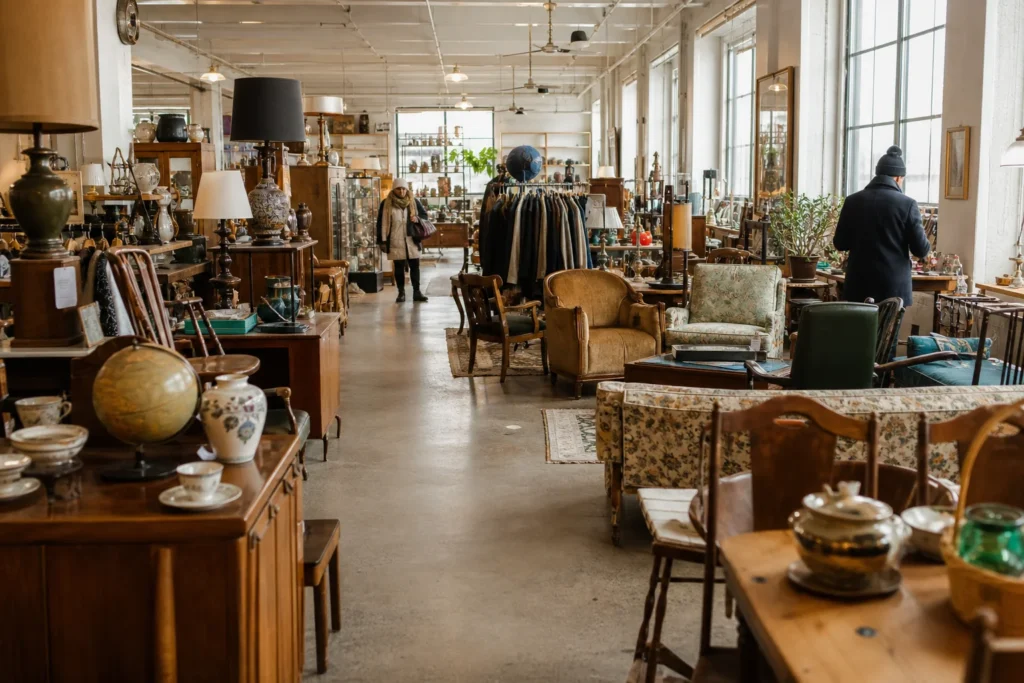

In the Lachine borough of Montréal, tucked along Boulevard Montréal-Toronto, Eco Depot sits somewhere between a well-curated second-hand shop and a genuine neighbourhood institution. It is not a flea market in the open-air sense, but it carries that same spirit of discovery — the sense that the right object might be waiting just around the next display. The store draws collectors, upcyclers and DIY hunters, but it welcomes the unhurried browser with equal ease.
The merchandise spans a pleasingly wide range. Furniture turns up alongside vintage clothing, retro audio equipment appears near decorative objects, and children's toys share floor space with office hardware and accessories. Displays group pieces with some care — a mid-century desk placed near a filing cabinet, older ornaments beside a stereo — so the floor reads as curated rather than dumped. Stock shifts regularly, which gives return visitors a reason to come back.
Layout reinforces the experience. The floor moves logically, so shoppers naturally pass through each section without backtracking. Nothing important hides behind something else. That kind of spatial clarity is easy to overlook until you visit a store that lacks it. Staff add another layer of value: employees tend to know the inventory well and engage with it genuinely. For larger furniture or bulky hardware, the team has been known to assist with loading, which removes the practical barrier that often stops buyers from committing to a bigger piece.
Eco Depot operates as a social enterprise, directing part of its annual proceeds toward a community cause. Supporters reportedly have some input into how that money is allocated. The model gives every purchase a second dimension — what you bring home also contributes something outward. For buyers who already prefer secondhand over new, that framing lands naturally. It also shapes the atmosphere: the store feels purposeful rather than accidental.
The store opens Monday through Wednesday from 10:00 to 17:30, then extends its hours Thursday and Friday until 20:00, making those two evenings useful for visitors who cannot get there during the day. It is closed on Saturdays and Sundays. Bus lines 116-N and 116-S stop at Norman / Richer, approximately 200 metres from the store — a short, straightforward distance on foot that makes the route genuinely convenient without a car.
Montréal has a strong secondhand retail culture, and Eco Depot fits it without blending into the background. It offers the considered atmosphere that better charity shops rarely match: merchandise that looks intentional, staff who can actually help, and a purpose that extends beyond the transaction. Arrive with a specific target or arrive curious — either way, plan enough time to move through the full floor.
Frequently Asked Questions
Q: What kinds of items can I expect to find at Eco Depot Montréal?
A: Stock spans antique and mid-century furniture, vintage clothing and accessories, retro audio equipment, decorative objects, children's toys, and office hardware. The mix shifts regularly, so return visits often turn up something different from the last.
Q: Is Eco Depot open on weekends?
A: No — the store is closed Saturday and Sunday. It opens Monday through Wednesday from 10:00 to 17:30, and stays open until 20:00 on Thursday and Friday, making those two evenings a practical option for visitors who work weekday days.
Q: Can I get to Eco Depot without a car?
A: Yes. Bus lines 116-N and 116-S stop at Norman / Richer, roughly 200 metres from the store on Boulevard Montréal-Toronto in the Lachine borough — a short, straightforward walk from the stop.
Q: Will staff help if I want to buy a large piece of furniture?
A: Staff are known to assist with loading bulkier pieces, which removes a practical barrier that often stops buyers from committing to furniture or heavier hardware. It is worth asking when you are ready to purchase.
Q: Is Eco Depot a charity shop or a for-profit store?
A: It operates as a social enterprise, directing a portion of its annual proceeds toward a community cause, with supporters having some input into how that funding is allocated. The model gives purchases a dimension beyond the transaction, and it shapes the atmosphere noticeably compared with a standard second-hand shop.
Marketplace Highlights










Add a review