

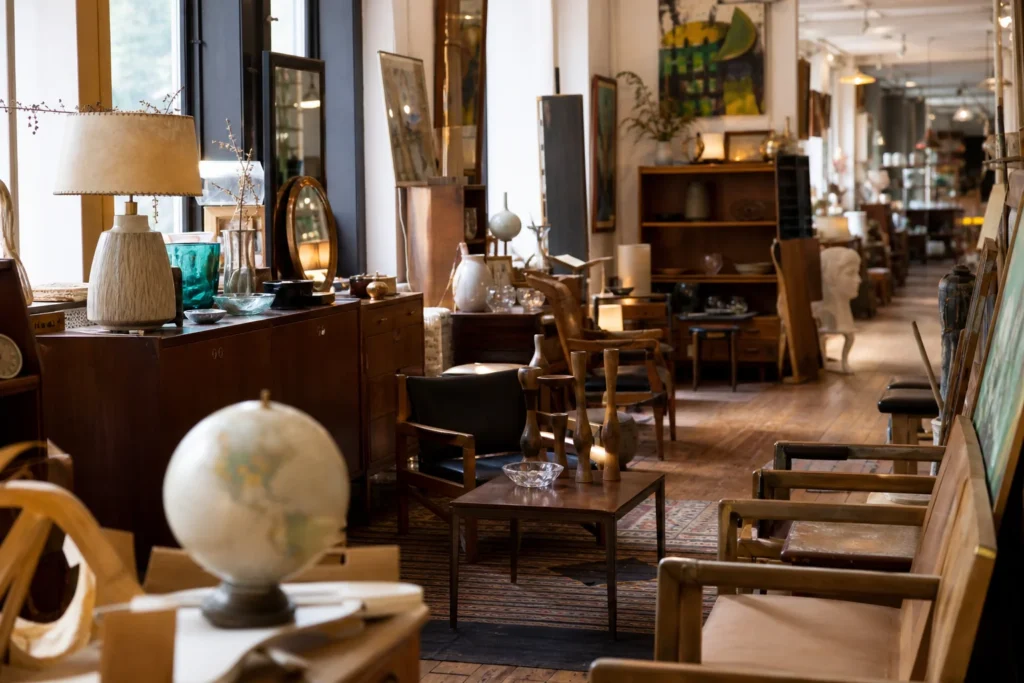

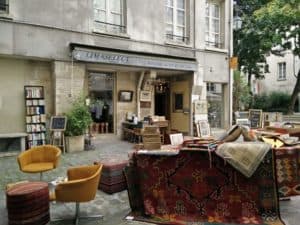
Few antique districts in Canada earn the word "district" as honestly as this one. Along Notre-Dame Street West, west toward Atwater Avenue and into the Saint-Henri neighbourhood, a genuine concentration of dealers has taken root — not in a purpose-built centre, but along a living city street. That origin shows in the texture of the place. Gallery-style shops with precise lighting and glass cases occupy the same block as tight, floor-to-ceiling secondhand rooms and multi-dealer collective floors where independent sellers share a single sprawling space. The range is real, and so is the contrast in price.
The strongest reason to visit is the Quebec material. Heritage furniture, regional ceramics and objects directly tied to the province's distinct cultural history appear here in a density that no other Canadian city can match at street level. These pieces are the district's clearest differentiator — compelling for collectors of local history, and genuinely difficult to find anywhere else in comparable depth.
Alongside the Quebec-specific stock, European and design-era pieces fill out the offer. Scandinavian furniture, Bauhaus objects, Arts and Crafts pieces and Mid-Century modern finds draw collectors and design professionals who know exactly what they are hunting. A third register caters to browsers with a smaller budget or a more instinctive eye — industrial salvage, retro kitchenware, vintage collectibles and curated oddities that reward patience rather than expertise. The district works for serious specialists and for people who simply enjoy a well-stocked shop.
The dealers add something a warehouse antique fair rarely provides. Many are collectors themselves and talk about their stock with real knowledge. Ask about a particular piece and you are likely to get provenance, a period context, a story about how it arrived in Montreal. That kind of conversation shifts the experience from transaction to something closer to a lesson in material history. It is part of what separates this stretch of Notre-Dame from a weekend flea market.
Browsing without a specific plan works well here. One interesting window pulls you into the next, and the unplanned detour often turns up the best find. Collectors with a focused brief can map relevant dealers in advance, but the district rewards wandering as much as preparation. Budget more time than you think you need.
Most shops open Monday through Saturday, generally from 09:00 to 17:00, with Sunday typically a rest day. Individual dealers set their own hours, so it is worth checking with specific shops before making a special trip.
Getting here is straightforward. Lionel-Groulx metro station, served by lines 1 and 2, sits approximately 400 metres from the district and connects easily from central Montreal. The Notre-Dame / Charlevoix bus stop is practically at the door, served by bus lines 35-E, 35-O, 36-E and 36-O. Charlevoix metro station on line 1 offers an alternative approach at roughly 700 metres. Between the metro and the local bus connections, the district is accessible without a car from most parts of the city.
Frequently Asked Questions
Q: What makes the Montreal Antique District different from a typical antique fair or flea market?
A: The district is a permanent stretch of specialist shops along Notre-Dame Street West rather than a weekend event. Many dealers are collectors themselves and will talk through provenance, period context and the story behind individual pieces — the kind of conversation a temporary market stall rarely offers.
Q: What types of antiques and vintage pieces are the district's strongest suit?
A: Quebec heritage material is the real differentiator — heritage furniture, regional ceramics and objects tied directly to the province's cultural history in a concentration no other Canadian city matches at street level. Alongside that, you'll find Scandinavian furniture, Mid-Century modern, Bauhaus and Arts and Crafts pieces, plus industrial salvage, retro kitchenware and collectibles for browsers working with a smaller budget.
Q: When are the shops generally open, and is Sunday a good day to visit?
A: Most shops open Monday through Saturday, roughly 09:00 to 17:00. Sunday is generally a rest day for the district. Individual dealers set their own hours, so check directly with any specific shop before making a special trip.
Q: How do I get to the district by public transit?
A: Lionel-Groulx metro station, served by lines 1 and 2, sits approximately 400 metres from the district and connects easily from central Montreal.
Q: Should I plan a route in advance or is wandering a better approach?
A: Both work. Collectors chasing a specific era or category can map relevant dealers before arriving, but unplanned browsing often turns up the best finds — one interesting window leads naturally to the next. Either way, budget more time than you think you need; a quick pass through a handful of shops rarely satisfies.
Marketplace Highlights








Add a review