

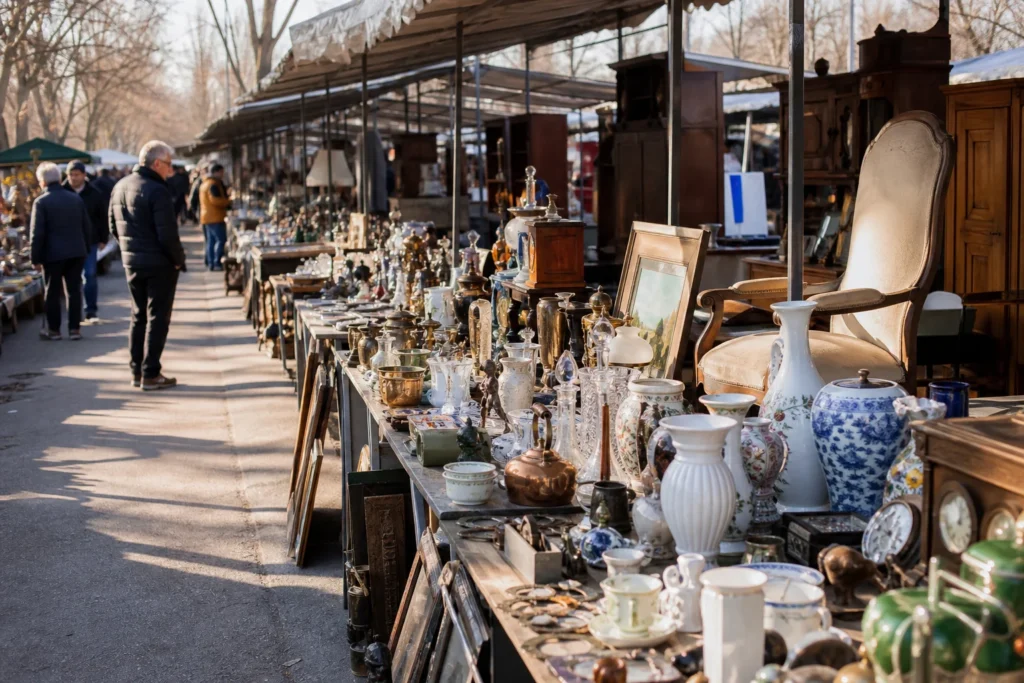

Dealers arrive at Ecseri Bolhapiac before sunrise on Saturdays. The market opens at 05:00, and serious collectors show up in the early dark armed with patience and a specific wish list. That early-morning energy sets the tone for one of Central Europe's most characterful flea markets — a sprawling, uncurated, genuinely rewarding place on the southern outskirts of Budapest.
What gives Ecseri its real distinction is the depth of Hungarian-specific merchandise. Collectors hunting fine porcelain will find pieces from Herend, Zsolnay and Holloháza turning up regularly across indoor stalls. The textile vendors are equally compelling: embroidered linens, lace tablecloths, napkins and hand-stitched pieces that rarely surface outside Hungary. This is the strand that separates Ecseri from a generic European flea market, and it draws buyers from well beyond the city.
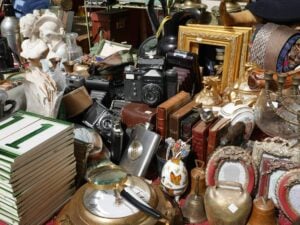
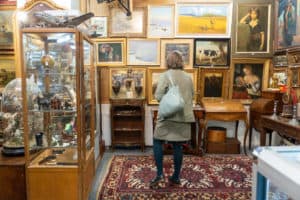
The broader market mix covers the full spectrum of European secondhand trading. Militaria, vintage cameras, vinyl records, old photographs, antique furniture, porcelain figures, costume jewellery and vintage toys fill the stalls alongside paintings, clocks and assorted twentieth-century objects. One collector's corner holds framed oil paintings stacked three deep; another spills into the aisle with cardboard boxes of postcards and badges. The range is wide enough that most visitors arrive with at least one specific focus in mind.
Stalls spread across both indoor halls and the outdoor yard, and many are densely packed without much visible organisation. A systematic approach to every table rarely works well here. Visitors who arrive with a clear target — a particular porcelain manufacturer, a category of militaria, pre-war Hungarian textiles — tend to get more from the experience than those trying to cover everything at once. Two hours is a reasonable estimate for a full circuit of the market at a comfortable pace.
The schedule gives Ecseri an accessibility that most weekend-only markets cannot match. Weekday trading runs from 08:00 to 16:00, Monday through Friday, making it a practical stop for visitors who prefer quieter browsing midweek. Saturdays open at 05:00 and run through to 15:00 — the early hours belong to trade buyers and experienced collectors working quickly before the crowds arrive. Sundays open at 08:00 and close at 13:00, and the pace tends to be noticeably calmer than Saturday morning.
Many vendors at Ecseri know the provenance of individual pieces and are genuinely willing to talk about them. Asking about the origins of an embroidered tablecloth or an old military badge often opens a longer conversation. Many stallholders speak enough English to negotiate and explain, so language is rarely a barrier for visitors looking to buy or simply learn more about what they are handling.
Ecseri sits on Budapest's outskirts, but the city's public transport network connects it to the centre in well under an hour. The journey is worth it for anyone seriously interested in Hungarian decorative arts, textile collecting or militaria. It also suits the kind of buyer who values a market that feels genuinely untouched by curation — one where the next find depends entirely on how carefully you look.
Frequently Asked Questions
Q: What makes Ecseri worth the trip from central Budapest?
A: It is one of the few places in Hungary where Hungarian-specific pieces — Herend, Zsolnay and Holloháza porcelain, embroidered linens, lacework and hand-stitched textiles — surface regularly at open-market prices alongside the usual European flea market mix of militaria, vinyl, cameras, vintage toys and antique furniture. The combination of Hungarian depth and broad secondhand range is what separates it from a generic city market.
Q: When is the best time to arrive?
A: Serious collectors and trade buyers target the Saturday opening at 05:00, when the best pieces move quickly. Sunday opens at 08:00 and closes at 13:00, and the pace tends to be calmer — better for unhurried browsing. Weekday hours run 08:00 to 16:00 Monday through Friday if you prefer a quiet midweek visit.
Q: How long does it take to cover the market?
A: A comfortable full circuit of both the indoor halls and outdoor yard typically takes around two hours. Arriving with a specific focus — a porcelain maker, a category of militaria, pre-war textiles — tends to make the visit more productive than trying to cover every stall systematically.
Q: Can I talk to vendors about what they are selling?
A: Many stallholders know the provenance of individual pieces and are genuinely willing to discuss them. Most speak enough English to negotiate and explain, so language is rarely a barrier for international visitors.
Q: How do I get there from the city centre?
A: Ecseri is on Budapest's southern outskirts and is reachable by public transport from the city centre in under 40 minutes. Check current route options before you go, as services can change.
Marketplace Highlights








Add a review