


Region
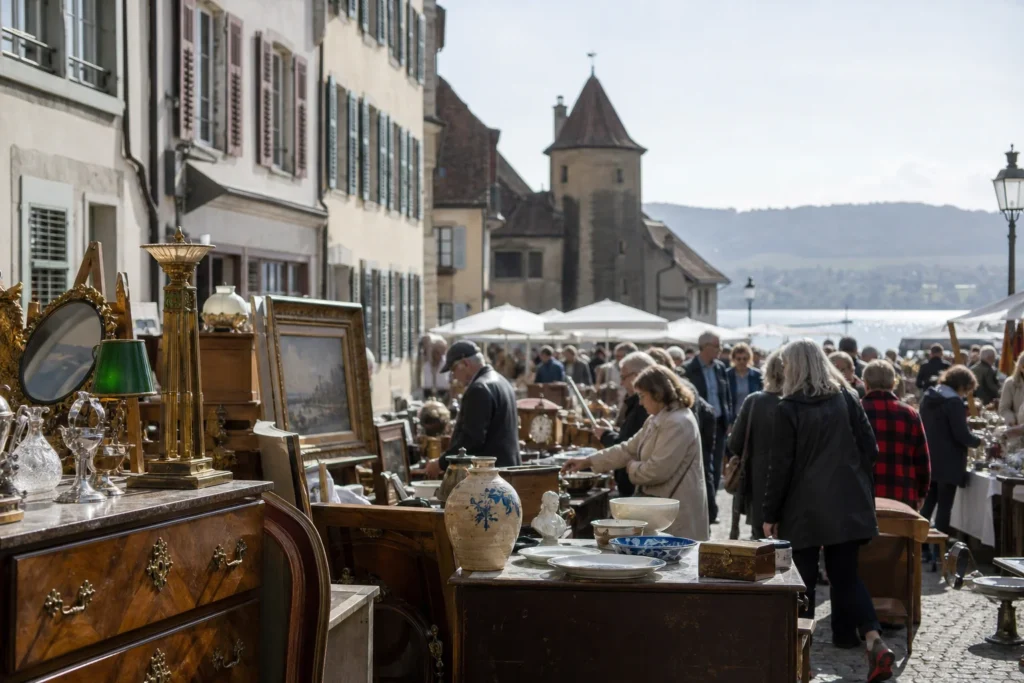
Every autumn, the medieval village of Le Landeron transforms into one of Switzerland's most remarkable brocante destinations. Compact stone streets lined with centuries-old facades become a vast open-air market, and the quiet lakeside atmosphere gives the whole event a character that few fairs of this scale can match. Set against the wooded shores of Lake Biel in the canton of Neuchâtel, Le Landeron provides a backdrop that feels genuinely earned rather than merely scenic. This is a place where the setting and the fair reinforce each other.
The Fête de la Brocante takes place on the last full weekend of September each year. Hours run Friday 14:00 to 19:00, Saturday 09:00 to 19:00, and Sunday 09:00 to 17:00. More than 300 dealers set up throughout the village, and the event regularly draws upward of 100,000 visitors across the three days. That scale places it firmly among the most significant brocante gatherings on the Swiss and broader European calendar.
Experienced collectors know that Friday afternoon is the smartest entry point. Dealers are still arranging their displays, weekend crowds haven't arrived, and the atmosphere feels closer to a trade preview than a public fair. The pace is unhurried and the conversations more direct. For anyone serious about the hunt, arriving before Saturday morning is not just an insider tip — it is a genuine tactical advantage.
The merchandise spans a wide and well-curated range. Decorative and domestic pieces dominate many stalls: painted furniture, ceramic tableware, vintage linens, mirrors, and ornate clocks. Alongside these sit vernacular objects and working tools that reward a more patient eye. Then there is the specialist layer — mid-century collectibles, curiosities and design pieces that draw dedicated buyers from across Europe. Professional dealers with properly curated stock mix freely with sellers offering broader secondhand household goods. That combination keeps the browsing interesting at every level of knowledge and budget.
By Saturday morning the fair fills completely. Moving through the dense network of stalls takes time, and a full circuit of the village is genuinely tiring. Local cafés, food vendors and Le Landeron's village restaurants serve as natural break points throughout the day. Seasoned visitors tend to build in a long lunch or a pause near the lake. The event works best when treated as a full experience rather than a rapid sweep.
Le Landeron is well served by public transport, which the fair's volume of visitors makes the sensible way to arrive. Le Landeron Centre station, approximately 430 metres from the fair grounds, is served by regional train lines R13 and R16 as well as bus lines 131 and 133, connecting the village to Biel/Bienne and Neuchâtel. For those arriving directly into the old town, the Le Landeron Vieille-Ville stop is approximately 250 metres away and served by bus 526. On a busy fair weekend, rail and bus travel avoids the considerable parking pressures that descend on the village.
For antique collectors and brocante enthusiasts planning an autumn trip through central Europe, Le Landeron occupies a category of its own. The combination of dealer quality, merchandise range, medieval setting and lakeside atmosphere makes this one of the strongest single-weekend events on the regional circuit. September weekends fill quickly for accommodation in the area, so planning ahead pays off.
Frequently Asked Questions
Q: When does the Fête de la Brocante Le Landeron take place each year?
A: The fair runs on the last full weekend of September. Hours are Friday 14:00–19:00, Saturday 09:00–19:00, and Sunday 09:00–17:00.
Q: Is Friday worth attending, or is the fair better on the weekend?
A: Friday afternoon is arguably the best time to arrive. Dealers are still arranging their stalls, weekend crowds haven't yet descended, and the atmosphere is closer to a trade preview. Serious collectors treat it as an early-access advantage rather than a partial day.
Q: What kinds of things are sold at the fair?
A: The 300-plus dealers offer a broad but well-curated mix: painted furniture, ceramic tableware, vintage linens, mirrors and clocks sit alongside old tools and vernacular objects, with a specialist layer of mid-century collectibles and curiosities that draws dedicated buyers from across Europe. Professional dealers with curated stock mix freely with sellers offering general secondhand household goods.
Q: How do I get to Le Landeron without a car?
A: Le Landeron Centre station, around 430 metres from the fair grounds, is served by regional train lines R13 and R16 connecting to Biel/Bienne and Neuchâtel, as well as bus lines 131 and 133. Given the volume of visitors the fair attracts, public transport is the practical choice.
Q: How long does it take to see the fair, and is there food available?
A: A full circuit of the village stalls is genuinely tiring — experienced visitors budget most of a day rather than a quick sweep. Local cafés, food vendors and village restaurants are scattered throughout, and a long lunch or a pause near Lake Biel is how most seasoned attendees structure the experience.
Marketplace Highlights









Tori O
27th September 2026 at 15:14Not terribly impressed with the quality of goods offered. There were a few vendors with high quality merchandise but prices were high and not really negotiable. In addition, if going show up Friday around 10:00. Most vendors are set up and crowds are few. Saturday was mobbed and lots of strollers!