

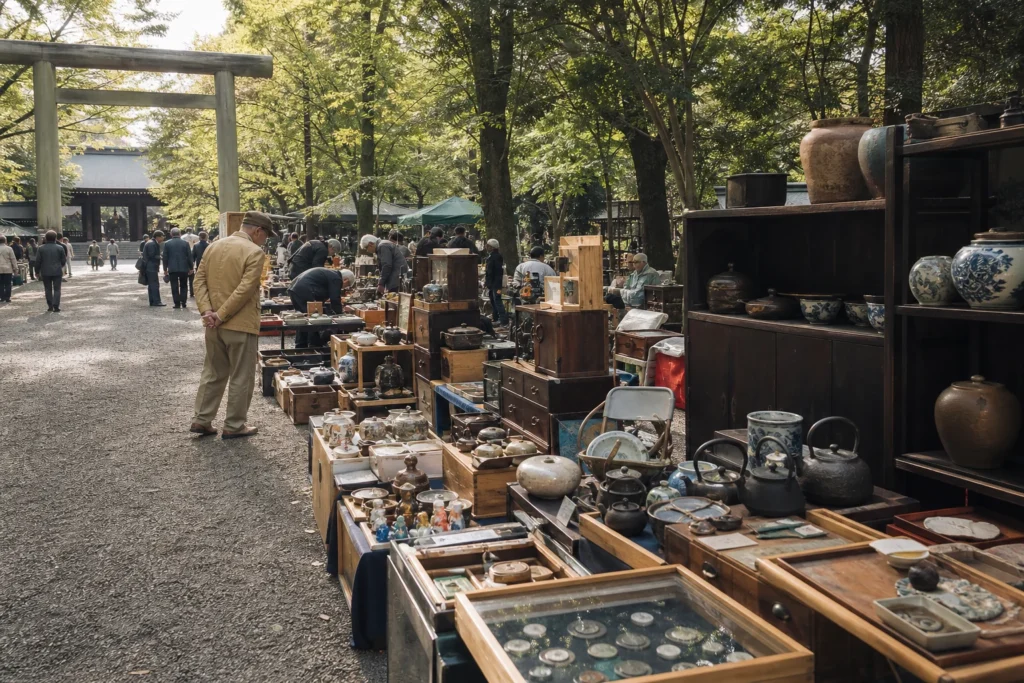

Inside the grounds of Yasukuni Shrine in Kudankita, Chiyoda, a small open-air antique fair once gathered between 10 and 20 specialist vendors among the zelkova trees. That compact scale is the first thing worth knowing. This is not a sprawling Tokyo market event — it is an intimate, unhurried browsing experience set against one of the city's most historically weighted backdrops.
The 靖国神社青空骨董市 is currently listed as temporarily suspended, with all days showing as closed. Visitors planning a trip specifically for the fair should check directly with the shrine before making the journey. The description below reflects the market as it has previously operated.
When running, the fair opened from sunrise and continued through to sunset on a weekly basis. The vendor mix drew sellers from across Tokyo, and the stock leaned toward small Japanese antiques and curios — old coins, vintage decorative objects and occasional pieces of compact furniture. Meiji-era coins and lacquerware sit comfortably within what a fair of this type and setting tends to attract, though the precise stock shifts from week to week. With only a handful of stalls, sellers know their inventory well. Patient browsers tend to do better here than anyone chasing volume.
Yasukuni Shrine itself was established by Emperor Meiji and enshrines over two million people who died in Japan's modern conflicts. That history gives the grounds a particular gravity. The shrine also commemorates 1,068 individuals convicted of war crimes, including Class A war criminals — a fact that has generated lasting diplomatic and moral debate, and that shapes the atmosphere of any visit here. Wandering the stalls feels different inside these grounds than it would at a neutral urban venue. Some visitors find that contrast thought-provoking; others simply find it striking.
The fair suits a specific kind of visitor: someone already spending time in central Tokyo who combines a shrine visit with a relaxed look through the stalls. It appeals to collectors of small Japanese antiques and anyone drawn to the quieter end of Tokyo's antique market scene. The setting alone — a working shrine with ancient trees, stone lanterns and a ceremonial gate — distinguishes it from every other antique fair in the city.
For access, Ichigaya Station sits approximately 500 metres away and serves subway lines N, S and Y as well as JR train line JB, making it the most practical arrival point from across the city. The Kudan-Sanchome bus stop, served by bus route 高71, is roughly 100 metres from the shrine — the closest public transport option available. Iidabashi Station on JR line JB offers a further alternative approximately 750 metres away and connects well from the broader Iidabashi and Kagurazaka area.
Frequently Asked Questions
Q: Is the Yasukuni Shrine Antique Fair currently open?
A: The fair has been on hiatus and all market days are currently showing as closed. Check directly with Yasukuni Shrine or the organizer's official page before planning a visit specifically for the market.
Q: What kind of antiques and objects typically appear at this fair?
A: When running, the fair drew 10 to 20 specialist vendors selling small Japanese antiques — old coins, vintage decorative objects, lacquerware and occasional compact furniture pieces. Stock shifts from week to week, so there are no guaranteed finds, but Meiji-era coins and curios are in keeping with what a Tokyo shrine market of this type tends to attract.
Q: How does this fair compare to larger Tokyo antique markets?
A: It is considerably more intimate than events like the Oedo Antique Market. The modest vendor count makes for unhurried browsing — sellers know their stock well and there is room to look properly. It suits a patient collector or a curious visitor rather than anyone chasing volume.
Q: What is the easiest way to get here by public transport?
A: Ichigaya Station (subway lines N, S and Y, plus JR line JB) is around 500 metres away and offers the broadest connections from across the city. The Kudan-Sanchome bus stop on route 高71 is the closest stop at roughly 100 metres from the shrine entrance. Iidabashi Station is a further option at approximately 750 metres.
Q: Is the shrine itself worth visiting even if the market is not running?
A: Yes — the grounds are striking in their own right, with a large torii gate, stone lanterns and mature zelkova trees. The shrine carries considerable historical weight as a site commemorating Japan's war dead, including figures whose enshrinement has generated lasting debate. Many visitors find the atmosphere thought-provoking regardless of whether the market is active.
Marketplace Highlights








Craig Obrien
8th December 2015 at 14:00Yasakuni Shrine is one of the great places to visit in Tokyo. As well as the excellent surroundings, huge park across the road and the history in symbolizes every third Sunday there is a fabulous flea market held under the trees rimming the grounds. There are some amazing things on offer but bargain hard for a decent price. It is easily reached from the Kudanshita subway line – take exit 3 and just wander up the hill. There is good signing in the station so it will be easy to find the best exit.
Kenyatta Aldrich
8th April 2016 at 09:12We went to Yasukuni Shrine on a Sunday morning and were pleasantly surprised to see that there was an antique market running along the main entrance on our way out. It seemed that on weekends they would be here selling a range of used military items and relics. Items on sale include samurai swords, old army bayonets, Japanese army uniforms and hats. One would easily find the Shrine preserved of its strong military character, a sure attraction for history-war enthusiast.
Jana Meyer
18th April 2016 at 13:36The flea market held on the grounds on Sundays are well worth the trip if you’re in the market for anything from kimono obis to antiques to old photos.
Edward Davis
30th April 2016 at 10:40Given the status of Yasukuni Shrine, there is a good bit of WWII memorabilia (the shrine itself is controversial but historically significant). We’ve found the prices here to be better than other shrine sales and the shopkeepers pleasant to deal with.