


Region
Houston Antiques + Art + Design Show is permanently closed. The market is retained as an editorial archive of the venue and its distinctive character.
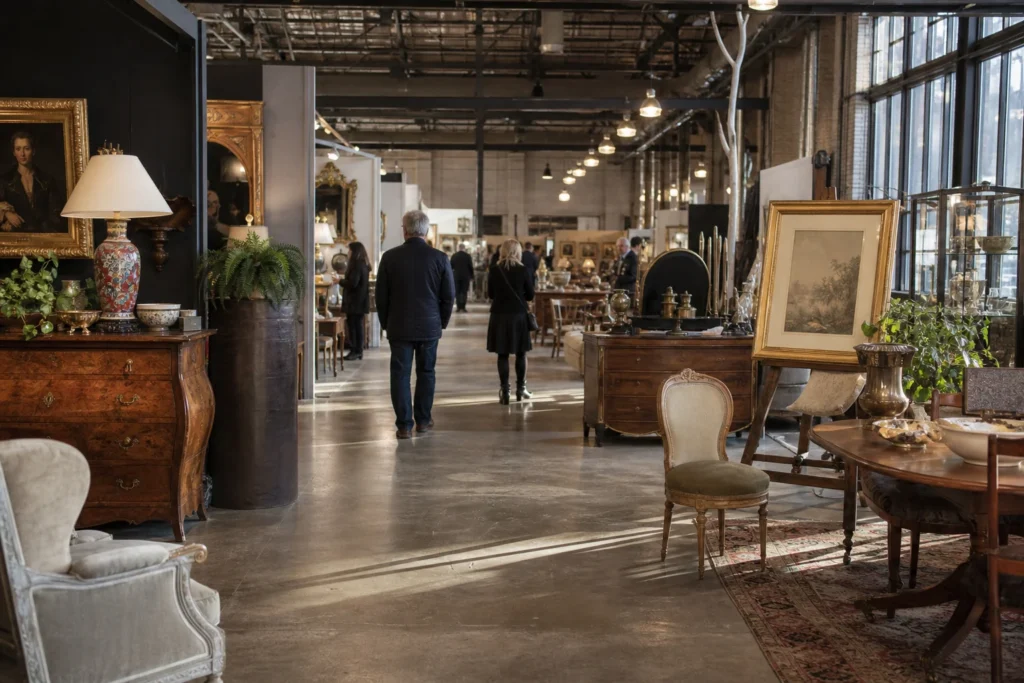
Sawyer Yards gave the Houston Antiques + Art + Design Show a setting unlike most events on the Texas fair calendar. The converted industrial warehouses of the complex sat close to downtown Houston, in the heart of the Washington Avenue arts corridor, and their raw scale gave the fair an unusual sense of volume and atmosphere. Dealers arranged their material across spaces that read less like a conventional market floor and more like a series of interconnected galleries. That physical character suited the show's ambitions well.
At the centre of what made the event distinctive was Dolphin Promotions, the organiser behind it. Dolphin had a strong reputation across the American antiques fair circuit for holding its participating dealers to rigorous standards. Vetting was taken seriously, and collectors who followed Dolphin events understood what that meant: the material on the floor had been selected for quality and provenance, not simply assembled for volume. That trust shaped how visitors engaged with the show from the moment they arrived.
The range of periods on display was notably broad. Dealers brought work spanning the decorative traditions of the seventeenth, eighteenth and nineteenth centuries, and the programme extended forward into vintage twentieth-century modern. That combination was unusual for a single fair and served a wide spectrum of collector interests. A buyer focused on Georgian furniture and a collector drawn to mid-century design could both find material with documented history and genuine dealer knowledge behind it.
What filled the floor reflected that breadth of period and taste. Fine art, sculpture and decorative objects occupied one strand of the show. Silverware, jewellery, watches and clocks formed another. Furniture at every scale appeared alongside lamps, vases and lighting. Vintage fashion accessories, including handbags with provenance, drew their own audience. Across all of these categories, the conversations with dealers tended to be as substantive as the objects themselves. Dealers brought context, and serious buyers came prepared to ask for it.
The show ran over a long weekend once a year, and a single admission ticket covered all three days. That structure rewarded collectors who returned more than once. Many visitors mapped the floor on opening day, then came back to revisit specific dealers or negotiate on pieces spotted early. Arriving on the first day gave the clearest first look at the full range before the most sought-after material began to move.
Within the wider landscape of American antiques fairs, the Houston show held a particular position. Its combination of a curated dealer roster, an architecturally distinctive setting and a period range that stretched from antique to modern gave it a character that was harder to replicate than a standard regional fair. For collectors in the Gulf Coast region and those travelling from further afield, it represented the kind of event built around substance rather than scale alone.
Frequently Asked Questions
Q: What kind of antiques and collectibles did the Houston Antiques + Art + Design Show typically feature?
A: The show brought together a notably wide span of material under one roof. Decorative arts from the seventeenth, eighteenth and nineteenth centuries appeared alongside vintage twentieth-century modern, meaning traditional period collectors and mid-century enthusiasts both found relevant pieces. Categories included fine art, sculpture, furniture at every scale, silverware, jewellery, clocks, watches, lighting, decorative objects and vintage fashion accessories such as provenance-documented handbags.
Q: Who organised the show, and what did that mean for quality?
A: Dolphin Promotions ran the event. The company had a strong reputation across the American antiques fair circuit for rigorous dealer vetting, which meant material on the floor had been selected for documented provenance and authenticity rather than simply assembled for volume. Collectors who followed Dolphin events understood that standard and came expecting substantive conversations with dealers as well as the objects themselves.
Q: Where was the show held, and what was the atmosphere like?
A: The show took place at Sawyer Yards, a converted industrial warehouse complex in Houston's Washington Avenue arts corridor. The raw scale of the spaces gave the fair an unusually gallery-like atmosphere, distinct from a conventional market floor, with dealers arranging material across interconnected rooms that suited the quality of the work on show.
Q: How did the three-day format work?
A: The show ran over a long weekend once a year, and a single admission ticket covered all three days. Many collectors used the first day to map the full floor, then returned on subsequent days to revisit specific dealers or reconsider pieces spotted early. The multi-day structure rewarded that kind of deliberate, unhurried buying approach.
Marketplace Highlights








Add a review