


Region
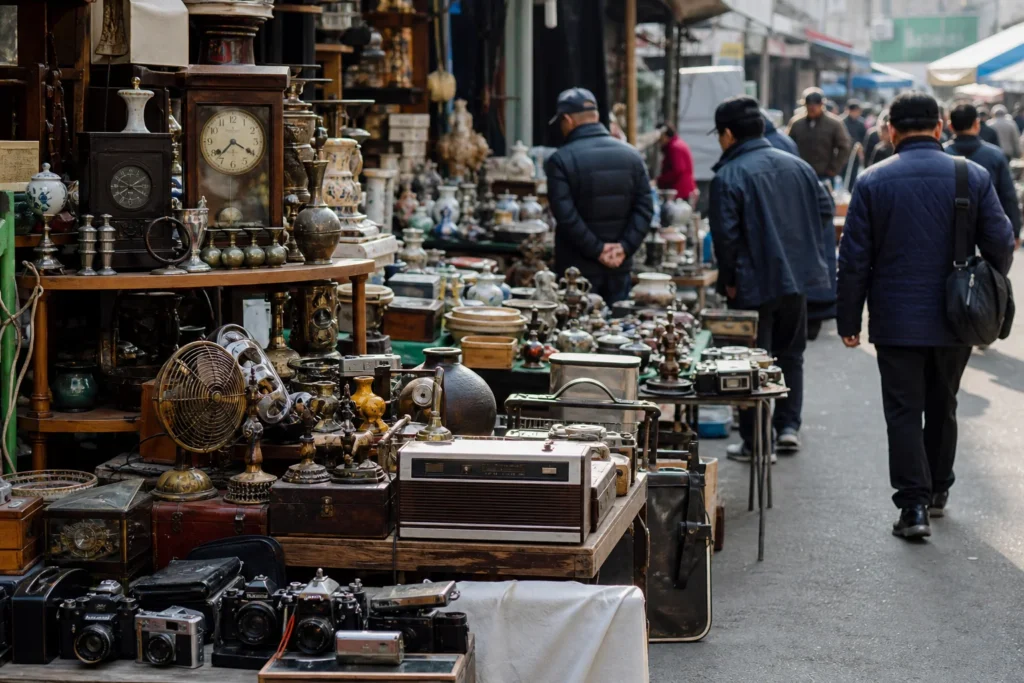
Locals and longtime Seoul shoppers know it by two nicknames: "The Monster Market" and the "All-Things Market." Both names fit. Hwanghak-dong Flea Market sprawls across a dense cluster of alleys in central Seoul, hosting around 1,000 shops and stalls that together cover a range of goods almost no other market in the city can match. The market grew out of the informal trading culture that took root in the 1950s and has been a fixture of Seoul's second-hand economy ever since.
Unlike most of Seoul's well-known markets, Hwanghak-dong opens every day of the week. Stalls and shops run from 09:00 to 18:00, Monday through Sunday, though the market closes when rain or snow makes outdoor trading impractical. That daily rhythm makes it far easier to visit on a weekday, when the crowds thin and dealers have more time to talk.
The antique alley is the most rewarding section for serious collectors. It sits between Samil Apartments 15-dong and 16-dong, near Cheonggyecheon 7-ga Street, and the shops here are dense with mid-century Korean objects. Old mortars and grinders, phonographs, vintage cameras, compasses, pipes, and antique coins fill the shelves alongside heavier pieces like early refrigerators and televisions. It takes patience to work through, but that patience tends to pay off.
The electronics district covers the area behind Samil Apartment 13-dong, running past the Seongdong Technical High School toward Samil Apartment 17-dong. Shops here stock TVs, car stereos, air conditioners, video game consoles, and household appliances in various states of repair. The first alley's one-storey building holds used books, old DVDs, and more consumer electronics. Machinery stores occupy the second street of Jungang Market, rounding out the market's five distinct zones.
Prices at Hwanghak-dong tend to sit below what you'd pay at other Seoul markets for comparable goods. The real advantage is the stock itself — pieces surface here that rarely appear anywhere else in the city. Bargaining is expected and generally welcomed, though pushing too hard on already-low prices can sour a deal quickly. A calm, unhurried approach works best.
The market suits a specific kind of visitor well: collectors hunting mid-century Korean antiques, electronics enthusiasts chasing second-hand finds, and curious travellers who prefer a working specialist market over a tourist-facing shopping street. It feels less polished than Insadong and less curated than Namdaemun, and that rougher texture is exactly the point.
Getting here is straightforward. Dongmyo (동묘앞) Station on subway Line 6 sits approximately 300 metres away and is the easiest access point for most visitors. Sindang (신당) Station, also on subway Line 6, offers an alternative at roughly 400 metres. For a local bus option, the Cheonggye 8 Gayeongdogyo stop — served by bus lines 2013 and 2230 — is approximately 150 metres from the market, making it the closest public transport option of all.
Frequently Asked Questions
Q: When is Hwanghak-dong Flea Market open, and are there any days it's closed?
A: The market runs Monday through Sunday, generally 09:00 to 18:00, making it one of the few Seoul markets open every day of the week. Trading stops when rain or snow makes outdoor stalls impractical, so it's worth checking conditions before making a special trip.
Q: Which part of the market is best for antique hunting?
A: The antique alley between Samil Apartments 15-dong and 16-dong, near Cheonggyecheon 7-ga Street, is the core destination for collectors. Shops here stock vintage cameras, phonographs, old coins, compasses, mortars and grinders, and heavier mid-century pieces like early televisions and refrigerators. It rewards patience — work through slowly.
Q: Is bargaining expected, and how aggressive should I be?
A: Haggling is normal and welcomed, but pushing too hard on prices that are already low can sour a deal. A calm, unhurried approach works better than aggressive countering, and sellers here are experienced enough to spot an unreasonable bid quickly.
Q: How do I get to the market by subway?
A: Dongmyo (동묘앞) Station on Line 6 is the closest stop, around 300 metres from the market, and the easiest option for most visitors. Sindang (신당) Station, also on Line 6, is a workable alternative at roughly 400 metres.
Q: Does the electronics section keep different hours from the rest of the market?
A: The electronics district may stay open later than the rest of the market, but confirm current hours locally or with the stall before making a dedicated evening visit.
Marketplace Highlights








Add a review