


Region
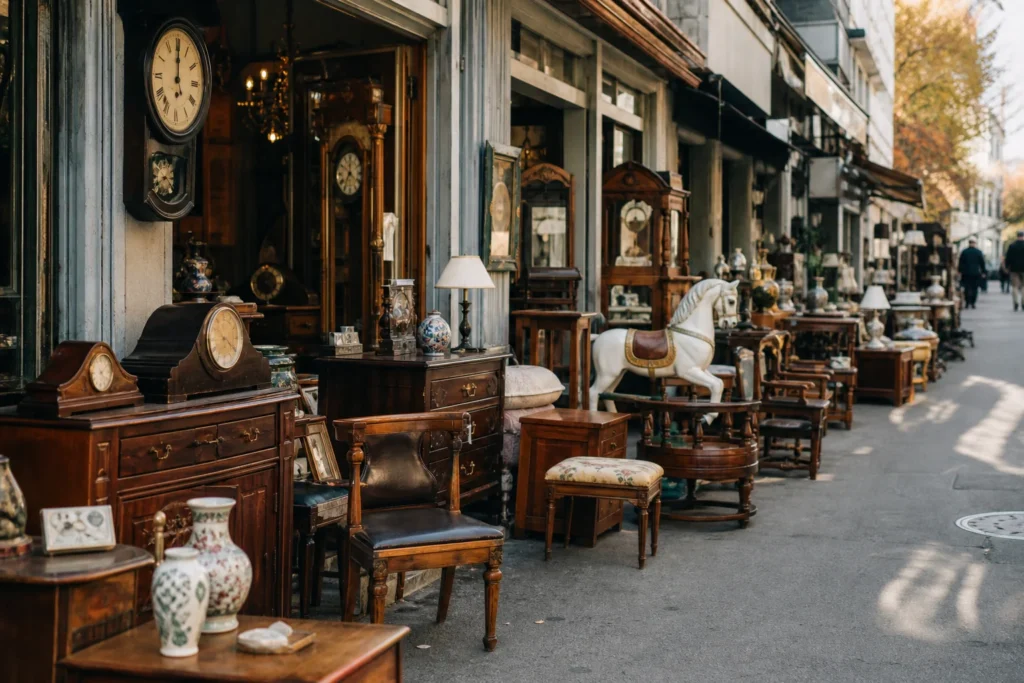
The story of Itaewon Antique Furniture Street begins with departure. In the 1960s, American soldiers stationed at the nearby Yongsan base sold off their furniture before shipping home. Local traders bought it up, and a street took shape. Decades later, that accidental market has grown into one of Seoul's most distinctive antique corridors — a specialist district where dealers source furniture and decorative objects from across the world.
The street runs through Itaewon-dong in Yongsan-gu, and the antique section carries a different energy from the neighbourhood's louder fashion and food strips. The pace here is slower and more deliberate. Individual shops open daily around 10:00 and typically trade until 17:00. Some dealers close on certain Tuesdays each month, so a weekday visit mid-week tends to guarantee the fullest selection.
The merchandise goes well beyond furniture. Dealers stock old wall clocks, vintage posters, carousel horses, mid-century toys, crockery, and decorative objects that surface nowhere else in the city. Pieces arrive from Europe, the Americas and across Asia. The range shifts constantly, and repeat visitors regularly find things that weren't there a month before.
Twice a year, the street's permanent character gives way to something livelier. The Itaewon Antique and Vintage Festival typically runs in May and October, with local antique dealers opening up the street as a flea market. The atmosphere shifts noticeably — more browsing, more chance encounters, more of the one-off pieces that dealers hold back for the event. If timing a trip around this festival is possible, it rewards the effort.
The street suits furniture hunters and interior designers, but also serious collectors and travellers who want to leave Seoul with something genuinely unusual. Conversations with dealers here tend to be more substantive than in a general flea market. Many know the provenance of what they sell and are happy to talk about it. The side streets branching off the main drag carry their own character — wandering them slowly is more productive than rushing.
For transport, Itaewon station on Metro Line 6 sits approximately 480 m away and is the most direct subway approach. Noksapyeong station, also on Line 6, is roughly 620 m in the other direction and offers a quieter entry point from the west. Visitors connecting within Yongsan-gu can use the bus stop near Digitech high school, about 150 m away, served by bus route 용산03. Both subway stations are well connected to central Seoul, making the antique street easy to fold into a wider day in the city.
Frequently Asked Questions
Q: When are the shops on Itaewon Antique Furniture Street open?
A: Most dealers open daily around 10:00 and trade until approximately 17:00. Some shops close on certain Tuesdays each month, so a mid-week visit tends to give you the fullest selection across the street.
Q: What kinds of items can I find here — is it only large furniture?
A: Furniture is the centrepiece, but the range goes well beyond it. Dealers also stock vintage wall clocks, decorative ceramics, mid-century toys, carousel horses, framed posters, and one-off curiosities sourced from Europe, the Americas and across Asia. The mix shifts constantly, so repeat visits regularly turn up new pieces.
Q: What is the Itaewon Antique and Vintage Festival, and when does it take place?
A: Twice a year — typically in May and October — local antique dealers open the street as an outdoor flea market. The atmosphere is livelier than the usual shopping day, with more browsing energy and pieces that don't always appear in regular shop stock. Check the event organizers' official pages before planning a trip around it, as exact dates vary.
Q: How do I get there by public transport?
A: Itaewon station on Metro Line 6 is the most direct approach, roughly 480 m from the antique section. Noksapyeong station, also on Line 6, is about 620 m away and offers a quieter entry from the west. A local bus stop near Digitech high school (bus route 용산03) is around 150 m away and useful for connections within Yongsan-gu.
Q: Is this a good destination for casual browsers, or is it geared toward serious collectors?
A: Both are welcome, but the street has a professional, specialist character rather than a casual flea-market feel. Dealers tend to know their stock well and are often happy to discuss provenance. Furniture hunters, interior designers and serious collectors will find it particularly rewarding, though anyone looking for something genuinely unusual to take home from Seoul will find the wandering worthwhile — especially along the side streets off the main drag.








Reda Gallagher
15th September 2015 at 07:06Walked around the antique street today. The positives are that it is in a spacious area unlike most antique markets across the world. This was started when the Europeans were selling their furniture etc when they left the country so if you are looking for Asian antiques this is not the place for you. And if you have been to Europe this will seem overpriced. Also the shop owners do not want to share the history of the piece so it’s quite disappointing. Note that the market is closed on Sundays
Adelle Kozlowski
30th September 2015 at 09:41This area is purely European antique style. Did not see a single Korean antique shop. Why would I come to Seoul to buy that? Seemed pretty odd to me.
Dean Hendrix
24th November 2015 at 14:53Don’t go if looking for Asian antiques. The street is filled with antique shops but mainly “western” (US and British) items from families of nearby US military bases. No Korean or Chinese antiques.
Dalton Li
10th January 2016 at 13:11I liked the long street full of nice antique pieces. Yes, antiques are pricey. But I believe it is worth it. I wish I have the courage to buy and have one shipped back home, but I don’t have a place for anymore additional furniture.