


Region
Seoul Folk Flea Market — known in Korean as 서울풍물시장 and widely called the Pungmul Market — has an origin rooted in displacement. When the sweeping urban renewal of the Cheonggyecheon stream corridor forced a large group of merchants out of the long-established Hwanghak-dong Flea Market, they didn't scatter. They regrouped, relocated, and built something larger in its place. That act of collective preservation gives the market an identity most tourist-facing shopping districts simply can't manufacture.
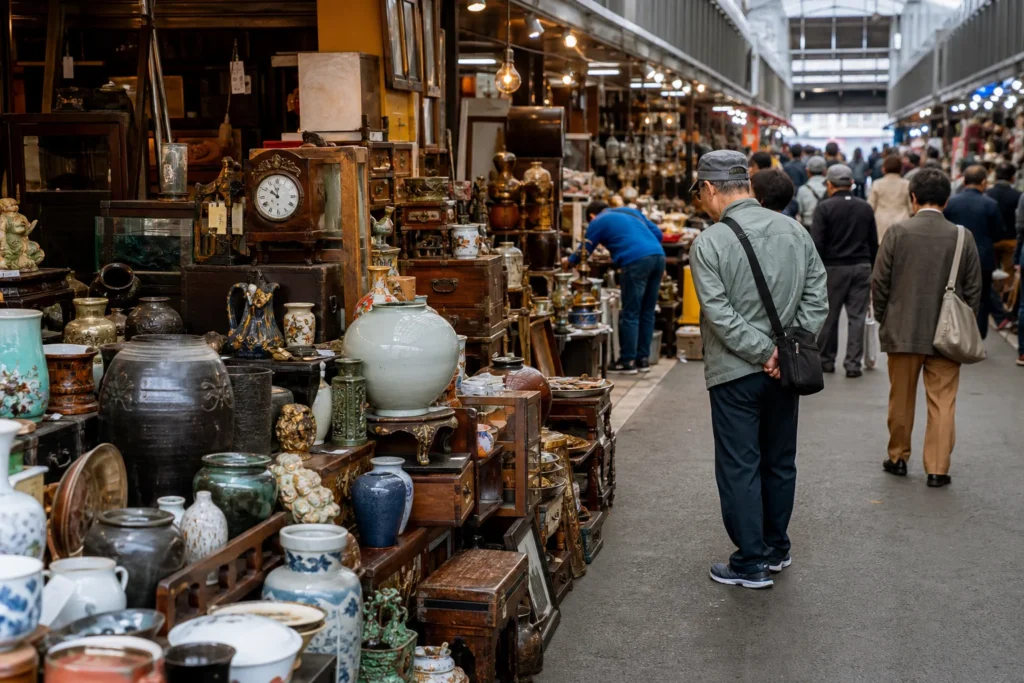
The market now spans 8,000 square metres and houses around 885 shops, making it one of the largest flea markets in South Korea. The internal layout is organised by alley, with vendors grouped according to what they sell. Shoppers move through distinct corridors of clothing, antiques, everyday goods, souvenirs and food. That structure makes it easy to navigate and rewards methodical browsing.
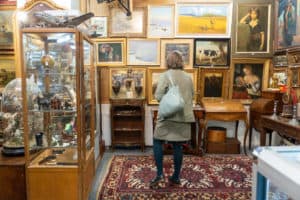
What draws serious collectors to Pungmul is its stock of genuine Korean folk artefacts and everyday antiques — objects that rarely surface in the polished souvenir shops clustered around major tourist landmarks. Ceramic pieces, old household items, traditional decorative objects and the kind of functional goods that defined mid-century Korean domestic life all find their way here. Alongside these, the market carries a broad range of first-necessity goods and cultural souvenirs. The contrast between the rare and the everyday, placed side by side in the same alley, is part of the character.
Food is woven into the experience rather than separated from it. Traditional Korean food stalls sit within the market, so visitors can eat between purchases rather than breaking off to find a restaurant. The atmosphere stays grounded and unhurried. This is a market that reflects ordinary Korean life rather than staging a version of it for visitors — which, for many people, is precisely the appeal.
The Pungmul Market opens daily from 10:00 to 19:00, with one regular exception: it closes on the second and fourth Tuesday of each month. Visitors planning a Tuesday trip should check which week falls in their travel window.
Getting here is straightforward. Sinseol-dong station — served by Seoul Metro lines 1 and 2 and light rail line W — sits approximately 170 metres from the market entrance, making it the most direct transit option. The same area is covered by a dense bus network at Sinseoldong Station bus stop, roughly 180 metres away, with routes including 13, 105, 201, 260, 261, 262, 270, 271, 272, 300, 303 and 370. Visitors combining Pungmul with the antiques shops of the nearby Dongmyo district can also arrive via Dongmyo station on Metro line 1, approximately 650 metres away.
Pungmul suits collectors hunting for authentic Korean folk objects, travellers who prefer a less curated market experience, and anyone curious enough to spend a morning eating and browsing through the texture of everyday Seoul. It rewards patience and repeated visits.
Frequently Asked Questions
Q: When is the Seoul Folk Flea Market open, and are there any regular closing days?
A: The market opens daily from 10:00 to 19:00. It closes on the second and fourth Tuesday of each month, so if you're planning a Tuesday visit, check which week falls during your trip before you go.
Q: Which metro station is closest to the market?
A: Sinseol-dong station is the most direct option, approximately 170 metres from the entrance, served by Seoul Metro lines 1 and 2 and light rail line W. Dongmyo station on line 1 is about 650 metres away and works well if you're combining the market with the antiques shops in the nearby Dongmyo area.
Q: What kinds of antique and vintage items can shoppers expect to find here?
A: The market is known for Korean folk artefacts, traditional decorative objects, old ceramics and everyday household items from earlier periods of Korean domestic life — the kind of pieces that rarely turn up in tourist-focused souvenir shops. Stalls are grouped by product type along distinct alleys, so the antiques section is navigable rather than scattered throughout.
Q: Is there food available inside the market?
A: Yes. Traditional Korean food stalls are located within the market itself, so you can eat between browsing sessions without leaving the site.
Q: Is this market worth visiting for serious collectors, or is it mainly aimed at tourists?
A: It serves both, but the mix leans more toward everyday Korean commerce than curated tourist retail. Collectors hunting for authentic traditional objects are likely to find more of interest here than at landmark souvenir districts. The breadth of stock — from rare folk pieces to first-necessity goods — reflects a working market rather than a staged one.







Lyndsay Nagle
13th July 2015 at 15:38If you’re looking for shopping like Myeongdong or Dongdaemun you’ll be disappointed. But if you like antiques, odds and ends sold by everyday Koreans and antique dealers, you’ll enjoy the visit.
The building itself has a general shopping area (the usual clothes, socks, hats etc), but – to me anyway – the real gem was the antique section on the ground floor plus all the street vendors around the building (bric a brac etc). One man’s trash is another man’s treasure – found some interesting things!
Rob Montoya
24th October 2015 at 10:53I am a collectible-aholic and found this place amazing! The area is huge and you can get just about anything you want, from antiques to junktiques to collectible to second hand goods to used/new stuff, electronics, etc. There is one main area that is in a building that has lots of “good stuff” but then just about every street leading to the building for many blocks around, has all kind of street vendors, locals, families selling “stuff” that you would never find anywhere else, easily anyways. There are restaurants and “main street” shops all around.
It was very easy to get to by the subway and then you had to know where to go after getting out of the subway but I also noticed that there were signs directing to the feel market. Pretty easy to get to and well worth the trip so that you could barter with the locals. This concept is pretty new to them so it was great to experience it; better than the “commercialized” markets, which are neat in their own right, but this is just “different”.
Russel Engle
22nd December 2015 at 18:39Lots of antiques, Buddha heads and Chinese stuff, Korean cabinets, military stuff, etc. the cutlery stall near the ramp offers good wares at fare prices, also Korean made.