

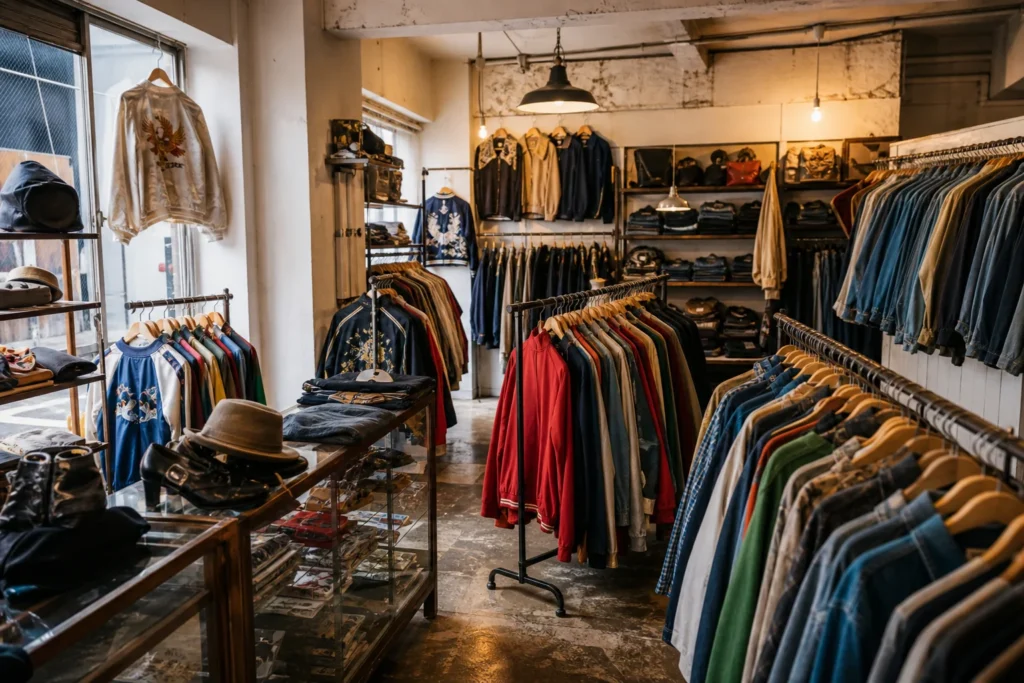
KINJI Harajuku earns its standing on the floor, not just the postcode. The store occupies one of the most competitive stretches of vintage retail in Tokyo, yet it distinguishes itself through organisation. Racks sort by category rather than intake batch, so shoppers looking for denim, outerwear, or athletic pieces can move through with actual purpose. That structure matters. It turns browsing from a rummage into a directed search, and it makes return visits genuinely productive.
The merchandise centres on American streetwear and Japanese casual wear, with a strong showing of heavier outerwear, overalls, and pleated skirts arriving in consistent numbers. Shoes and bags round out the floor without feeling like overflow — they hold their own as a dedicated accessories section rather than an afterthought. Adidas, Stussy, and Bape surface throughout the racks, though the specific mix shifts with each new intake. Nothing is guaranteed to be on the floor on any given day, which is part of what keeps regular visitors coming back.
Sukajan souvenir bomber jackets are the specialist draw. Embroidered satin pieces in decent condition can be genuinely hard to source, and KINJI stocks them with a regularity that sets it apart from most resale shops in the area. For collectors chasing that specific category, the Harajuku store justifies a dedicated trip rather than a passing detour.
Pricing sits above the cheapest end of Tokyo thrift culture, and that gap is honest — the curation earns it. Accessible entry points still exist across most categories, and the range means most budgets find something worth considering. Collector-grade Sukajan jackets and sought-after branded pieces carry prices that reflect their scarcity, though. Arriving with a clear category focus, or at least a rough price ceiling, makes the visit more satisfying than arriving open-ended.
The atmosphere rewards unhurried browsing. Staff carry a visible engagement with the stock — knowledgeable without hovering — and the music keeps energy present without crowding out concentration. The floor space is generous enough that the store rarely feels packed even on busy afternoons, which distinguishes it from the tighter shops on surrounding streets. KINJI operates other branches across Tokyo, Osaka, and Kyoto, but the Harajuku location holds the deepest and most varied inventory of the group. It works equally well as a standalone destination or as the anchor of a wider Harajuku vintage circuit — the surrounding blocks offer independent dealers, larger resellers, and food in every direction.
First-time Tokyo vintage shoppers and dedicated Sukajan hunters both have clear reasons to put this store on an itinerary. The combination of organised stock, recognisable brands, and a specialist jacket category gives KINJI Harajuku a sharper identity than the catch-all feel of many resale shops at similar scale. The store opens daily from 11:00 to 20:00, which gives plenty of room to fit it into an afternoon or pair it with a morning spent elsewhere in the neighbourhood.
Getting here is straightforward. The Omotesando bus stop sits roughly 40 metres away, served by bus lines 早81 and 池86. Meiji-jingumae 'Harajuku' station on subway lines C and F lies approximately 110 metres away and gives direct access from central Tokyo. Harajuku station on the JY train line is around 350 metres away — a short walk through one of the city's most engaging retail stretches. Any of the three options drops visitors comfortably close, and the density of the surrounding area means arriving early or staying late both make sense.
Frequently Asked Questions
Q: What makes KINJI Harajuku worth visiting specifically for Sukajan jackets?
A: Embroidered satin souvenir bombers in decent condition are genuinely difficult to source consistently in Tokyo, and KINJI Harajuku stocks them with a regularity that most resale shops in the area can't match. For collectors chasing that specific category, it's worth a dedicated trip rather than a passing detour.
Q: How is the stock organised on the floor?
A: Racks are sorted by category rather than intake batch, so you can head directly to denim, outerwear, athletic wear, or accessories without working through unrelated stock. Shoes and bags occupy a proper dedicated section rather than overflow space. The organisation makes return visits genuinely productive as new intake arrives.
Q: What price range should shoppers expect?
A: Pricing sits above the bargain-bin end of Tokyo thrift, and that reflects the curation rather than the postcode. Accessible entry points exist across most categories, but collector-grade Sukajan jackets and recognisable branded pieces carry prices to match their scarcity. Arriving with a rough category focus or a price ceiling makes the visit more satisfying than going in open-ended.
Q: Which brand names tend to appear on the floor?
A: Adidas, Stussy, and Bape surface throughout the racks alongside Japanese labels, but the specific mix shifts with each new intake. Nothing is guaranteed on any given day — which is part of what keeps regular visitors coming back.
Q: How does KINJI Harajuku compare to the chain's other locations?
A: KINJI operates stores across Tokyo, Osaka, and Kyoto, but the Harajuku location carries the deepest and most varied inventory of the group. It works equally well as a standalone destination or as the anchor of a wider Harajuku vintage circuit, with independent dealers and larger resellers on the surrounding blocks.
Marketplace Highlights









Add a review