


Kurazh is permanently closed. The market is retained as an editorial archive of the venue and its distinctive character.
Inside the vast Soviet-era exhibition grounds of VDNG, Kyiv once hosted one of Eastern Europe's most distinctive open-air markets. Kurazh Bazar launched in October 2015 inside and around the complex's monumental pavilions. It grew quickly from a local curiosity into a landmark event — a place where the city's appetite for secondhand culture, young design and collective good feeling found a natural home.
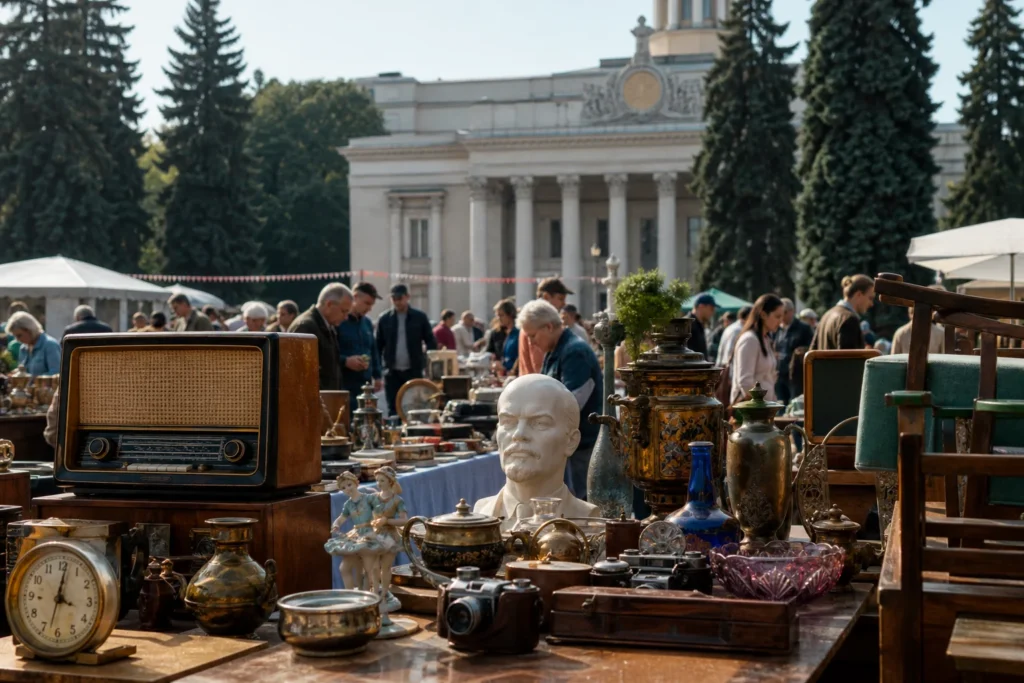
The stalls divided broadly into two worlds. The first belonged to Soviet and vintage material culture: vinyl records, old cameras, stacks of books and newspapers, antique clocks, samovars, vintage photographs of Kyiv and its residents, and layers of Soviet memorabilia. The second drew in decorative antiques — silverware, porcelain vases, crockery, glassware and antique lamps — the kind of objects that surface slowly at the edges of estate clearances and family attics. Prices tended to be approachable, and haggling was woven naturally into the rhythm of browsing. Alongside these tables, young Ukrainian designers sold clothing, accessories and handmade goods. That contrast between inherited objects and fresh local making gave the market its particular energy — part excavation, part showcase.
A portion of every entrance fee went to a charitable fund supporting children with disabilities and serious illnesses. That social mission was not peripheral. It shaped the market's identity from the start and gave visitors a reason to spend with some ease of conscience. The result was a crowd that ranged from serious collectors and antique hunters to style-conscious younger shoppers and tourists drawn in by the atmosphere. Few Kyiv markets attracted such a range of people for such different reasons, and fewer still managed to hold them all comfortably.
Kurazh also ran themed editions that gave each visit its own distinct character. The Jazz Edition brought a particular musical mood to the stalls. Literature Kurazh drew readers and book hunters. The Christmas Party market shifted the whole site into something closer to a seasonal celebration. Live performances, workshops and lectures ran alongside the shopping at most editions, and street bars served wine and cocktails across the grounds. A food court and sun lounger areas on VDNG's green lawns meant many visitors stayed for most of the day. Kurazh never really functioned as a quick browse — it was built to hold people.
The VDNG setting gave all of this an extra layer of resonance. The pavilion complex was constructed as a monument to Soviet industrial ambition, its architecture monumental, ornate and unmistakably of its era. Browsing Soviet memorabilia and pre-war Ukrainian objects inside and around those same pavilions carried an odd historical weight — the material culture of one period surrounded by the grand built ambitions of roughly the same years. That coincidence of setting and stock was not incidental. It made Kurazh something more than a market, and it made VDNG something more than a backdrop.
Frequently Asked Questions
Q: What kind of market was Kurazh Bazar?
A: Kurazh was a large open-air flea market and weekend event held at Kyiv's VDNG pavilion complex. It combined genuine antique and vintage stalls — Soviet memorabilia, vinyl records, old cameras, porcelain, silverware and vintage photographs — with tables run by young Ukrainian designers selling clothing, accessories and handmade goods. Live music, workshops, street bars and a food court made it a full-day destination rather than a quick browse.
Q: Was Kurazh only about shopping?
A: Not primarily. Themed editions — including a Jazz Edition, a Literature Kurazh and a Christmas Party market — gave each visit its own atmosphere. Performances, lectures and workshops ran alongside the stalls, and VDNG's green lawns with sun loungers meant visitors typically stayed for hours. The market was as much a social and cultural event as a place to hunt for objects.
Q: Was haggling expected at Kurazh?
A: Haggling was a natural part of the culture there. Prices across the vintage and antique stalls tended to be approachable, and negotiating was woven into the rhythm of browsing rather than being unusual or awkward.
Q: Did buying at Kurazh support a charitable cause?
A: Yes. A portion of every entrance fee went to a fund supporting children with disabilities and serious illnesses. That charitable mission was central to Kurazh's identity from its founding in October 2015, not a peripheral add-on.
Q: Is Kurazh Bazar still running?
A: Kurazh is permanently closed. This record is maintained as an editorial archive of the market and its character during its years of operation at VDNG in Kyiv.








Add a review