

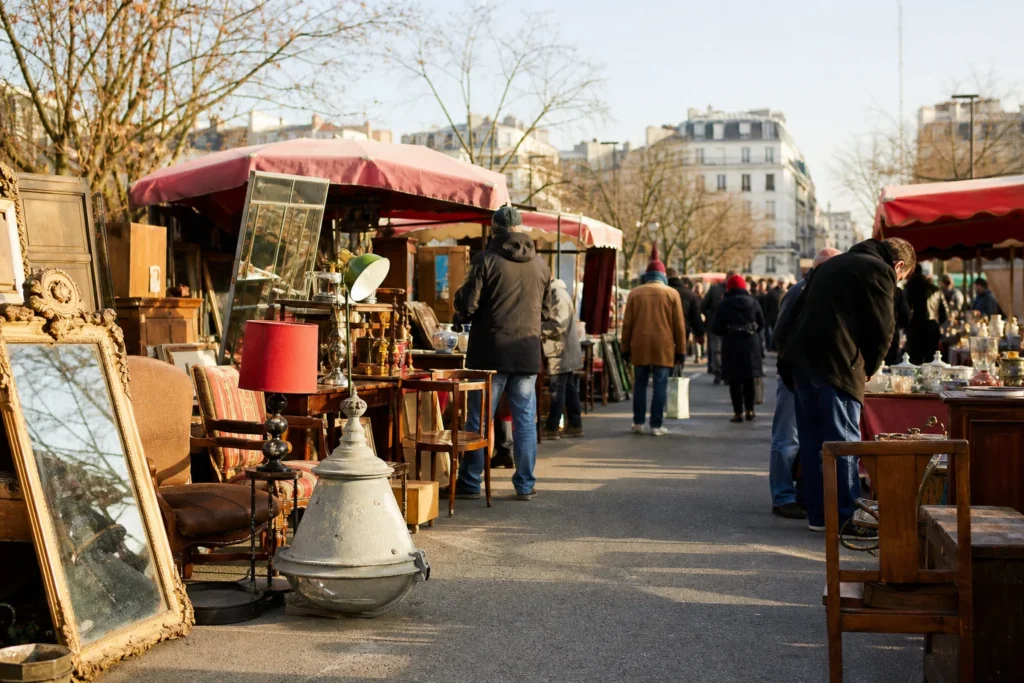

Forget the polished dealer galleries and climate-controlled antique corridors. The Marché aux Puces de Montreuil opens at seven in the morning and wastes no time on presentation. By the time the light is working through the canvas tent covers, stalls are already piled high and the first browsers are deep into the racks. Saturday, Sunday and Monday, from 07:00 to 19:30 — arrive early, and the market still feels like something you've found rather than something you've been directed to.
The market runs along Avenue du Professeur André Lemierre on the eastern edge of Paris, just past the périphérique near Porte de Montreuil. Nothing is arranged for effect. Goods sit in piles, hang from rails, lean against folding tables and spill across groundsheets. That is the point. Montreuil rewards active searching, not casual browsing.
The wearables alone justify the trip. Racks of vintage clothing fill long alleyways — leather jackets, wool coats from decades you can't quite pin, denim, belts stacked in shallow boxes, fabric remnants rolled and stuffed into corners. The cuts and materials here are genuinely old. Dealers sourcing unloved stock know the market well for exactly this reason.
Move deeper and the material shifts. Old lighting fixtures, mismatched crockery, glassware in varying states of survival, stacks of mirrors and chairs waiting for repair. Architectural salvage appears in honest disorder — brackets, handles, door hardware, decorative ironwork buried under tablecloths. A brass fitting worth keeping could be anywhere. That uncertainty is the draw.
The vendors are a varied group. Some pitch their stalls loudly and call out prices as you pass. Others sip coffee and say nothing until they've decided you're worth engaging. Approach with genuine curiosity, ask questions without rushing, and negotiate politely. A calm, considered offer almost always lands better than impatience. The market has its own tempo, and sellers tend to respond well to visitors who match it.
When the density of objects starts to blur, step back and take a break at one of the food stands scattered through the alleys. Crêpes, sandwiches and coffee appear between stalls. Watch how goods change hands — handshakes, nods, folded notes — and the market's character becomes clearer. It is a working marketplace, not a photo opportunity. Objects here carry genuine use-history: small dents, worn edges, patina that no staging produces.
Getting there is straightforward. Porte de Montreuil on metro line 9 sits approximately 450 metres from the market and is the standard arrival point for most visitors. The Édouard Vaillant bus stop, served by bus 351, is around 200 metres away. Porte de Montreuil also connects tram T3b and buses 57, 202 and La Traverse for those coming from other directions across the city.
Bring small bills, wear shoes suited to uneven ground, and plan at least two hours. Montreuil suits collectors hunting salvage, vintage dealers on a sourcing run, and anyone who finds Saint-Ouen a little too composed. It isn't the most famous flea market in Paris. For many regulars, that is precisely why it remains the most worthwhile.
Frequently Asked Questions
Q: When does the Marché aux Puces de Montreuil open, and which days does it run?
A: The market runs on Saturdays, Sundays and Mondays, from 07:00 to 19:30. Early morning arrivals get first pick of stalls before the crowds build.
Q: How do I get there by public transport?
A: Porte de Montreuil on metro line 9 is the standard arrival point, approximately 450 metres from the market. Tram T3b and several bus routes also serve Porte de Montreuil for those coming from different parts of the city.
Q: What kind of goods can I expect to find?
A: Montreuil leans heavily toward vintage clothing — leather jackets, wool coats, denim, belts — alongside household objects, old lighting fixtures, glassware, mismatched crockery, mirrors and architectural salvage. Nothing is sorted by category; finding something good requires active digging rather than casual browsing.
Q: Is bargaining expected, and how should I approach it?
A: Negotiating is part of how the market works. A calm, polite offer lands far better than impatience. Approach vendors with genuine curiosity, ask questions, and give the conversation time to develop — sellers here respond well to visitors who match the market's pace rather than rush it.
Q: Is this market suitable for serious vintage and antique hunters, or is it more of a tourist attraction?
A: Montreuil is a working marketplace, not a curated experience. Goods carry real use-history — worn edges, honest patina — and dealer buyers visit regularly for exactly that reason. It rewards collectors willing to dig rather than those looking for things already presented for sale.
Marketplace Highlights










Add a review