

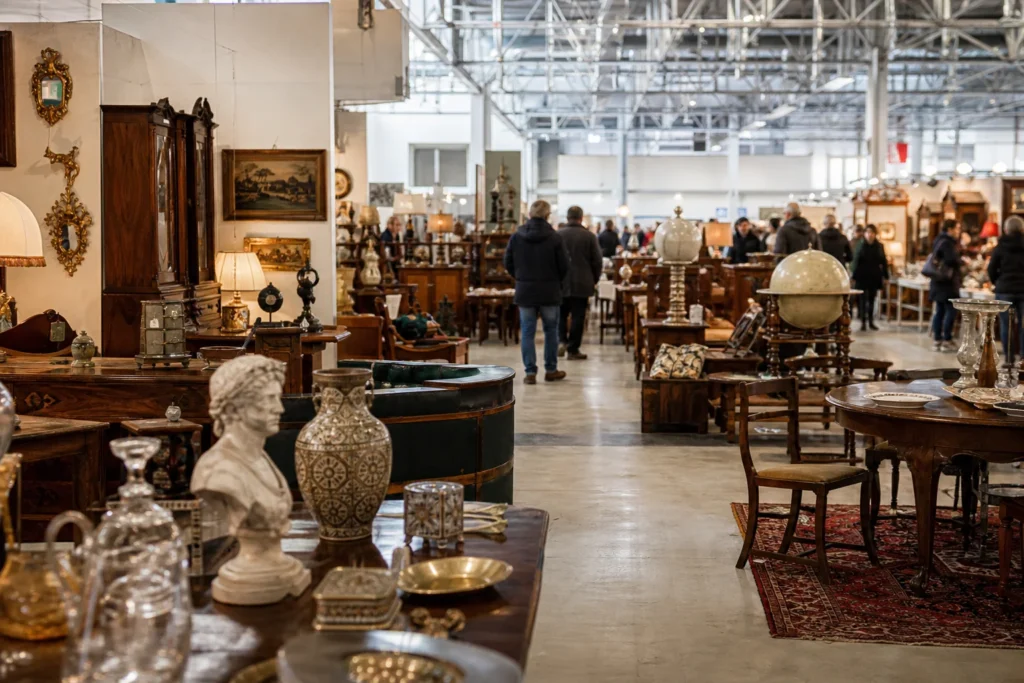

Twice a year, Parma transforms into one of Europe's most serious destinations for antiques and vintage. Mercanteinfiera occupies the vast exhibition centre on Via delle Esposizioni, spreading across three pavilions and roughly 45,000 square metres of floor space. Close to 60,000 visitors pass through each edition. The fair typically runs for eight days in both March and October, opening on the first Saturday and closing on the second Sunday, with doors open daily from 10:00 to 19:00. Exact dates shift slightly from year to year, so checking the current programme before planning travel is worth the few minutes it takes.
Arriving without context can be overwhelming. Three pavilions, more than 1,000 stalls, and a chronological sweep that runs from medieval pieces to 19th-century decorative arts — the scale demands some navigation strategy. Two of the three pavilions belong to antiques and period furniture. The depth here is remarkable. Museum-quality pieces sit beside everyday objects from the same eras, and the variety across centuries gives even veteran collectors something unexpected to find. Scanning the exhibitors' list online before entering saves real energy on the day. That said, wandering without a plan works equally well if time allows — the fair rewards both approaches.
The third pavilion concentrates on mid-century design, jewellery and vintage fashion, with around 900 booths packed into a focused space. This is where the fair earns its reputation among fashion collectors. Stalls carry archival pieces by Versace, Armani and Ferré alongside French houses — Chanel and Louis Vuitton appear regularly. Lesser-known Italian tailors are well represented too, both men's and women's, and those booths are worth slowing down for. The craft is often exceptional and the pieces genuinely hard to find elsewhere.
Pricing throughout Mercanteinfiera reflects the expertise of the people behind the stalls. Exhibitors are specialists who know their stock precisely. Expect fair market value rather than overlooked bargains. Most sellers will negotiate, and fashion vendors tend to be the most flexible — approach any conversation with genuine respect for what is on offer, and it usually leads somewhere productive.
Accessories reward patient shoppers most consistently. Leather goods from Tuscany, archival Hermès pieces, designer shoes, vintage hats and a strong spread of sunglasses fill the category across a wide price range. Some pieces are priced accessibly enough to suit buyers not yet ready to spend at the high end. For anyone building a collection with a clear visual identity, this section alone can justify the trip.
Mercanteinfiera suits serious collectors, trade buyers and informed vintage shoppers who want to experience European antique culture at genuine scale. The atmosphere is professional without being intimidating, and the depth of stock across all three pavilions is hard to match anywhere else in Italy.
Bus line 12 serves the area, with a stop at Roncopascolo Vallazza approximately 850 metres from the exhibition centre — the closest public transport option for visitors arriving without a car. A second stop on bus line 12 at Roncopascolo via Don Calzolari sits roughly 1.1 kilometres away and offers an alternative if needed. Both distances are approximate straight-line distances. Parma's city centre is well connected by rail, making the fair reachable for visitors based across the wider Emilia-Romagna region.
Frequently Asked Questions
Q: When does Mercanteinfiera take place, and how long does it run?
A: The fair runs twice a year — once in March and once in October — typically opening on the first Saturday and closing the following Sunday, giving each edition around eight days. Doors open daily at 10:00 and close at 19:00. Exact dates shift slightly from year to year, so check the official programme before booking travel.
Q: How large is the fair, and how should first-time visitors approach it?
A: Mercanteinfiera fills roughly 45,000 square metres across three pavilions at the Fiere di Parma exhibition centre on Via delle Esposizioni, with more than 1,000 stalls in total. Two pavilions are dedicated to antiques and period furniture; the third focuses on mid-century design, jewellery and vintage fashion. Browsing the exhibitors' list online before you arrive saves real energy — though wandering without a plan works equally well if you have the time.
Q: What kind of vintage fashion and designer pieces can shoppers expect to find?
A: The fashion pavilion carries archival pieces by Italian designers such as Versace, Armani and Ferré alongside French houses including Chanel and Louis Vuitton. Booths devoted to lesser-known Italian tailors — both menswear and womenswear — are also worth seeking out for exceptional craft and genuinely rare pieces. Accessories are a consistent strength: leather goods, vintage shoes, hats and sunglasses span a wide price range.
Q: Should I expect to negotiate on price?
A: Exhibitors are specialists who price their stock accurately, so overlooked bargains are unlikely. That said, most sellers are open to negotiation, and vendors in the fashion and accessories sections tend to be the most flexible. Approaching the conversation with genuine interest in the piece rather than simply pushing for a lower number usually produces better results.
Q: Is Mercanteinfiera suitable for trade buyers, or is it primarily a public fair?
A: It serves both. Trade buyers and dealers attend in significant numbers alongside private collectors and informed vintage shoppers. The depth of stock across antiques, decorative arts and vintage fashion makes it useful for professional sourcing as well as personal collecting.
Marketplace Highlights








Add a review